Commercial Foam Roofing
Spray Foam Roofing Tempe
We inspect substrate moisture, adhesion, roof details, and building operations before spray foam roofing is selected for a commercial property in Tempe.
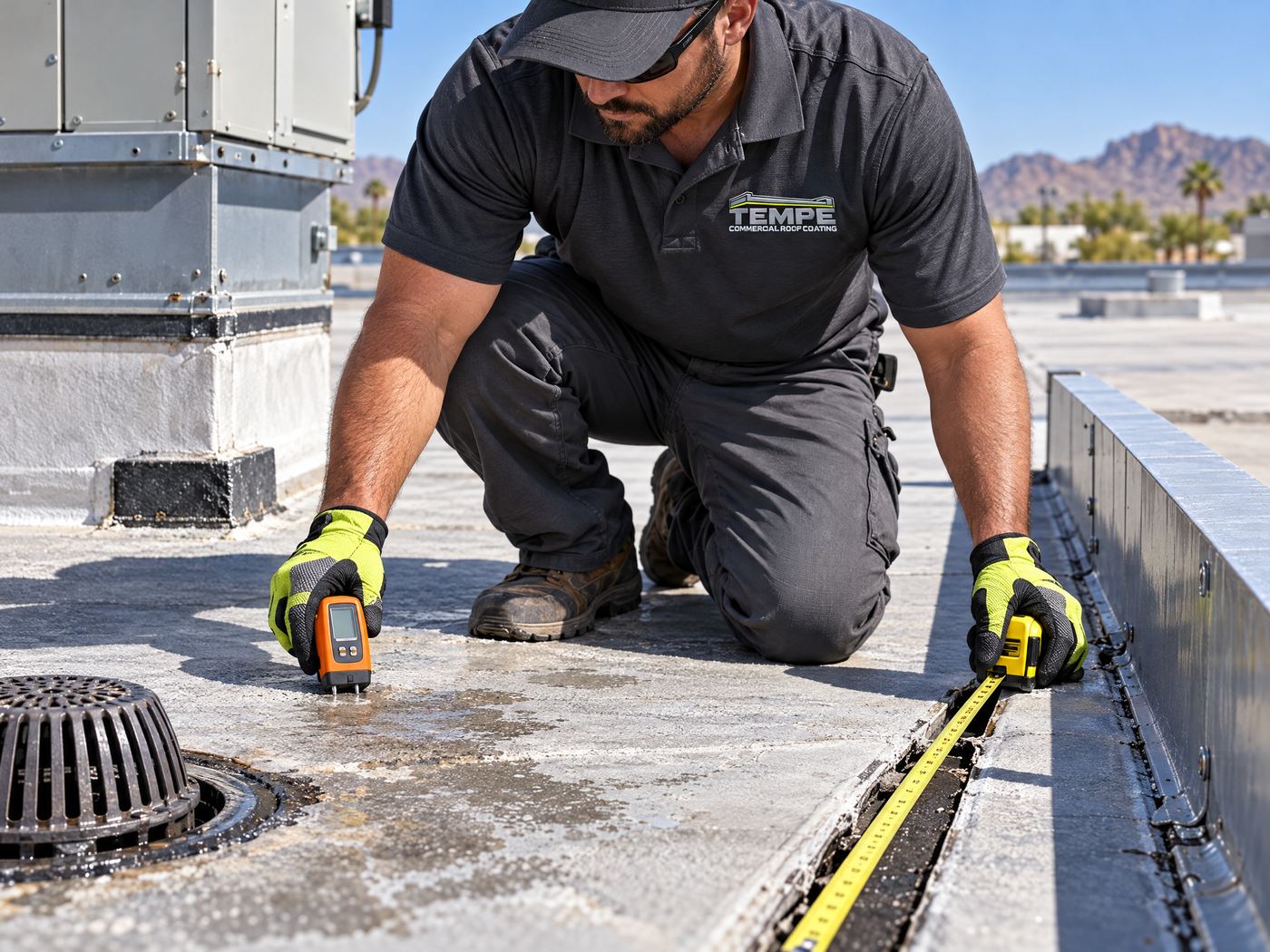
- Dry substrate firstWet insulation, soft deck areas, and trapped moisture change the foam decision.
- Adhesion at the surfaceLoose coating, dust, exposed deck, and old repairs need a preparation plan.
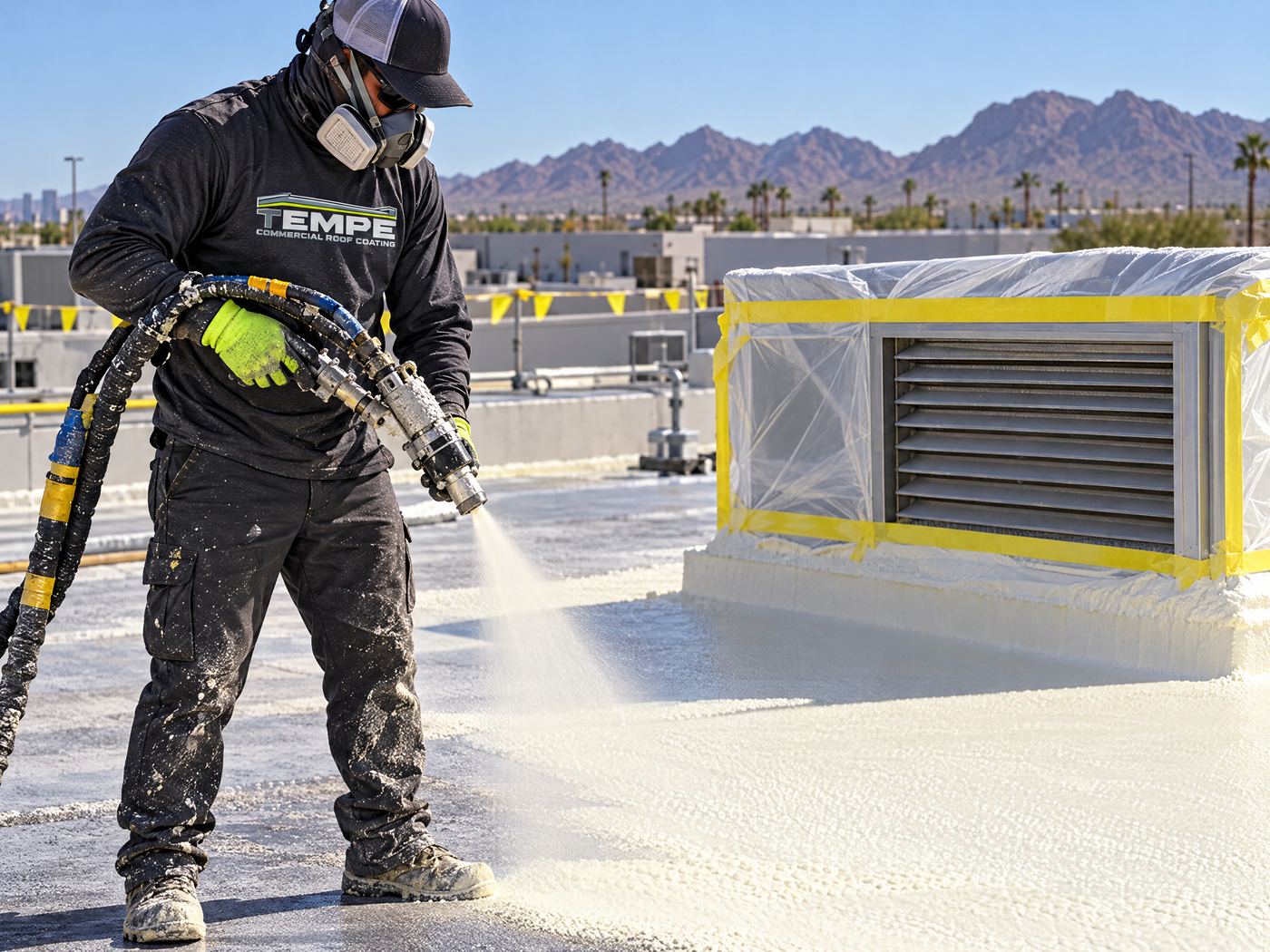
- Overspray controlHVAC intakes, rooftop equipment, vehicles, and roof access routes shape application.
- Specified thicknessFoam coverage is checked at drains, curbs, transitions, and open roof areas.
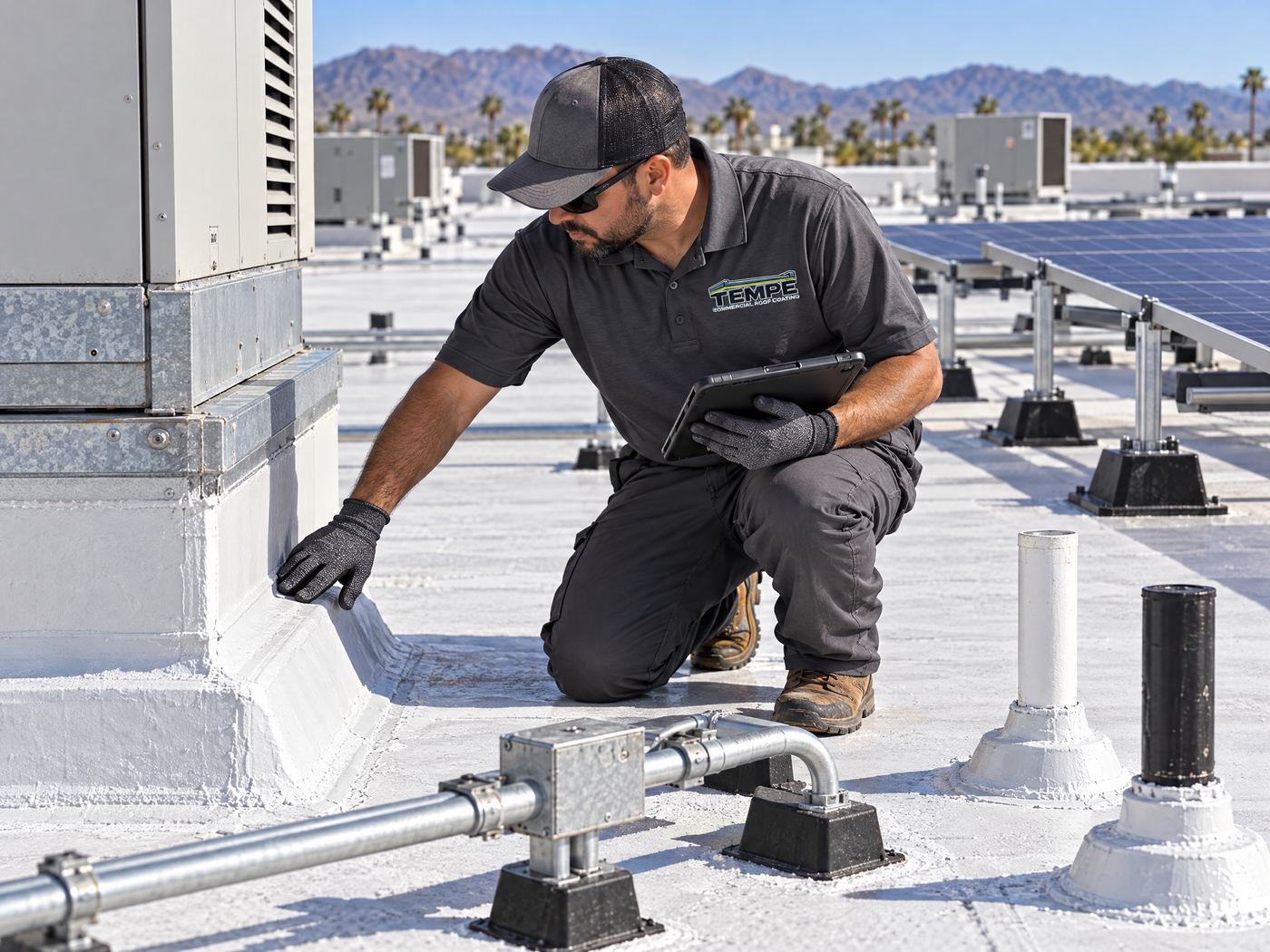
- Topcoat and roof pathA compatible topcoat supports the chosen recover or remove decision.
Foam Roof Facts
What Controls A Foam Roofing Decision
The roof surface and the building around it determine whether foam can be prepared, applied, and protected with a compatible topcoat.
Roof Suitability
Is This Roof A Fit For Spray Foam?
Spray foam works from the existing roof outward, so the base condition must support adhesion and the building must support controlled application.
Foam-Ready Conditions
- Dry insulation below a stable roof surface
- Firmly attached coating or membrane at the work area
- attached deck around curbs, drains, and penetrations
- Access routes that keep HVAC intakes protected
- Roof geometry that allows thickness checks
- Topcoat selection matched to the foam system
Recover Or Remove First
- Wet insulation beneath blistered or failing areas
- Soft deck, exposed damage, or open roof sections
- Loose coating that lifts during surface preparation
- Unresolved leaks at flashing, drains, or pipe supports
- Air intakes exposed to an uncontrolled spray path
- Roof areas that need removal before a stable base exists
Roof Condition Check
Signs Your Foam Roof Needs Attention
Use the visible roof details below to separate routine planning from conditions that need repair boundaries before spray foam work.
Watch
Uneven Foam Thickness
Thin areas, ridges, or abrupt changes near a drain can leave the roof surface inconsistent. Mark the transition for a thickness review before the topcoat is chosen.
Watch
Dust At The Roof Surface
Dust, chalking, and loose granules can interfere with adhesion. Check the surface around seams and parapet edges before the preparation method is set.
Repair First
Wet Insulation
Wet insulation below a membrane or coating points to a moisture problem beneath the application surface. Separate the affected area from dry, stable roof sections.
Repair First
Damaged HVAC Curb
Open joints, failed flashing, or movement at an HVAC curb can direct water below the foam. Repair the curb detail before covering the surrounding roof.
Call Now
Open Deck Or Soft Roof
Exposed deck, soft spots, and missing roof material require a structural and repair decision before foam application. Keep those areas outside the coating scope until addressed.
Call Now
Unprotected Air Intake
An intake beside the spray path can affect building operations and overspray controls. Identify its location, service clearance, and operating requirements at the start.
System Selection
Commercial Roof Coating Options for Tempe
Foam creates the base layer in this comparison. The roof condition, moisture findings, and topcoat requirements determine which option belongs in the work plan.
| Option | Base Or Substrate | Moisture And Detail Gate | Application Use | Recover Or Remove Path |
|---|---|---|---|---|
| Spray Foam Base | Dry, stable roof surface with attached deck areas | Wet insulation and soft spots need separation | Builds a shaped foam layer around roof transitions | Recover after preparation; remove damaged sections first |
| Silicone Topcoat | Compatible cured foam and prepared details | Drainage, ponding rings, and adhesion require review | Protects the foam surface where system requirements allow | Recoat follows compatibility and surface testing |
| Acrylic Topcoat | Compatible cured foam with a clean surface | Rain, cure conditions, and detail fabric affect application | Fits selected foam systems and weather-controlled work | Recoat follows the installed system and preparation rules |
| Remove And Replace | Wet insulation, damaged deck, or unstable roof layers | Moisture and structural damage define the boundary | Used where a recoverable foam base cannot be established | Remove affected assembly, then review the replacement roof |
Qualified Roof Benefits
Benefits of Coating Your Roof
A qualified foam and topcoat system can improve how a suitable commercial roof handles its details, access needs, and future maintenance decisions.
Office BuildingsIndustrial FacilitiesMulti-Tenant PropertiesResearch Buildings
Fewer Surface Breaks
A continuous foam layer can follow roof transitions, pipe supports, and HVAC curb edges after those details are repaired and prepared.
Detail-Aware Coverage
Shaped foam can address uneven roof geometry around drains and penetrations, with thickness checks keeping the application tied to the selected system.
Planned Equipment Access
HVAC service paths, walk pads, and air intakes can be marked before the topcoat work so roof maintenance remains part of the operating plan.
Clearer Repair Boundaries
Separating dry foam-ready areas from wet insulation and damaged deck gives owners a defined recover versus remove decision for each roof section.
Active Roof Concern
Wet Insulation Or An HVAC Intake Near The Spray Path?
Call before foam work is planned when moisture, air movement, or access around rooftop equipment could change the application method.
Field Work Sequence
From Dryness Check To Topcoat Review
The work sequence keeps substrate condition, roof repairs, spray control, thickness, and topcoat compatibility in the same commercial roof decision.
Alpha
1INSPECTInspect Your Roof
We check wet insulation, deck condition, existing coating, drains, seams, HVAC curbs, penetrations, and access routes. The inspection separates dry foam-ready areas from repair-first conditions.
Bravo
2PREPPrepare The Substrate
Cleaning, removal of loose material, detail repairs, and moisture-related work create the base for adhesion. We keep damaged roof sections outside the spray scope until their condition is resolved.
Charlie
3PROTECTSet Overspray Controls
HVAC intakes, equipment, vehicles, skylights, and roof access paths are identified before application. Wind direction, spray direction, and site operating rules guide the protection plan.
Delta
4COATApply Foam And Check Thickness
Foam is applied across prepared roof sections with attention to drains, transitions, curbs, and penetrations. Thickness checks find thin areas and high spots before the topcoat stage.
Echo
5REVIEWSelect And Review The Topcoat
We compare compatible silicone or acrylic topcoat requirements with the cured foam, roof drainage, detail repairs, and planned maintenance access. The final review records areas that need continued attention.
Spray Foam Application At A Commercial HVAC Curb
Get An EstimateRelated Commercial Services
Other Roof Coating Systems To Compare
A different coating system can fit when the existing roof, moisture findings, or topcoat requirements point away from foam.
Alpha
Silicone Roof Coating
Compare silicone when a low-slope roof has ponding rings, an existing coating, or a cured foam surface that needs a compatible topcoat review.
Silicone Roof CoatingBravo
Acrylic Roof Coating
Review acrylic when cure conditions, fabric-reinforced details, and a water-based coating approach fit the prepared commercial roof surface.
Acrylic Roof CoatingCharlie
Commercial Coating Services
Compare the full system list when a property has mixed roof sections, metal panels, membranes, foam, or shingle assemblies.
Commercial Roof Coating ServicesFoam Roofing Questions
Spray Foam Roofing Questions For Tempe
These answers focus on moisture, solar equipment, overspray, thickness, topcoat selection, and the recover versus remove decision.
Can a Roof Be Coated if Solar Panels Are Already Installed?
Possibly, but the panels and their mounting systems need to be considered during inspection and planning. Restricted access can affect surface preparation and coating around the supports. We determine how the accessible roof areas and panel connections can be handled before work begins. ReviewSprayFoamRoofing.
Can Spray Foam Roofing Be Installed Over Wet Insulation?
Spray foam roofing needs a dry substrate for reliable adhesion. Wet insulation, trapped moisture, and soft deck areas need to be located before application. We use the inspection findings to separate drying or repair work from foam-ready areas, then confirm the surface condition before spraying. ReviewSprayFoamRoofing.
How Is Adhesion Checked Before Spray Foam Application?
Adhesion depends on the existing roof surface, its cleanliness, and the preparation performed before spraying. We inspect loose coating, exposed deck, seams, and contaminants, then identify areas that need cleaning, repair, or a test before the foam system is selected. ReviewSprayFoamRoofing.
How Are HVAC Intakes Protected From Foam Overspray?
HVAC intakes are marked during the roof inspection and included in the application plan. We consider wind, spray direction, equipment shutdown requirements, nearby vehicles, and protected access routes. Intakes, curbs, and service openings receive site-specific controls before foam is applied around them. ReviewSprayFoamRoofing.
How Is Spray Foam Thickness Checked On A Commercial Roof?
Specified thickness is checked across the roof instead of judged from appearance alone. We watch for thin areas, high spots, transitions, drains, and penetrations where coverage can vary. The selected system’s instructions determine the required application amount and the checks used during review. ReviewSprayFoamRoofing.
Which Topcoat Can Be Applied Over Spray Foam?
The topcoat must be compatible with the foam system and the roof conditions. We compare silicone and acrylic options by surface preparation, drainage exposure, repair details, and the selected product requirements. A topcoat decision follows adhesion and foam inspection rather than a product name alone. ReviewSprayFoamRoofing.
Can Spray Foam Recover A Roof Or Does The Roof Need Removal?
Spray foam can recover a roof when the existing assembly provides a dry, stable base for the selected system. Wet insulation, damaged deck, loose materials, and widespread structural concerns change the decision. We separate recoverable sections from remove-and-replace conditions during inspection. ReviewSprayFoamRoofing.
Next Roof Decision
Plan The Right Foam Roofing Scope
Share the commercial property location, roof sections, moisture concerns, HVAC intake locations, and the details that affect recover or remove work.