Air Intake Clearance
Dust or coating near an HVAC air intake can affect building operations. Mark the intake, check its curb flashing, and set an application boundary before work starts.
Keep sensitive building operations in view while the roof is inspected, prepared, and coated. The work starts with concrete roof details and the access rules around them.
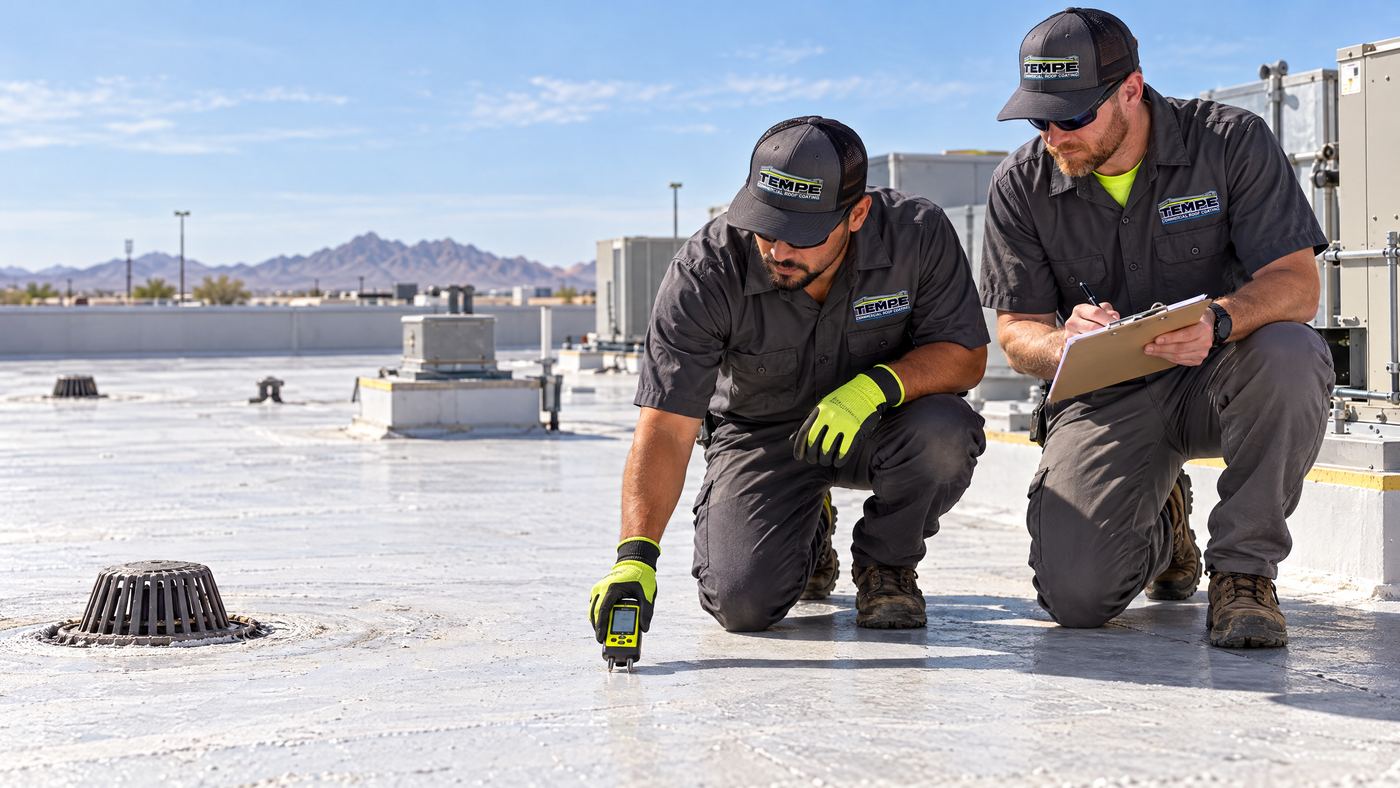
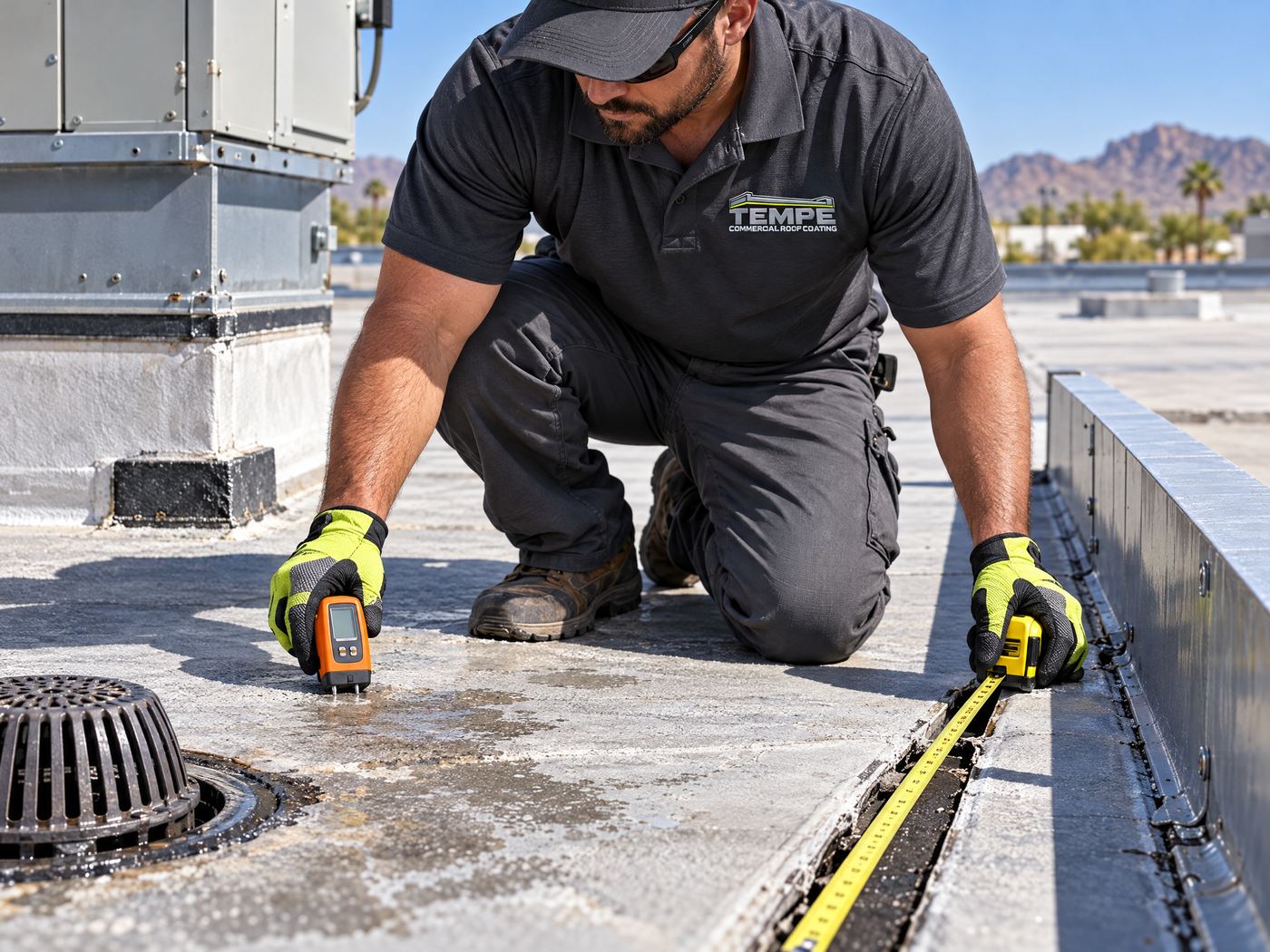
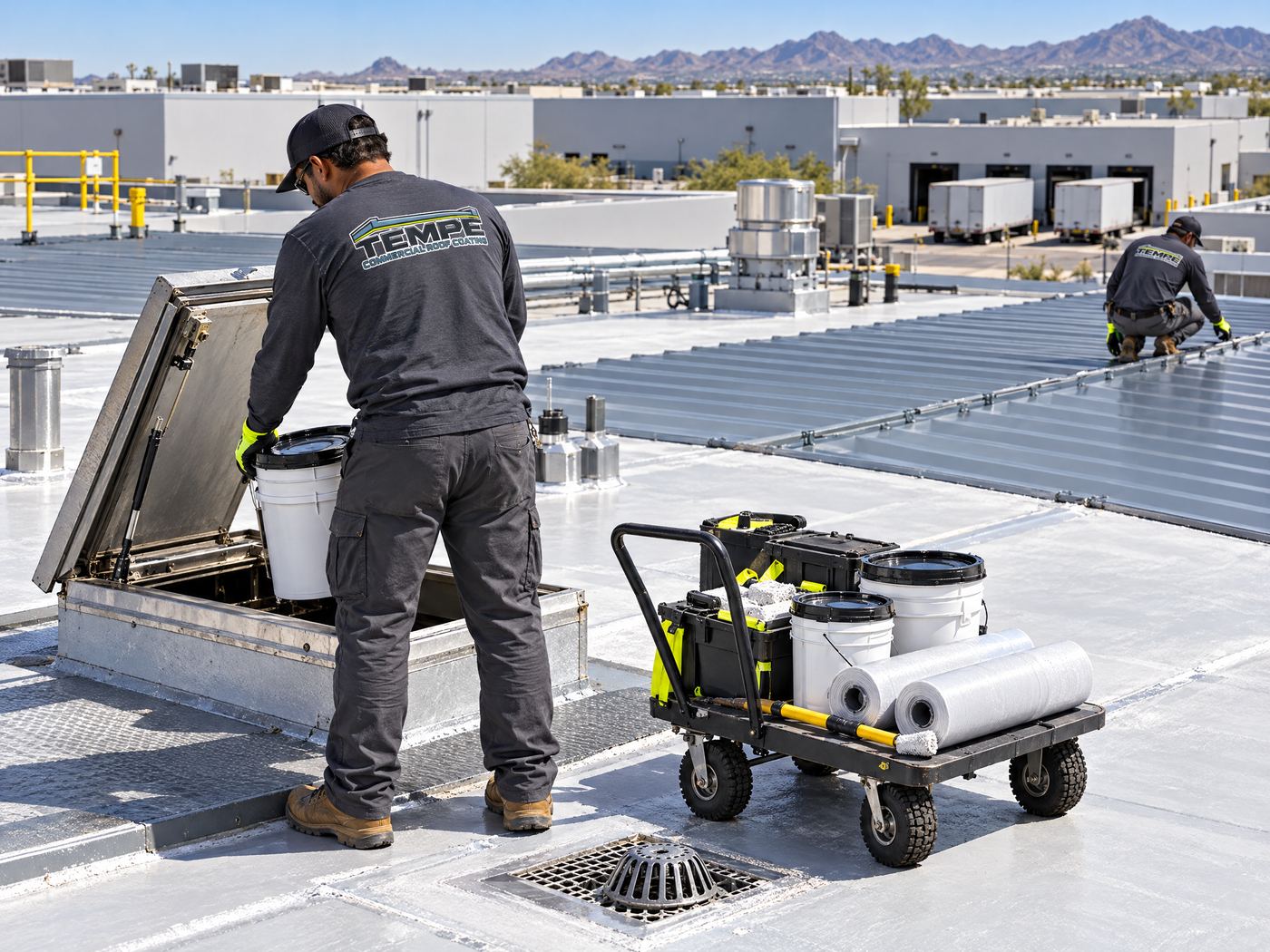
A coating project on a research or technology property has to account for what happens below the roof. We inspect air intakes, equipment clearances, and approved roof paths before selecting an application method.
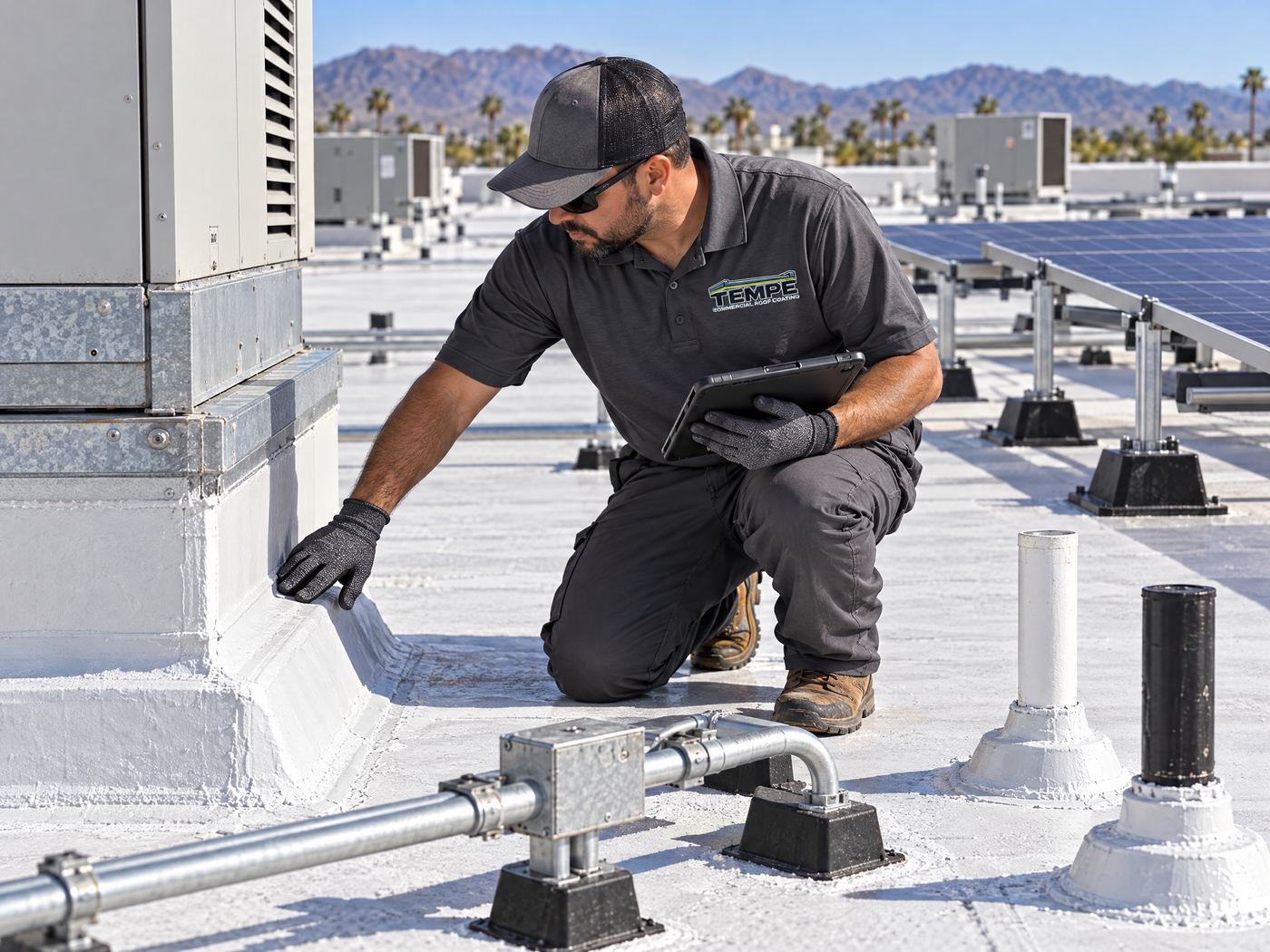
City of Tempe identifies Research and Discovery as innovation areas and names ASU Research Park and Discovery Business Campus as key areas. That setting can include facilities where roof work must follow site controls and operating requirements.
We use those roof details to build a practical work sequence. Your facility manager can identify sensitive zones before the coating system and application method are selected.
Use the visible condition of each roof detail to separate a coating candidate from a repair-first area. The severity chip shows where the decision starts.
Dust or coating near an HVAC air intake can affect building operations. Mark the intake, check its curb flashing, and set an application boundary before work starts.
Gaps at conduit, pipe, or antenna penetrations create a repair condition. Sealant and flashing repairs need compatible materials before the main roof coating is applied.
Movement around pipe supports can reopen a roof detail after coating. We inspect the support base, fasteners, and surrounding membrane or metal before setting the repair boundary.
Recurring water around a rooftop HVAC curb can point to failed flashing, blocked drainage, or a damaged roof surface. The curb and nearby drain need attention before coating.
Blocked walk pads or narrow paths can force foot traffic across seams and equipment connections. Map the approved route and protect the roof detail that technicians use.
Wet insulation or a soft deck changes the coating decision. Moisture, membrane seams, and the deck area need investigation before a surface restoration scope is set.
A suitable coating system can support facility operations when preparation, access, and roof details are handled together. The benefit depends on the existing roof and the selected system.
Coating boundaries around HVAC curbs, air intakes, and pipe supports give facility teams a clear roof-access reference.
Prepared seams, penetrations, and flashing can form part of a restoration system after damaged areas receive the right repair.
Marked air paths and protected service routes help keep application activity separated from sensitive building systems.
Separate roof sections can be inspected for different substrates, drains, and repair histories before one system is chosen.
The roof substrate, moisture condition, and equipment layout guide the service choice. These systems fit different roof details and preparation needs.
Alpha
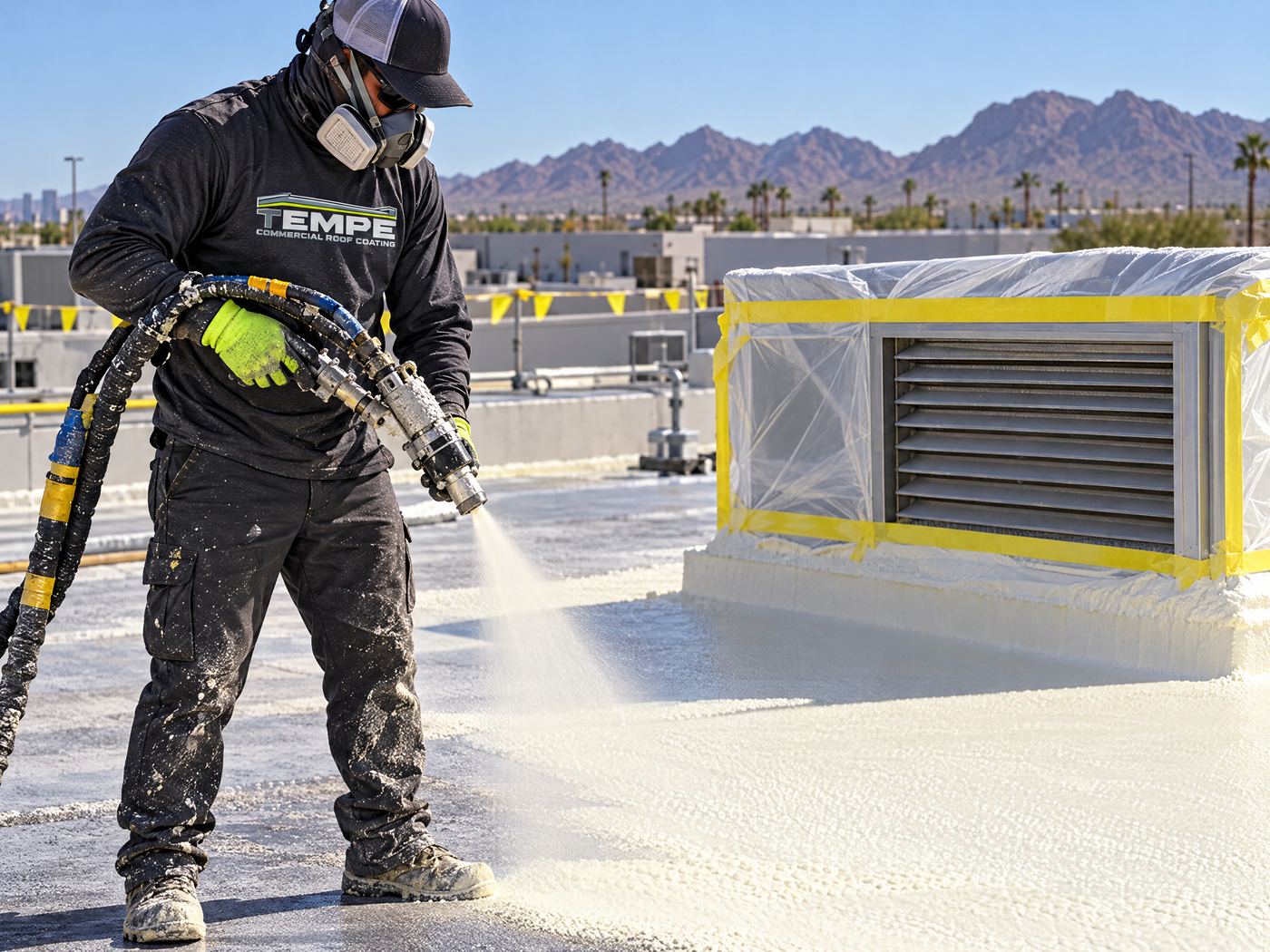
Dry, prepared substrates and controlled overspray matter around air intakes, HVAC curbs, and conduit. Spray foam can address surface transitions when the roof and operating controls support the application.
Best fit: Dry roof sections with planned equipment protection.
Spray Foam Roofing DetailsBravo
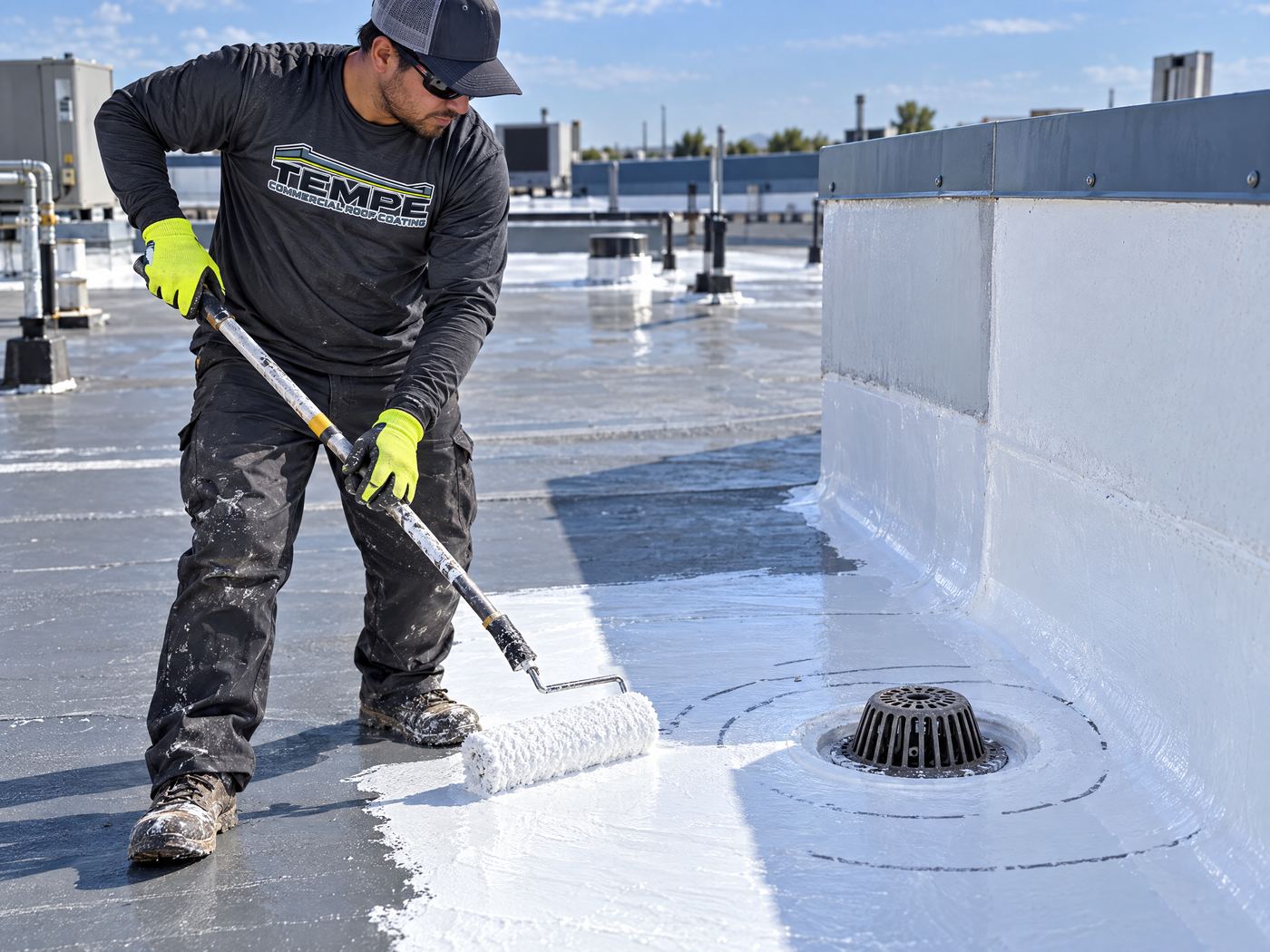
Silicone can suit selected low-slope roof surfaces after moisture, ponding rings, seams, and prior coating adhesion are checked. Pipe supports and penetrations still need separate detail work.
Best fit: attached low-slope surfaces with compatible preparation.
Silicone Roof Coating DetailsCharlie
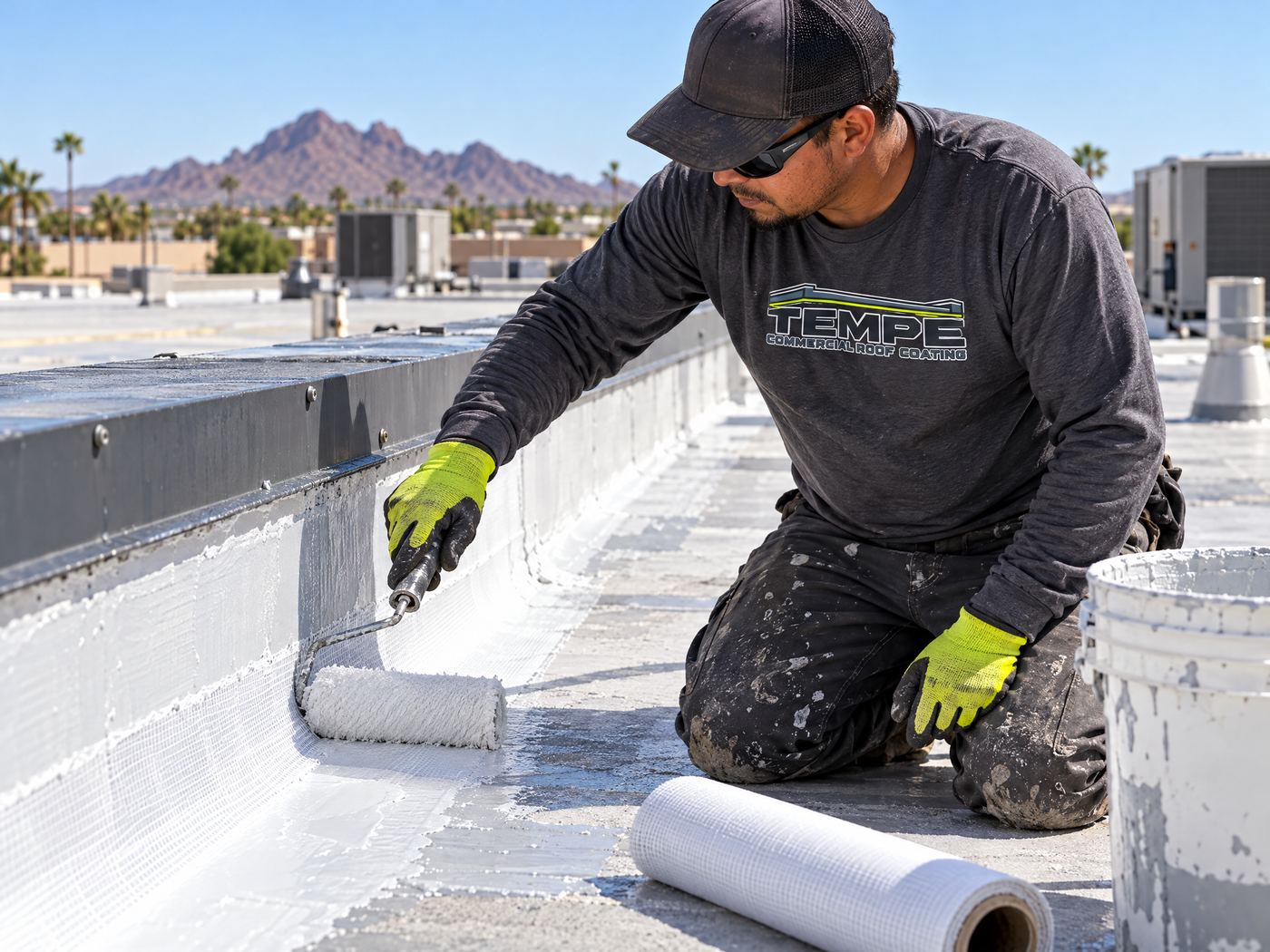
Acrylic systems require attention to surface dryness, cure conditions, exposed asphalt, and fabric-reinforced details. Work around air intakes and occupied areas must follow the selected product requirements.
Best fit: Prepared roof surfaces with compatible cure conditions.
Acrylic Roof Coating DetailsTell us where air intakes, exhaust outlets, and sensitive equipment sit before the roof coating scope is set.
Each step ties the coating work to a roof detail, an access rule, or a building operating concern.
Alpha
1We locate air intakes, HVAC curbs, pipe supports, penetrations, seams, drains, and soft areas. The inspection separates coating-ready sections from repair-first conditions.
Bravo
2Security checkpoints, escorts, roof doors, ladders, and service paths are identified before materials move. The plan keeps technicians away from protected equipment and restricted zones.
Charlie
3Cleaning exposes loose coating, open seams, damaged flashing, and failed sealant. Repairs, reinforcement, and protection around air intakes are completed according to the selected system.
Delta
4Spray, roll, or brush application follows the product requirements and the building controls. Curb edges, penetrations, pipe supports, and marked air paths receive detail attention.
Echo
5We check the finished surface, roof edges, drains, equipment clearances, and access paths. Facility records can capture the repaired details and the areas that received coating.
Commercial roof conditions change with the property and its operating layout. Explore nearby approved service areas when a facility spans more than one Tempe district.
Direct answers help facility managers prepare for sensitive equipment, controlled access, and roof-detail decisions before coating work begins.
Tell us about those areas before work begins. We need to consider nearby air intakes, ventilation, equipment access, and any site-specific restrictions. The selected coating and application method should be reviewed alongside the building's operating requirements. ReviewDiscoveryDistric.
Air intakes should be identified and protected before cleaning or coating starts. We check the intake location, nearby HVAC curb, exhaust path, and approved work boundary. The application method and material handling plan then account for the building's ventilation requirements and the risk of airborne material. ReviewDiscoveryDistric.
Yes, the work sequence can be built around the property's access rules. Share security checkpoints, escort requirements, roof-door controls, approved hours, and restricted paths before scheduling. Those details affect how workers reach the roof, where materials are staged, and which equipment areas remain available. ReviewDiscoveryDistric.
Pipe supports and penetrations receive their own inspection before the field coating is applied. We look for loose flashing, failed sealant, gaps, and roof movement around each connection. Repair or reinforcement uses materials compatible with the roof system, and the finished detail remains visible for later service work. ReviewDiscoveryDistric.
Phased coating can fit a facility with controlled access or sensitive equipment. The sequence follows the roof layout, repair needs, air-intake locations, material staging, and product cure requirements. Each section must have a defined edge and access plan so later work does not disturb a completed roof detail. ReviewDiscoveryDistric.
The roof surface and its operating constraints decide the system. We inspect metal panels, low-slope membranes, prior coatings, seams, drains, HVAC curbs, and penetrations before recommending spray foam, silicone, or acrylic coating. A product choice follows substrate condition, preparation needs, and controls around air movement and equipment. ReviewDiscoveryDistric.
Bring your roof access rules, equipment locations, and known leak details to the estimate conversation.
Roof Callback
Share your name and phone number. You can also call +1 (623) 310-0178 directly.