Watch
Worn Coating And Faded Detail Lines
A worn surface, exposed reinforcement, or faded seam line can point to planned restoration. We check adhesion, dry areas, and the coating history before selecting a recoat system.
Weather conditions shape how a commercial roof is prepared, coated, and protected while the coating cures. We inspect the roof details first, then set the work sequence around the surface and the building.
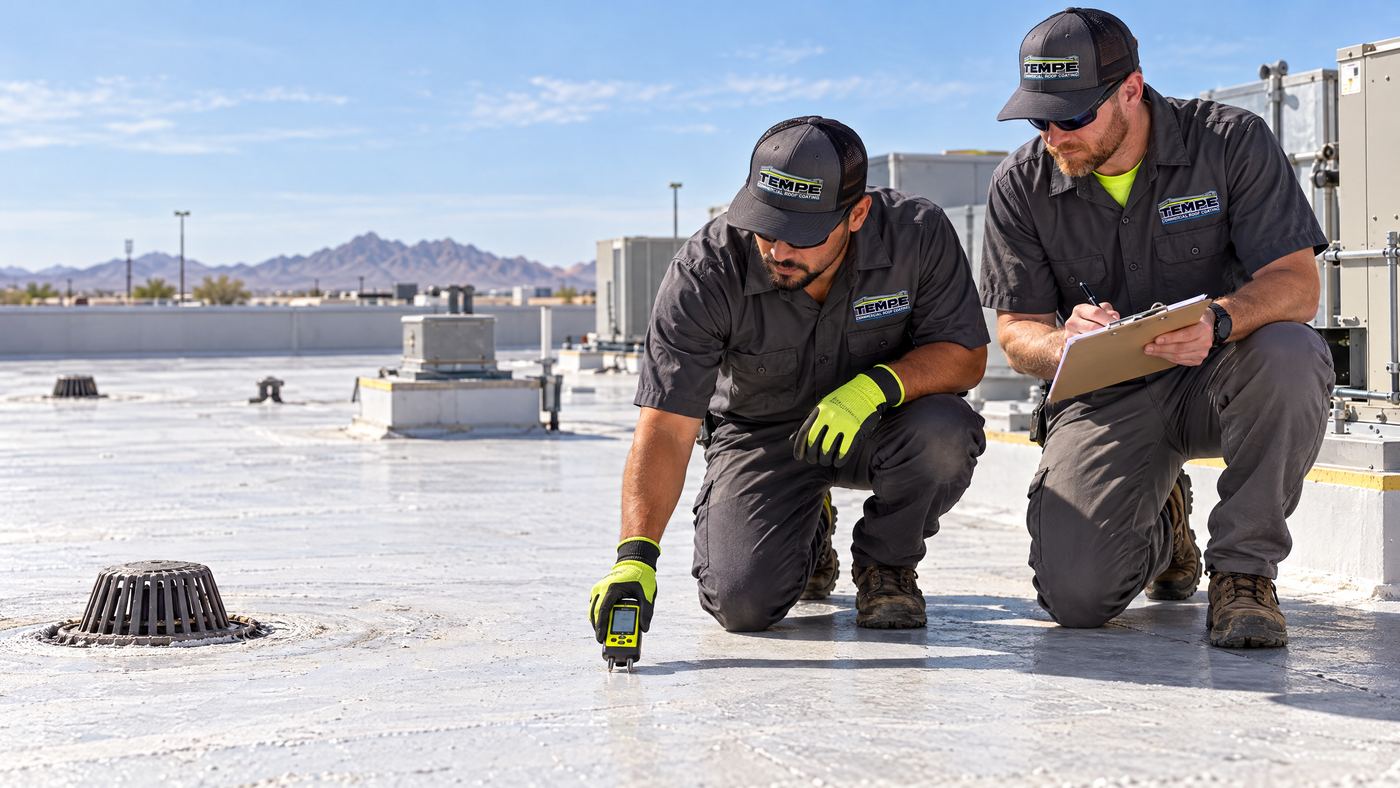
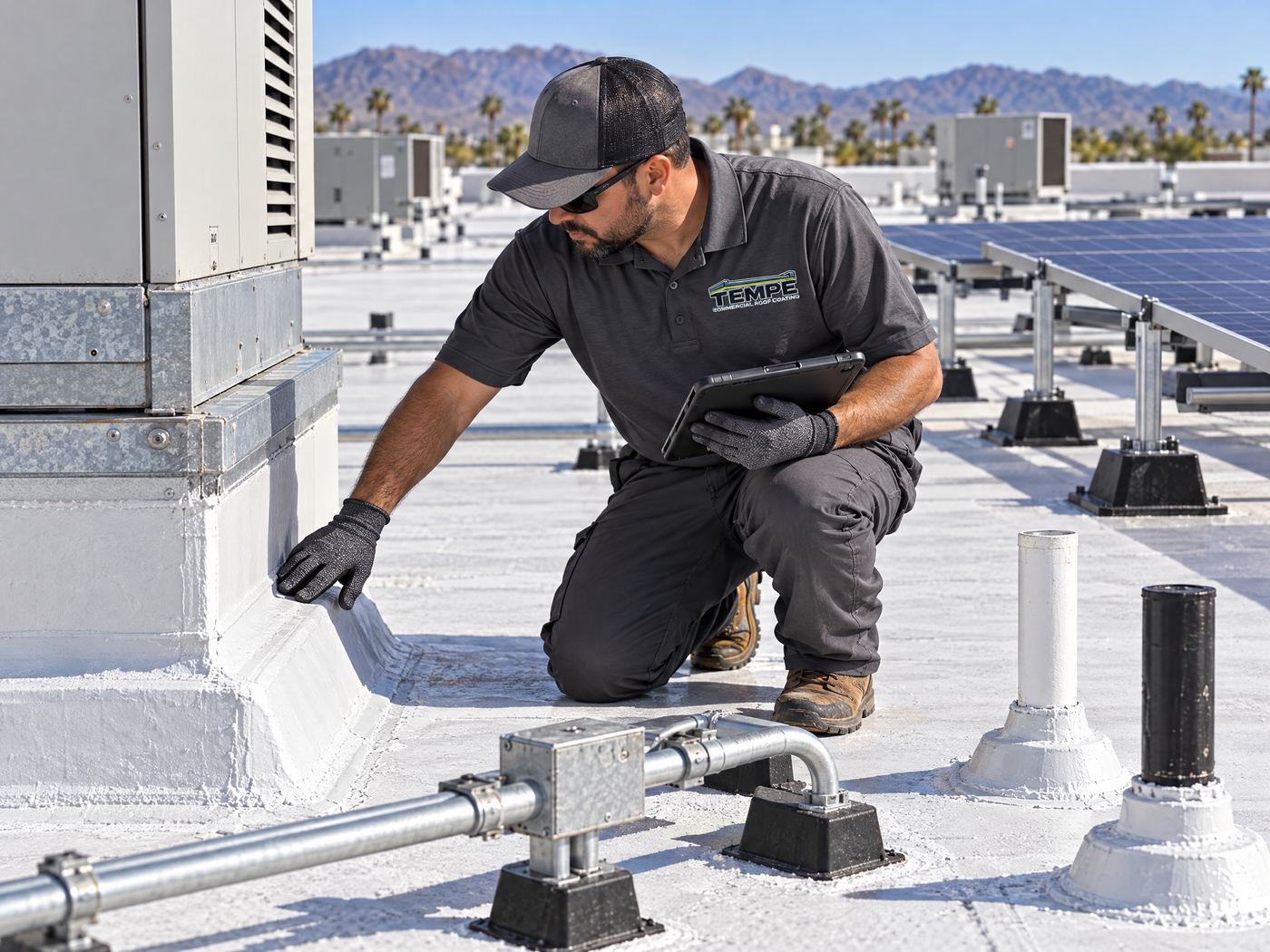
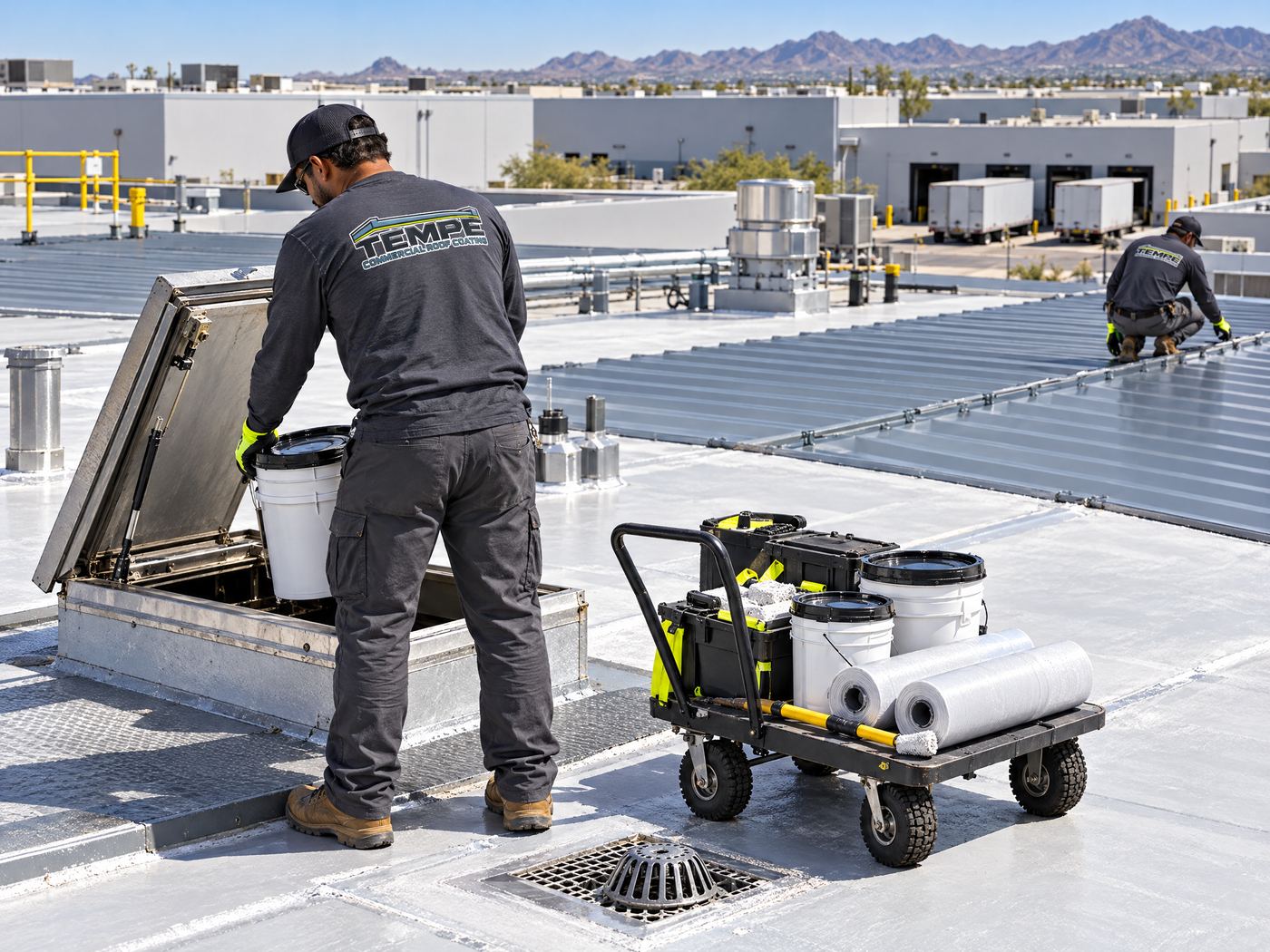
A coating plan starts with the roof surface, then accounts for the conditions present during application and cure.
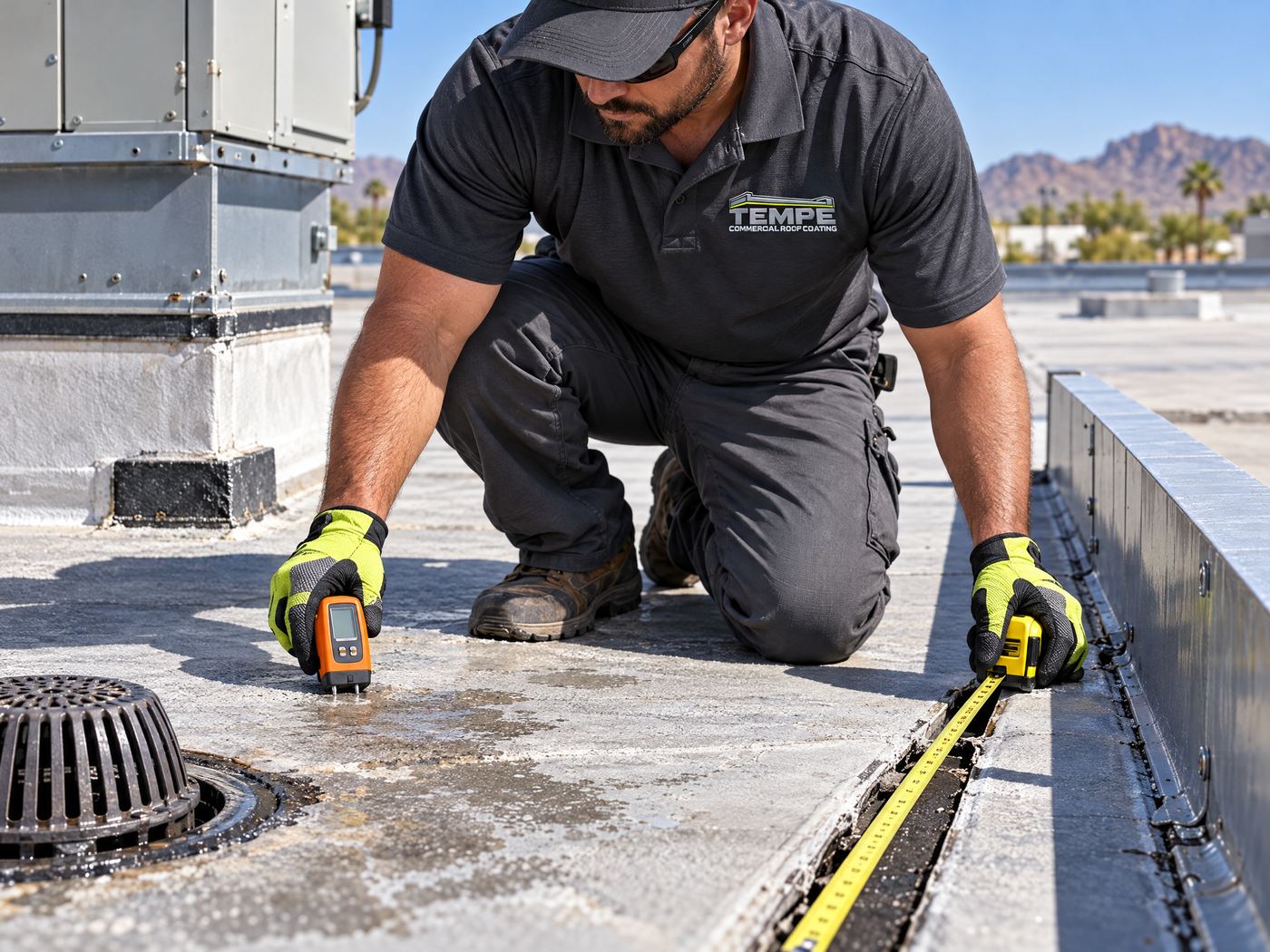
Open seams, wet materials, and ponding rings can change the order of work. A roof surface that looks dry at the edge can still hold moisture around fasteners, laps, insulation, or repaired areas.
We check the roof before choosing an application window. The coating product, surface temperature, wind, humidity, and rain risk all affect how the material is applied and when the coated section can be exposed to water or foot traffic.
Weather decisions begin with visible roof conditions. These severity cues help separate a coating candidate from an area that needs repair-first work.
A worn surface, exposed reinforcement, or faded seam line can point to planned restoration. We check adhesion, dry areas, and the coating history before selecting a recoat system.
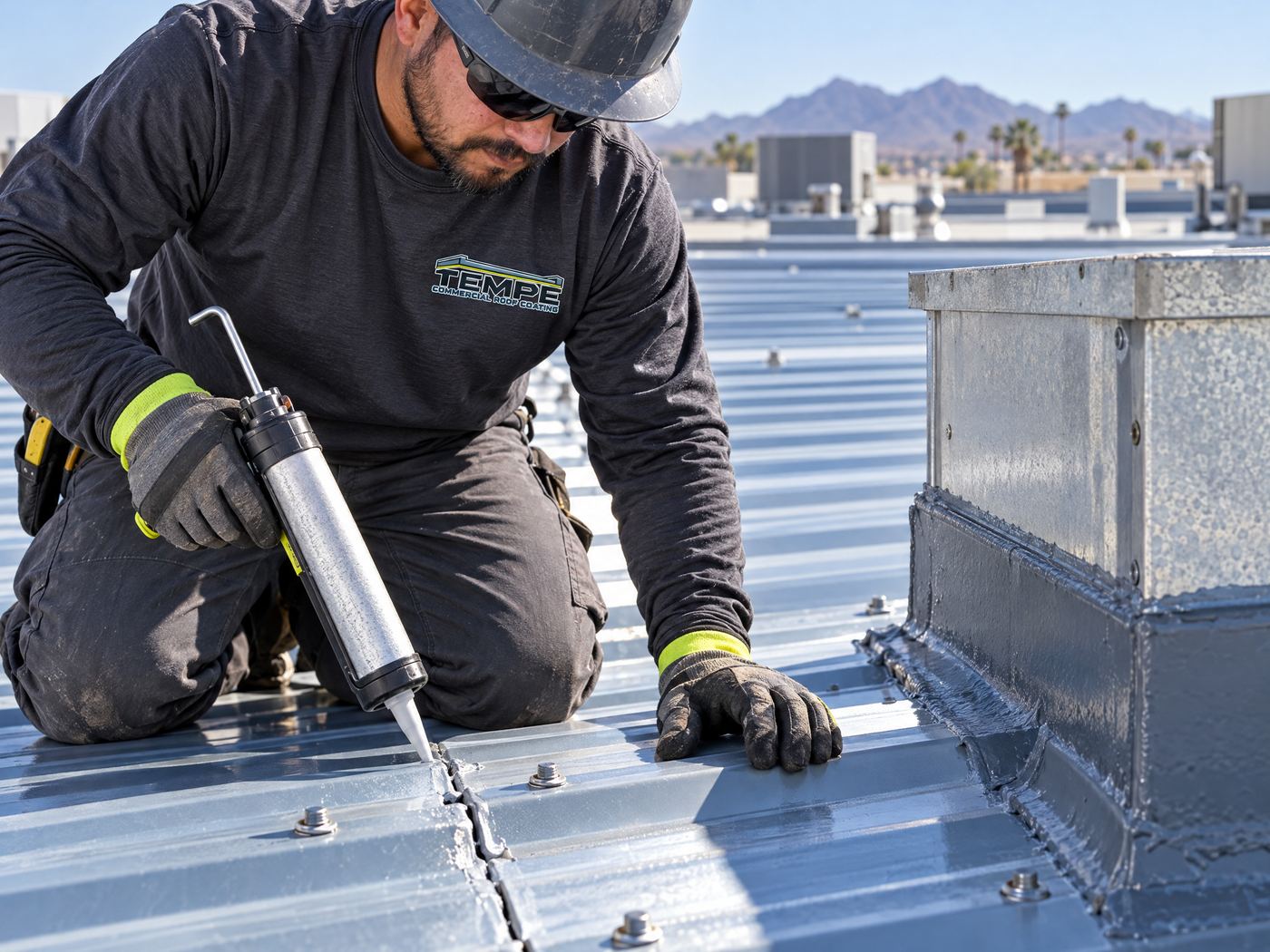
Panel laps, membrane seams, and loose fasteners can admit water beneath a coating. Those points need repair, reinforcement, or replacement before a continuous coating layer is applied.
Dark rings, silt lines, or standing water near drains show where drainage and surface condition need review. Coating follows correction of the water path and any damaged roof materials.
Ceiling stains, wet insulation, and active leaks call for source tracing before coating. A surface layer cannot replace work on damaged flashing, penetrations, seams, or saturated materials.
HVAC curbs, pipe supports, and service paths can divide a roof into exposed and protected work zones. We mark access routes and detail boundaries before the coating plan is set.
Metal panels, asphalt details, and older membranes can meet on one commercial building. Each section gets its own compatibility and preparation decision before a product is carried across the transition.
A prepared roof can gain practical protection from a compatible coating system. The benefit depends on the substrate, the details, and the work completed before application.
Across compatible roof fields, a compatible coating can cover prepared seams and small surface transitions while leaving drains, curbs, and flashing details clearly defined.
Separating damaged flashing, wet insulation, open laps, and coating-ready roof areas gives the facility team a clearer work scope around active roof details.
Marked walk paths and protected HVAC curb areas help keep service routes visible when technicians need to reach rooftop equipment after the coating work.
Breaking work into roof sections can keep preparation, application, and cure decisions tied to actual surface conditions instead of a calendar assumption.
The roof material, moisture condition, and detail work determine which coating service belongs in the scope.
Alpha
Water-based acrylic can fit a prepared roof where dry conditions and a workable cure window are available. Worn coating, exposed asphalt, seams, and detail fabric need review first.
Acrylic Roof CoatingBravo
Silicone is considered for compatible low-slope surfaces after checking ponding rings, old coating adhesion, bleed-through, membrane seams, and the recoat path.
Silicone Roof CoatingCharlie
Spray foam requires a dry substrate, controlled application around HVAC intakes, and a defined thickness and topcoat plan. Uneven insulation and exposed deck areas set the repair boundary.
Spray Foam RoofingTell us about ponding rings, damp roof areas, open seams, or a cure-sensitive work window. Call +1 (623) 310-0178 for a direct roof conversation.
The work sequence keeps roof condition and weather decisions together, from the first inspection through the final review.
Alpha
DAY 1We check seams, fasteners, flashing, drains, ponding rings, rooftop equipment, and insulation conditions. Moisture and roof-surface observations establish whether the section can move toward coating.
Bravo
SCOPEOpen laps, damaged penetrations, wet materials, and loose coating are separated from coating-ready areas. The scope records where repair, reinforcement, cleaning, or removal comes first.
Charlie
PREPRoof cleaning, dry-down, seam work, detail reinforcement, and adhesion checks are matched to the selected system. Drains, HVAC curbs, and access routes remain protected during preparation.
Delta
COATApplication starts when the product and roof surface meet the required conditions. Wind, rain risk, humidity, and temperature guide spraying, rolling, or detail work across each section.
Echo
CHECKWe look over coverage, seams, flashing, penetrations, drains, and marked walk paths after the coating work. Cure and access instructions stay tied to the selected roof system.
Commercial roof work can also be planned for these approved Tempe-area service locations, with the same attention to roof condition and access details.
Clear answers help facility managers choose a coating window without treating weather, roof condition, or access as an afterthought.
The required dry or cure time depends on the product and the conditions during application. Air temperature, roof-surface temperature, humidity, wind, and the coating type can all affect the timing. We follow the manufacturer's instructions and account for the weather before scheduling the work. ReviewAhwatukeeFoothil.
Yes. Rain risk can change when a roof section is prepared or coated. We look at the product requirements, roof-surface condition, exposed seams, drains, and the forecasted window before application. If the surface cannot remain ready for the required cure period, that section needs a different work decision. ReviewAhwatukeeFoothil.
Wind affects both application control and nearby building operations. We consider the roof layout, spray or roller method, HVAC intakes, vehicles, access paths, and exposed equipment. The selected method and work area are set around those roof details so material stays where the scope calls for it. ReviewAhwatukeeFoothil.
We inspect seams, fasteners, flashing, penetrations, drains, ponding rings, and visible coating failure. Moisture in insulation or repaired areas can change the decision. Cleaning and close inspection can reveal loose materials or damaged laps that need repair before a coating layer is applied. ReviewAhwatukeeFoothil.
Ponding needs investigation before coating. We look at the drainage path, drain or scupper condition, ponding rings, and any damaged membrane or roof surface. A coating can be considered only after the water-management and repair boundaries are addressed for the affected section. ReviewAhwatukeeFoothil.
Rooftop HVAC equipment changes access and protection planning. We identify curbs, service paths, air intakes, pipe supports, and areas technicians must reach. The application method and coating boundary are reviewed around those details so equipment access and roof preparation remain part of the work sequence. ReviewAhwatukeeFoothil.
Yes. A coating section can be rescheduled when the substrate is damp, wind affects application control, rain threatens the cure window, or roof repairs are still open. The decision protects the preparation sequence and keeps coating from covering a condition that needs repair first. ReviewAhwatukeeFoothil.
Share the roof details, weather concern, and operating constraints. We can discuss the coating scope for your Ahwatukee Foothills commercial property.
Roof Callback
Share your name and phone number. You can also call +1 (623) 310-0178 directly.