Defined Roof Access
Mark hatches, ladders, and HVAC service paths so tenant entrances remain separate from roof traffic.
Commercial roof coating takes more than a product choice when tenants, deliveries, and building systems stay active. We plan the roof work around the details your facility team already manages.
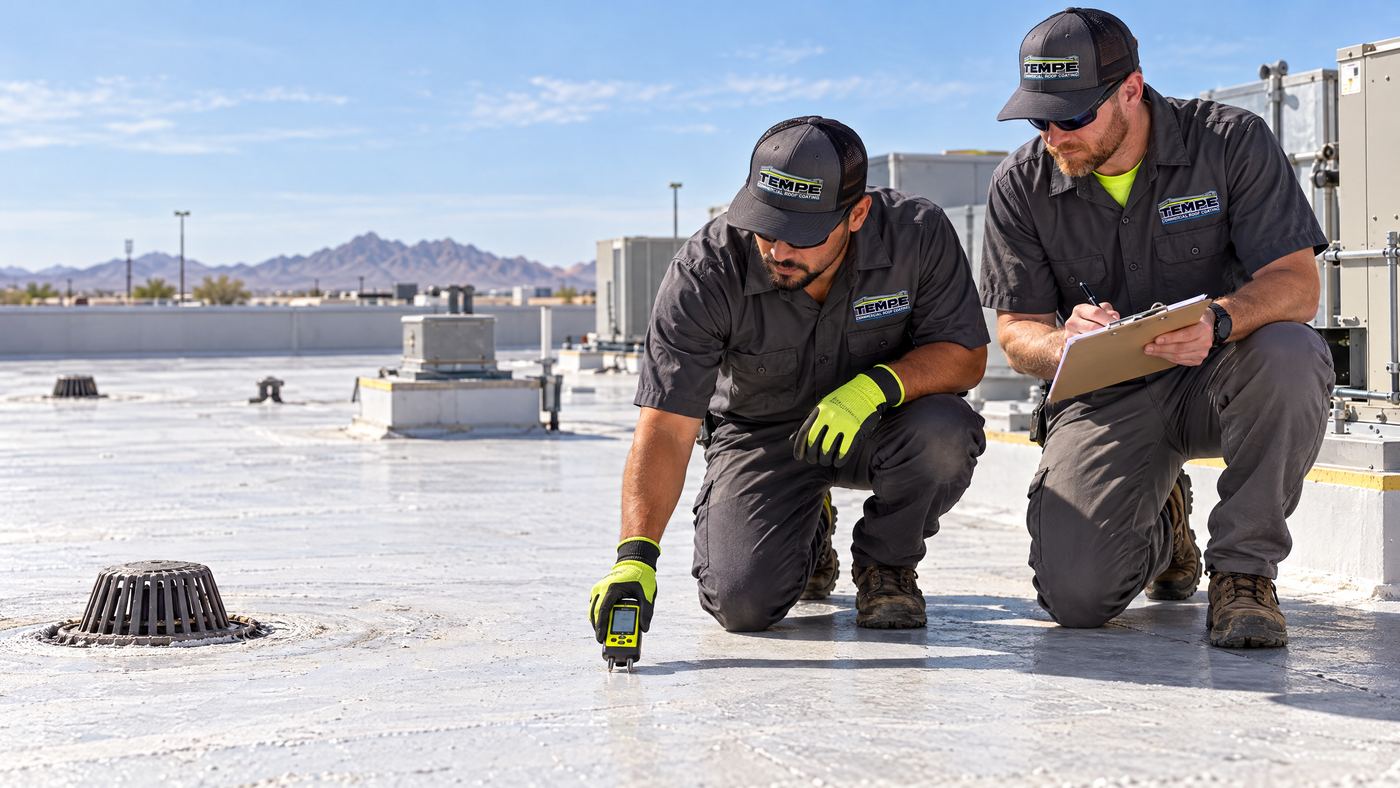
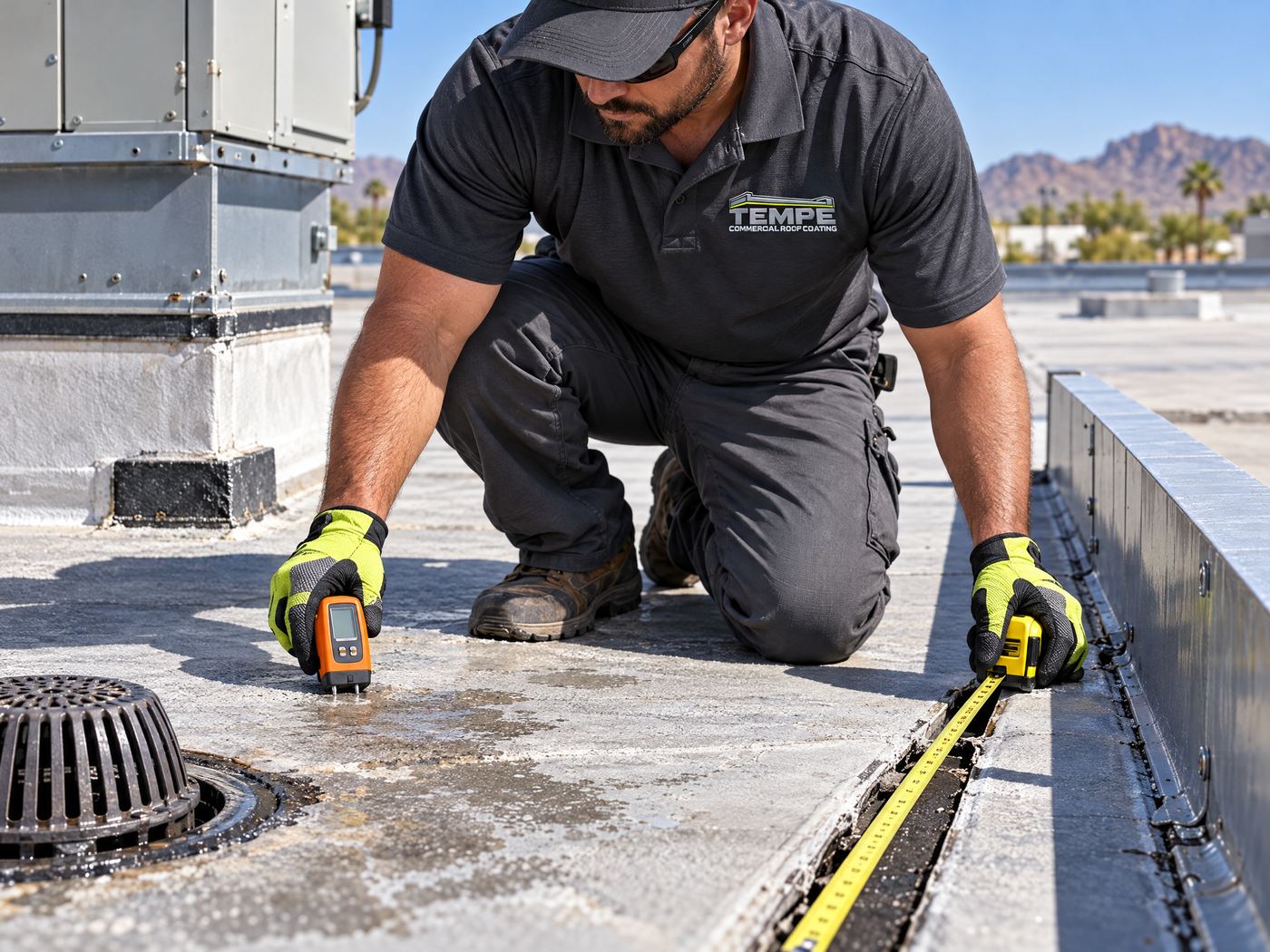
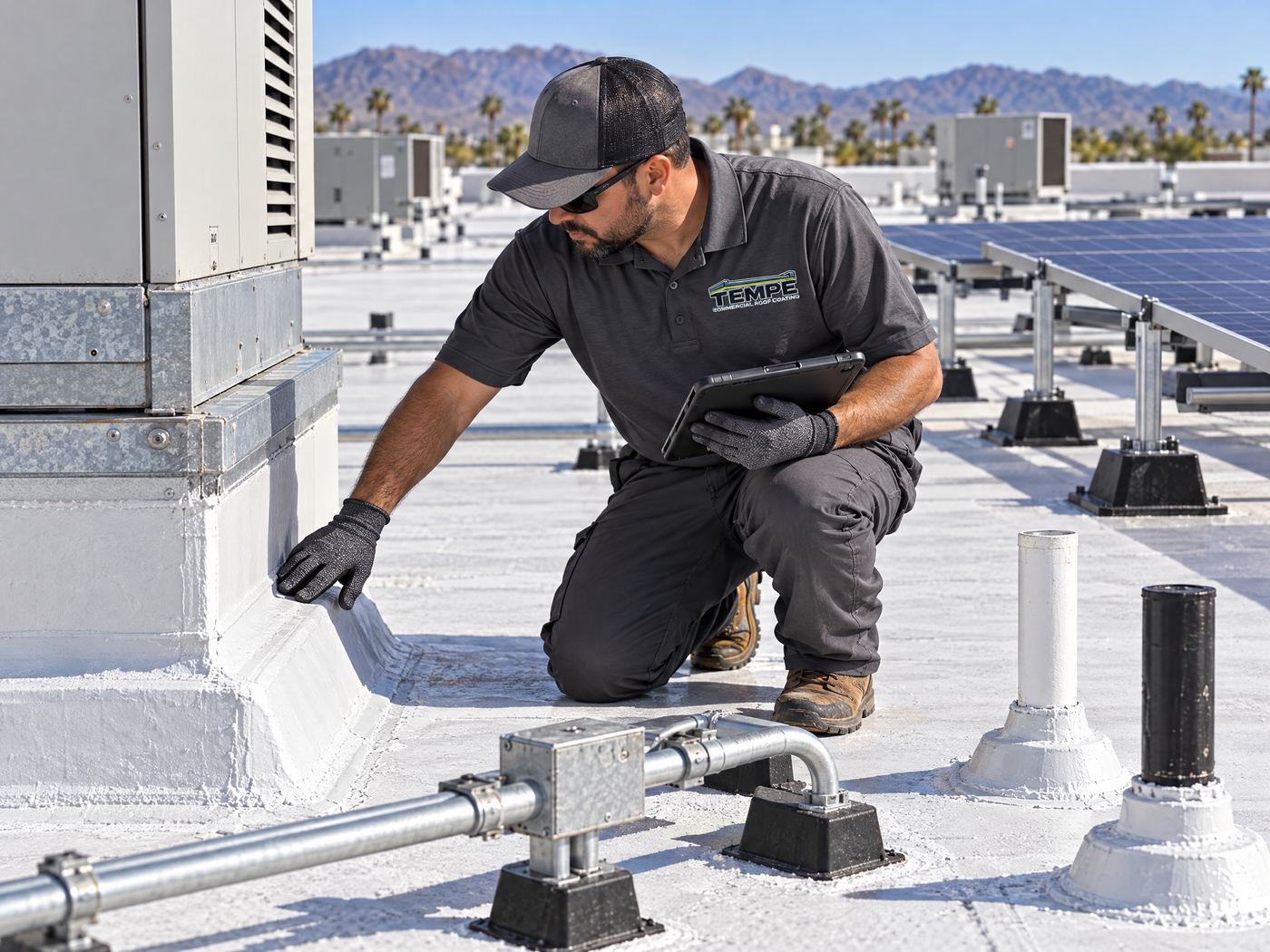
A tenant notice should match the actual roof activity. We identify where crews will enter, where materials will travel, and which work windows keep the building usable while roof preparation and coating proceed.

Start with the roof map and the tenant-facing parts of the property. A hatch above a shared corridor, an HVAC curb beside an office suite, or a loading-area route can change the order of work.
These conditions help facility managers decide which roof areas need a work-window discussion, repair-first treatment, or a coating inspection before tenant notices go out.
Traffic around a hatch can wear the coating and leave loose sealant at the curb or frame.
Open flashing at a parapet or shared wall can direct water into an occupied section.
Recurring stains below a roof seam or penetration need a leak source check before coating.
Cracked sealant around an equipment curb can affect access planning and repair scope.
Impact, punctures, or exposed fasteners near a delivery route need attention before surface preparation.
Thin or peeling coating around drains and walk paths should be checked for adhesion and moisture.
A qualified coating plan connects roof work to the building's occupied areas. The benefits depend on attached preparation, compatible materials, and clear boundaries around tenant operations.
Mark hatches, ladders, and HVAC service paths so tenant entrances remain separate from roof traffic.
Use the roof map, flashing locations, and delivery routes to set notices around the work sequence.
Check metal seams, existing coating, curb sealant, and exposed fasteners before selecting the coating system.
Separate flashing repairs, penetration work, and coating-ready roof areas so the property team knows what changes.
The roof surface, existing coating, and occupied-site constraints guide the system choice. These three services fit common Guadalupe planning needs when inspection confirms the substrate is ready.
Alpha
For metal panels with rust bloom, open laps, or loose fasteners. Preparation focuses on seams, fasteners, penetrations, and safe access near tenant-facing walls.
Best fit: coating-ready metal panels with defined repair areas.
Explore Metal Roof CoatingBravo
For a compatible roof surface where water-based application and cure conditions can be planned around entrances, HVAC curbs, and active work areas.
Best fit: prepared surfaces with a workable application window.
Explore Acrylic Roof CoatingCharlie
For compatible low-slope surfaces where ponding rings, existing coating adhesion, drains, and penetrations need review before a compatible recoat.
Best fit: inspected low-slope roof areas with compatible preparation.
Explore Silicone Roof CoatingDiscuss tenant-facing entrances, loading routes, HVAC curbs, and active leaks before the roof work is planned.
The roof inspection sets the repair boundaries, access plan, and coating order before tenant notices describe the work.
Alpha
1We inspect roof access points, tenant-facing entrances, HVAC curbs, shared-wall flashing, drains, and visible leak paths across each roof section.
Bravo
2Next, we identify where crews and materials will travel, which loading areas need protection, and which roof details require tenant-facing notices.
Charlie
3Flashing gaps, open seams, loose fasteners, damaged sealant, and penetration defects are addressed before coating-ready areas are prepared.
Delta
4Surface cleaning, adhesion checks, masking near HVAC equipment, and protection at entrances create a defined area for the selected system.
Echo
5The coating is applied to the prepared roof areas, with attention to seams, curbs, flashing, drains, and the access routes identified during planning.
If your property operates near Guadalupe, these approved service areas connect you with the same commercial roof coating services and a location-specific planning angle.
Clear answers help property managers set tenant notices, protect access routes, and choose a coating plan that matches the roof details on site.
We review how crews and materials will reach the roof and whether the work could affect parking, loading areas, or vehicle routes. Depending on the application method and site layout, some areas can need temporary protection or restricted access. ReviewGuadalupeRoofCoa.
Start with the roof areas that affect tenants, such as entrances below a shared-wall flashing line or an HVAC curb above an occupied suite. The notice should describe the planned work window, access changes, protected areas, and the facility contact for roof-related questions. ReviewGuadalupeRoofCoa.
Yes. Work windows can be organized around tenant entrances when the roof access path, material staging area, and coating activity are identified first. A hatch above a lobby or a flashing repair over a storefront can call for a different sequence than an isolated roof section. ReviewGuadalupeRoofCoa.
Roof access points affect where crews enter, how materials reach the surface, and which tenant routes need protection. We check hatches, ladders, doors, and roof edges, then place preparation and coating activities so the planned path stays clear. ReviewGuadalupeRoofCoa.
Facilities teams should flag curb flashing, sealant joints, service clearances, nearby air intakes, and equipment replacement plans. Those details can change preparation and access. Coating should follow repair and protection work around the curb rather than cover a damaged connection. ReviewGuadalupeRoofCoa.
It can when separate roof sections have different substrates and each system passes inspection. Metal panels can need seam and fastener preparation, while a low-slope membrane needs its own compatibility and moisture checks. We review how transitions, drains, and shared access routes connect the sections. ReviewGuadalupeRoofCoa.
Bring your roof access points, tenant schedules, and recurring leak locations into the coating discussion.
Roof Callback
Share your name and phone number. You can also call +1 (623) 310-0178 directly.