Worn Panel Finish
Faded metal panels and surface rust can signal preparation needs before a metal coating system is selected.
Multi-building properties need a roof plan that follows the building layout, equipment locations, loading routes, and production needs.
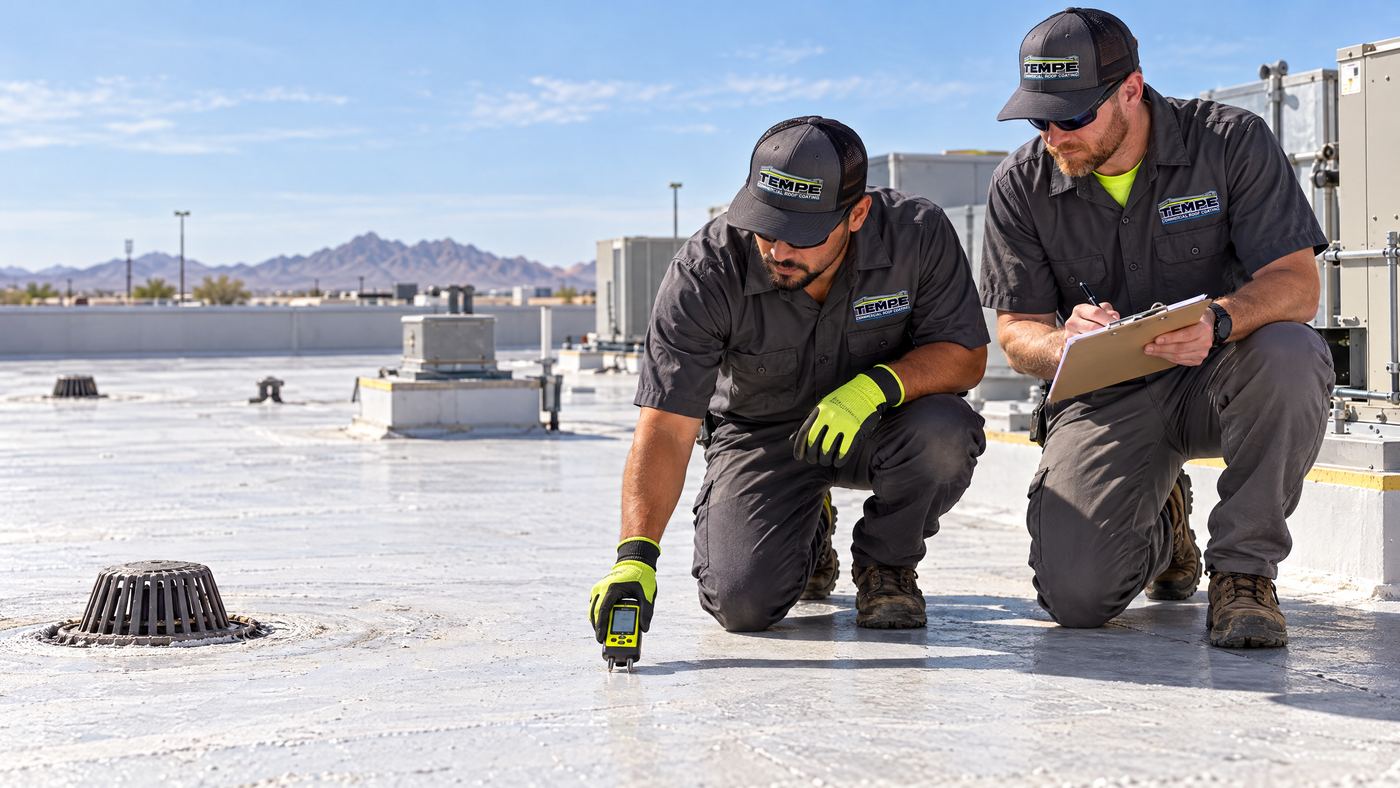
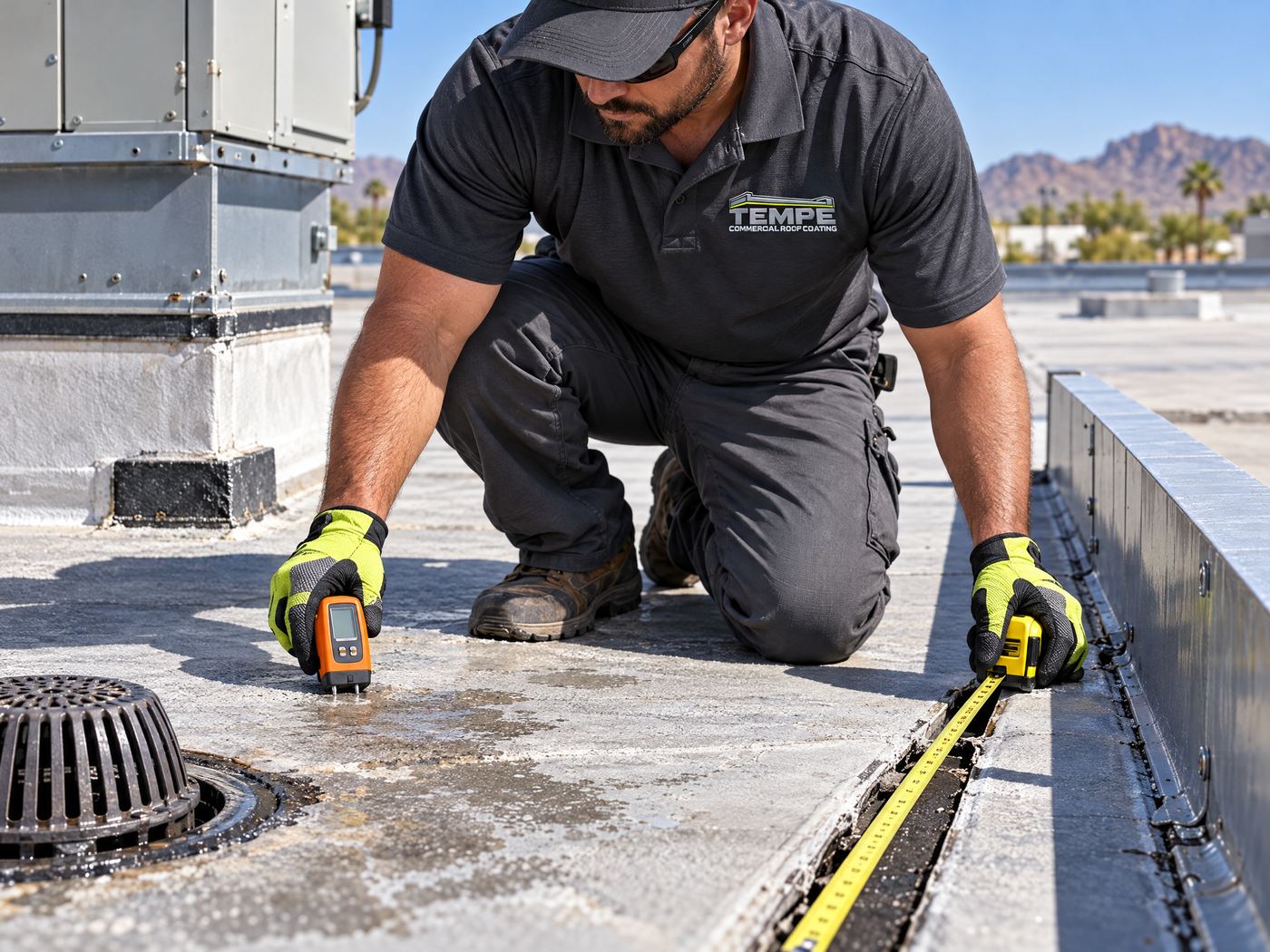
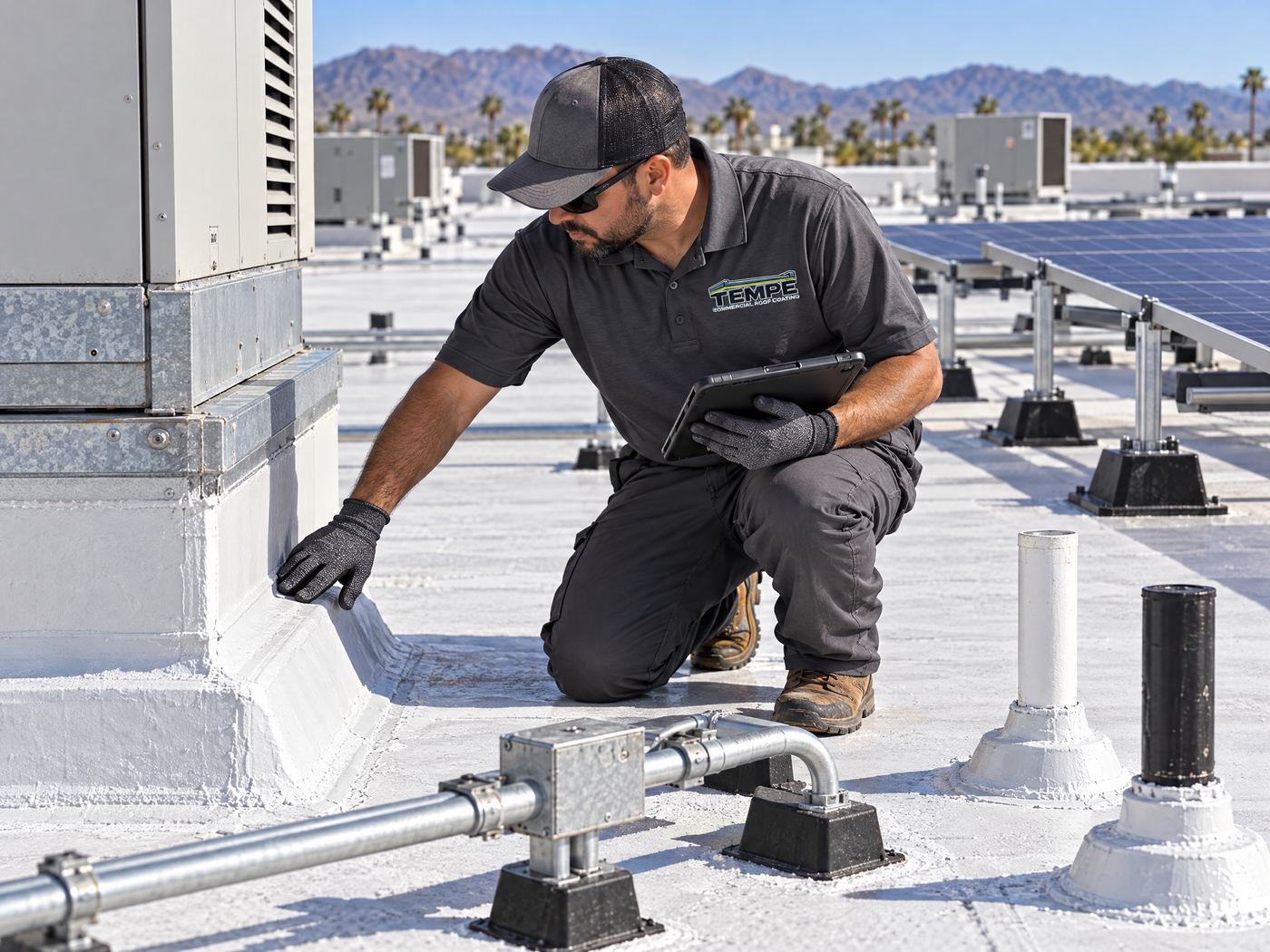
A phased scope gives each roof section a defined preparation and coating sequence while facility managers track access, equipment, and production needs.
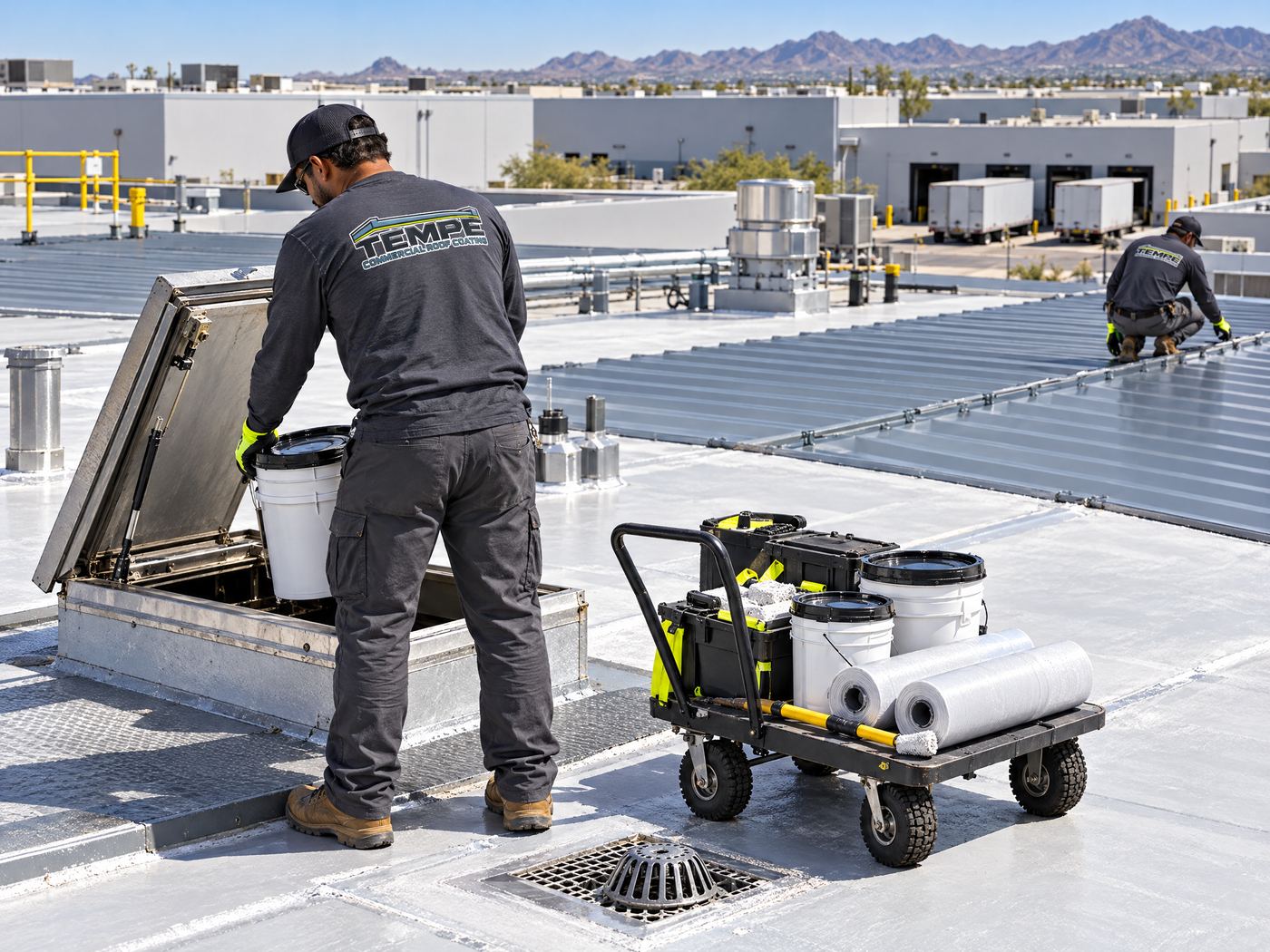
We start with a roof-by-roof inspection. The scope identifies which areas can move toward coating, which need repairs first, and which details need a separate treatment.
Use visible roof details to sort immediate repair work from areas that can enter a coating scope.
Faded metal panels and surface rust can signal preparation needs before a metal coating system is selected.
Separated laps or loose fasteners need repair and sealing before the main coating reaches the panel field.
Gaps at HVAC curbs, exhaust bases, or pipe penetrations can keep water entering after a broad roof coat.
Standing water or blocked overflow paths affect connected roof sections and deserve attention before surface work.
Soft spots, ceiling stains, or wet materials below the membrane change the restoration decision and repair scope.
Changes between roof heights, wall flashings, and edge metal need a detail review before coating connects the sections.
A suitable coating scope can organize restoration around the parts of a manufacturing property that facility teams use every day.
Separate panel fields, roof edges, and equipment curbs into clear zones so each phase has a documented roof detail.
Map ladders, loading areas, drains, and service paths before materials and application equipment enter an active facility.
Keep repair locations, coating coverage, penetrations, and shared drainage notes tied to the building section they describe.
Use the inspection findings to direct coating toward attached roof areas while damaged laps, wet insulation, and failed flashing receive separate attention.
The roof surface and its operating details guide the coating system. We inspect each building section before recommending a fit.
Alpha
Fits a metal roof scope where panel laps, fasteners, rust bloom, and edge details can be prepared and repaired before coating.
Metal roof coating in TempeBravo
Fits a dry, prepared substrate where foam thickness, overspray control, HVAC intakes, and a compatible topcoat can be addressed.
Spray foam roofing in TempeCharlie
Fits selected low-slope sections after checking moisture, ponding rings, old coating adhesion, seams, and compatibility at transitions.
Silicone roof coating in TempeCall us about leaks, standing water, open panel laps, or damaged flashing that could affect a busy building section.
Each phase connects inspection findings to preparation, application, and a record of the roof details covered.
Alpha
1We inspect each building section, including metal panel laps, fasteners, drains, roof edges, HVAC curbs, exhaust penetrations, and signs of wet insulation.
Bravo
2We mark repair-first details, loading routes, equipment zones, shared drainage, and the work boundaries for each phase of the property.
Charlie
3Cleaning, seam work, fastener treatment, flashing repairs, and substrate checks address the roof conditions that affect coating adhesion and coverage.
Delta
4We apply the selected metal, spray foam, or silicone system to the prepared section while accounting for drains, curbs, penetrations, and nearby operations.
Echo
5We review coated panel fields, repaired laps, detail transitions, and drainage points, then keep the coating and repair information with the building records.
Nearby service areas connect different commercial roof settings to the same inspection-led coating work.
Facility managers often need the phasing, access, and roof-detail decisions answered before work reaches an active building.
Sometimes. Dividing a project into sections can help accommodate tenant schedules, equipment access, or operational requirements. The sequence depends on the roof layout, weather, preparation needs, and how the coating system must be applied and cured. ReviewTempeMakerRoofCo.
We divide the property by roof section, access route, drainage connection, and repair condition. Panel laps, drains, HVAC curbs, and loading areas receive location-specific notes so the coating sequence follows the building plan rather than treating every roof as one surface. ReviewTempeMakerRoofCo.
Loading areas need a site-specific access plan. We review vehicle routes, staging space, roof access points, and the location of materials or application equipment. A phase can then be arranged around the loading dock and its roof penetrations while the facility team manages operating restrictions. ReviewTempeMakerRoofCo.
HVAC curbs, exhaust bases, pipe supports, and surrounding flashing are inspected before the roof field is coated. Gaps, failed sealants, or damaged roofing need compatible repairs. Air intakes and equipment access also shape the application method and the boundary of each work phase. ReviewTempeMakerRoofCo.
Shared drains, scuppers, overflow paths, and low points are reviewed as connected roof details. Blockages, damaged edges, or poor transitions need attention before coating. The phase plan records how water moves between roof sections so a new surface does not hide a drainage concern. ReviewTempeMakerRoofCo.
The fit depends on the roof surface and condition. Metal sections call for panel-lap, fastener, and corrosion checks. Dry substrates can support spray foam after moisture and overspray controls are reviewed. Silicone can fit selected low-slope areas after checking ponding, old coating adhesion, and compatibility. ReviewTempeMakerRoofCo.
Tell us about the buildings, roof sections, equipment, loading areas, and repair concerns that shape the work.
Roof Callback
Share your name and phone number. You can also call +1 (623) 310-0178 directly.