Roof System Selection

Commercial Roofing Services Tempe

The coating name comes after the roof inspection. Metal corrosion, low-slope moisture, worn acrylic, dry foam substrates, and shingle compatibility each change the preparation plan.

  • Substrate FirstIdentify metal panels, membranes, asphalt surfaces, foam, or shingles before product selection.
  • Repair BoundarySeparate open seams, loose fasteners, wet materials, and damaged flashing from coating-ready areas.
  • Operations In ViewAccount for HVAC curbs, air intakes, loading areas, tenant access, and roof work zones.
  • Five Service PathsCompare the approved Tempe commercial roofing systems by fit, moisture conditions, use, and recoat path.
Commercial roof worker inspecting roof details in Tempe, Arizona
Commercial roof coating preparation around roof seams and flashing
Commercial roofing worker coordinating rooftop equipment access
Five Coating Services

Start With The Roof Detail

Each service below has a different preparation gate. Open the service page that matches the roof surface or the condition your facility team is tracking.

Alpha

Metal Panels

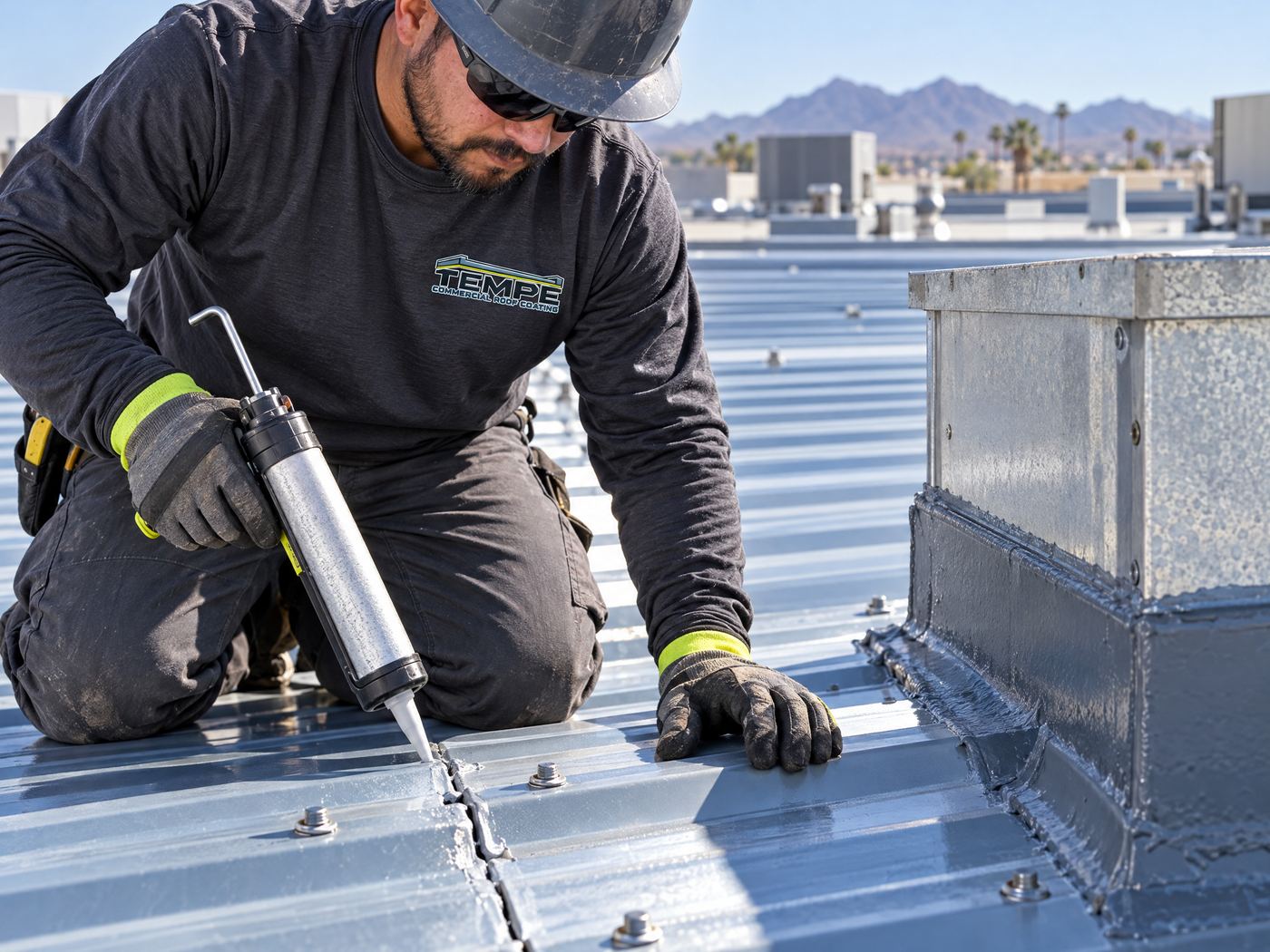
Metal Roof Coating

Corroded panels, open laps, loose fasteners, and failed pipe flashing need attention before the coating passes over the roof. Panel movement and condensation also need to be separated from active leaks.

Best Fit: Commercial metal roofs with repairable seams and fastener lines.

Explore Metal Roof Coating

Bravo

Low-Slope Membranes

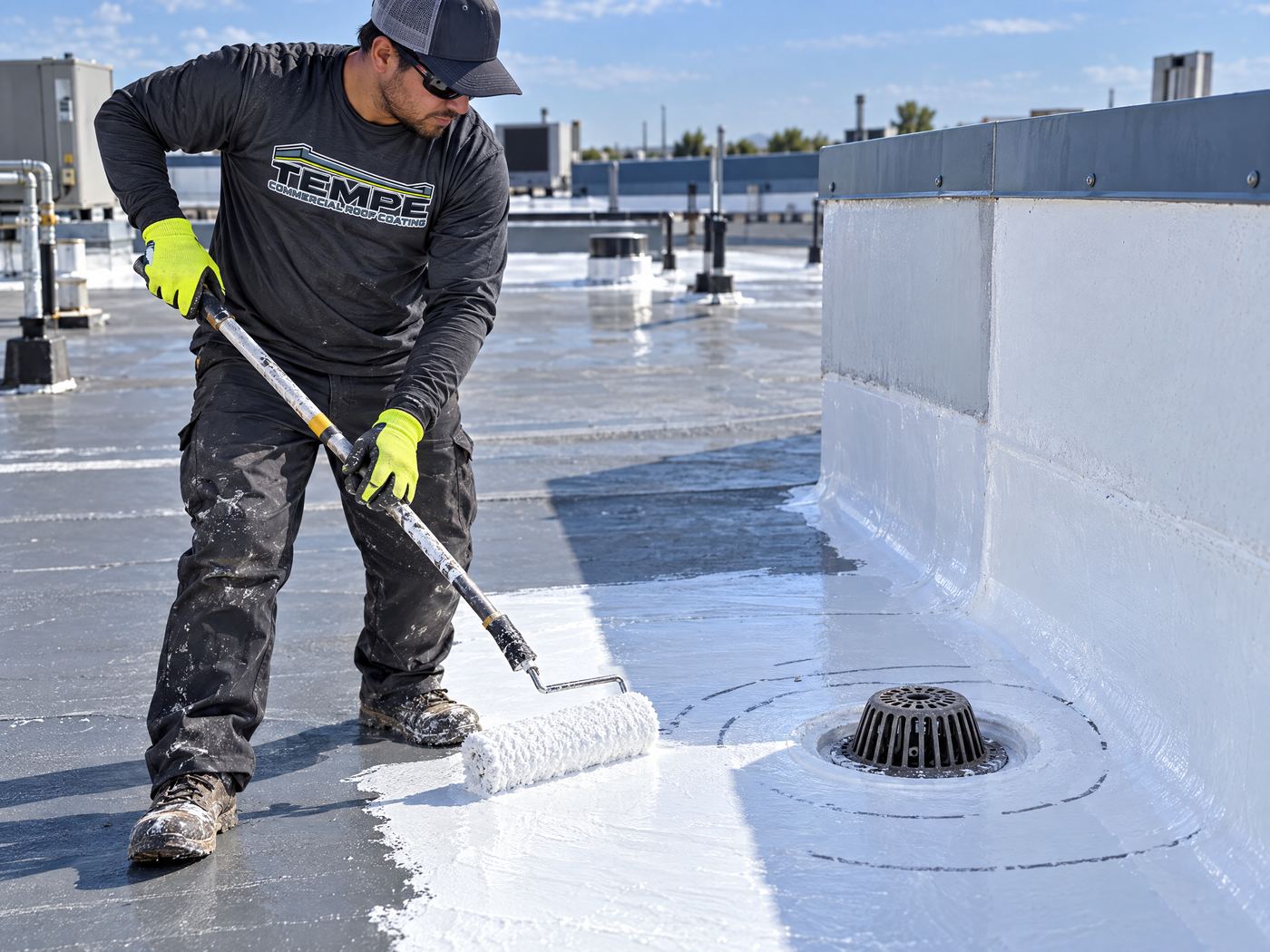
Silicone Roof Coating

Ponding rings, old coating adhesion, membrane seams, and bleed-through shape the silicone preparation plan. Moisture below the surface must be investigated before restoration work begins.

Best Fit: Low-slope roofs where the substrate and existing coating can accept a compatible silicone system.

Explore Silicone Roof Coating

Charlie

Water-Based Systems

Acrylic Roof Coating

Worn acrylic, exposed seams, flashing transitions, and roof fabric at details require a clean, prepared surface. Cure conditions and rain exposure affect how the work is staged.

Best Fit: Compatible commercial roof surfaces with a dry substrate and compatible acrylic preparation.

Explore Acrylic Roof Coating

Delta

Continuous Slope

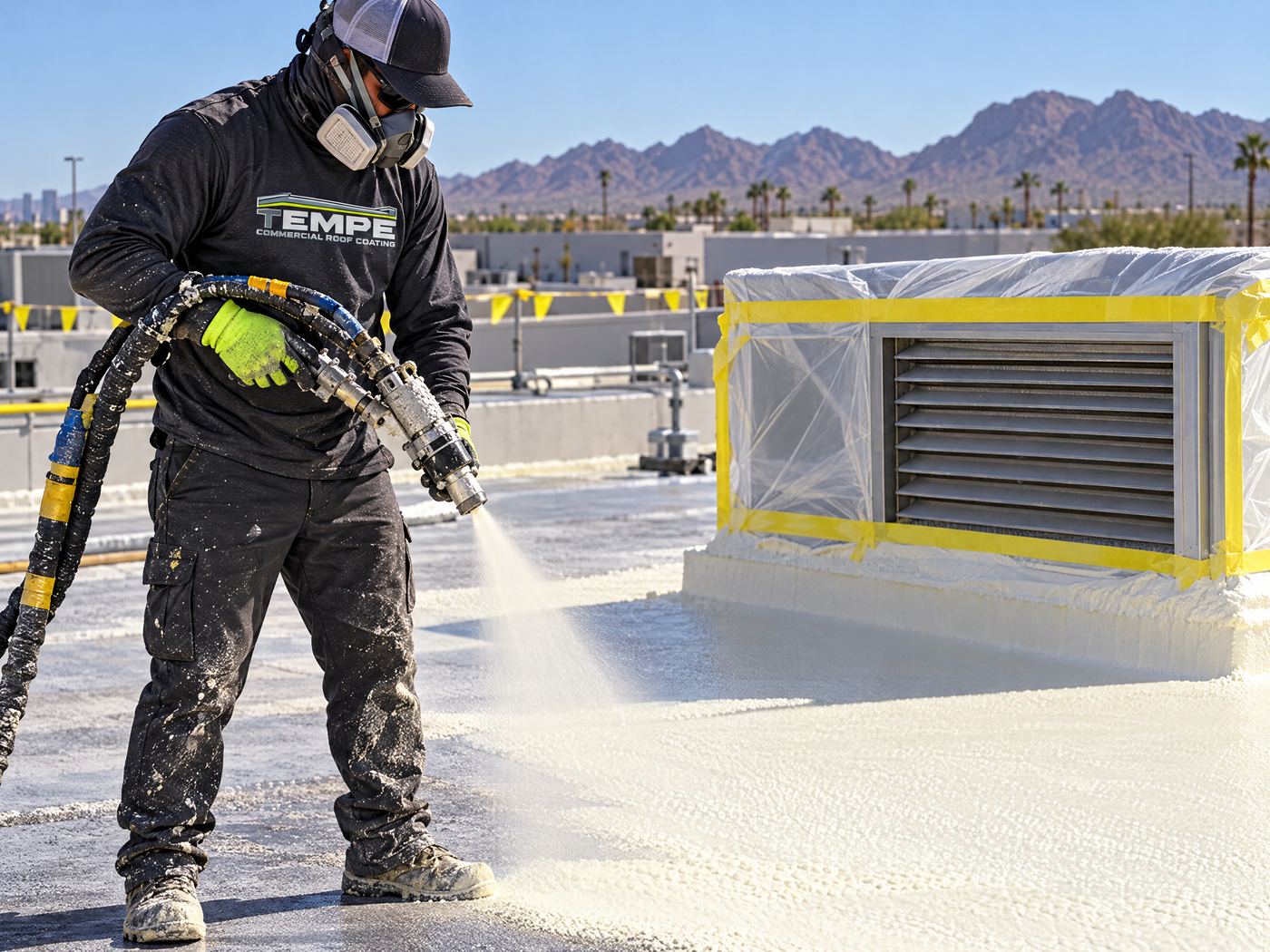
Spray Foam Roofing

Foam work depends on a dry substrate, strong adhesion, controlled thickness, and protection around HVAC intakes. Overspray planning matters wherever equipment, vehicles, or occupied areas sit below.

Best Fit: Dry commercial roof sections that can support foam preparation and a selected topcoat.

Explore Spray Foam Roofing

Echo

Granulated Courses

Shingle Roof Coating

Shingle coating begins with a narrow compatibility check. Granule loss, cracked tabs, lifted edges, flashing, and the shingle maker's guidance determine whether coating belongs in the plan.

Best Fit: Commercial shingle areas that pass the inspection, product, code, and repair review.

Explore Shingle Roof Coating
System Comparison

Which System Fits Which Roof

Use the table as a starting screen, without using the product as a shortcut. The roof substrate, moisture findings, connected details, and preparation results control the final system choice.

Commercial roof coating system comparison
SystemBest SubstrateMoisture CheckTypical UseRecoat Path
MetalSteel or metal panels with serviceable seamsCheck corrosion, condensation, open laps, and wet insulation at detailsPanel roofs, fastener lines, curbs, and penetrations after repairReview the installed metal system before adding a compatible recoat
SiliconeLow-slope membranes or compatible existing coatingsInvestigate ponding rings, trapped moisture, bleed-through, and seam conditionRestoration where surface adhesion and drainage details are addressedPlan future recoats with compatible silicone materials and preparation
AcrylicPrepared, dry roof surfaces with compatible acrylic conditionsCheck damp areas, roof fabric, flashing, and cure exposureReflective restoration on compatible commercial roof sectionsClean, inspect, and confirm compatibility before an acrylic recoat
Spray FoamDry substrates that can accept foam and a selected topcoatVerify substrate dryness and adhesion before sprayingContinuous slope shaping, insulation detail, and restoration zonesRepair damaged foam, confirm thickness, and renew the topcoat system
ShingleCommercial shingle areas that pass a compatibility reviewInspect cracked tabs, lifted edges, underlayment signs, and flashingLimited shingle restoration where maker guidance supports the workFollow the selected shingle system and reassess damaged courses first

Preparation Gate

Cleaning, adhesion checks, repairs, primers, fabric, or moisture control can change the system that fits.

Repair-First Conditions

Wet insulation, open structural damage, failed drainage, and loose roof materials need a repair decision before coating.

Mixed Roof Sections

A single building can need different systems. Inspect each section and the transitions between them.

Roof Decision

Several Roof Conditions At Once?

Call when metal corrosion, ponding, rooftop equipment, or mixed roof sections make a product-only decision risky.

Shared Work Sequence

How Commercial Roof Coating Moves From Inspection To Application

The same inspection-led sequence supports each system. The roof detail determines what changes inside each step.

  1. Alpha

    DAY 1

    Inspect Your Roof

    Map metal seams, fasteners, drains, penetrations, HVAC curbs, membrane laps, shingle courses, and visible ponding rings. Separate coating-ready sections from areas that need repair or further testing.

  2. Bravo

    SCOPE

    Set The Repair Boundary

    Address open seams, loose flashing, corroded panels, wet materials, damaged shingle tabs, and failed sealant before the main coating work. Confirm how roof sections connect at curbs, edges, and transitions.

  3. Charlie

    PREP

    Prepare The Substrate

    Clean the roof and select the required primer, fabric, adhesion check, moisture control, or detail repair. Protect drains, air intakes, skylights, equipment supports, and occupied areas during preparation.

  4. Delta

    COAT

    Apply The Selected System

    Use the approved application method for the roof layout and product. Control coverage around seams, curbs, penetrations, and edges, while staging spray, rolling, or brushing around access routes.

  5. Echo

    CHECK

    Review Roof Details

    Walk the coated areas, verify transitions and drainage points, and record product information, repairs, and maintenance needs. Keep the roof ready for future checks around equipment and traffic paths.

System Selection Questions

Questions Before You Choose A Coating

These answers cover common substrate, preparation, and operations questions owners ask before selecting a commercial roof coating service.

How Do You Choose a Coating for a Roof With Several Different Materials?

We assess each section separately. Metal, rubber membranes, asphalt-based roofing, and other surfaces can have different preparation and product requirements. We consider how the sections connect and select a compatible approach rather than assuming one product will work everywhere. ReviewCommercialRoofin.

Supplied FAQ Q12

Can Metal Roof Coating Address Rusted Panel Seams?

It can be part of the repair and restoration plan when the panels, seams, and fasteners remain compatible for preparation. Rust bloom, open laps, loose fasteners, and failed flashing need inspection first. Condensation should also be separated from a roof leak so the repair boundary matches the actual condition. ReviewCommercialRoofin.

When Does Silicone Fit A Low-Slope Commercial Roof?

Silicone fits a low-slope roof after the substrate, existing coating, drainage details, and moisture conditions are checked. Ponding rings, wet insulation, bleed-through, and weak adhesion change the preparation plan. A compatible system and a attached surface matter more than the coating label alone. ReviewCommercialRoofin.

What Does Acrylic Coating Need Before Application?

Acrylic coating needs a prepared surface, compatible moisture conditions, and attention to seams, flashing, and roof fabric. The work plan accounts for curing conditions and exposure to rain. Loose material, damaged details, and contaminated areas need cleaning or repair before the acrylic layer is applied. ReviewCommercialRoofin.

Why Does Spray Foam Require A Dry Substrate?

Spray foam relies on adhesion to the roof surface, so moisture at the substrate can affect the application. The inspection checks dryness, surface condition, thickness needs, and nearby HVAC intakes. Overspray controls also matter around vehicles, equipment, air handlers, and occupied building areas. ReviewCommercialRoofin.

Is Shingle Roof Coating Compatible For Every Commercial Shingle Roof?

No. Shingle coating has a narrower inspection gate than many commercial roof systems. We check cracked tabs, lifted edges, granule loss, flashing, underlayment signs, and the shingle maker's guidance. Repairs, code review, or replacement can be the more appropriate direction for a damaged shingle section. ReviewCommercialRoofin.

Can You Coat A Roof With Ponding Water?

Ponding needs investigation before a coating system is selected. We look for drainage restrictions, low areas, ponding rings, membrane condition, and moisture below the surface. Coating can be considered only after the roof section and its drainage details are compatible for the proposed system. ReviewCommercialRoofin.

What Affects The Choice Between Spraying And Rolling?

The product, roof layout, detail density, and conditions around the building all affect the application method. Open roof areas can support spraying, while curbs, penetrations, vehicles, and air intakes can call for rolling or brushing in selected zones. The method follows the roof and the system instructions. ReviewCommercialRoofin.
Next Roof Step

Get A Commercial Roof Coating Estimate

Share the roof surface, visible conditions, and building access details. We will start with the roof, then identify the coating service that fits.

Commercial roof coating in TempeCall Us