Seams And Fasteners
Open membrane seams, panel laps, loose fasteners, and rust blooms show where water entry or movement can begin.
We coat commercial roofs after checking the details that control preparation, repair, and system fit.
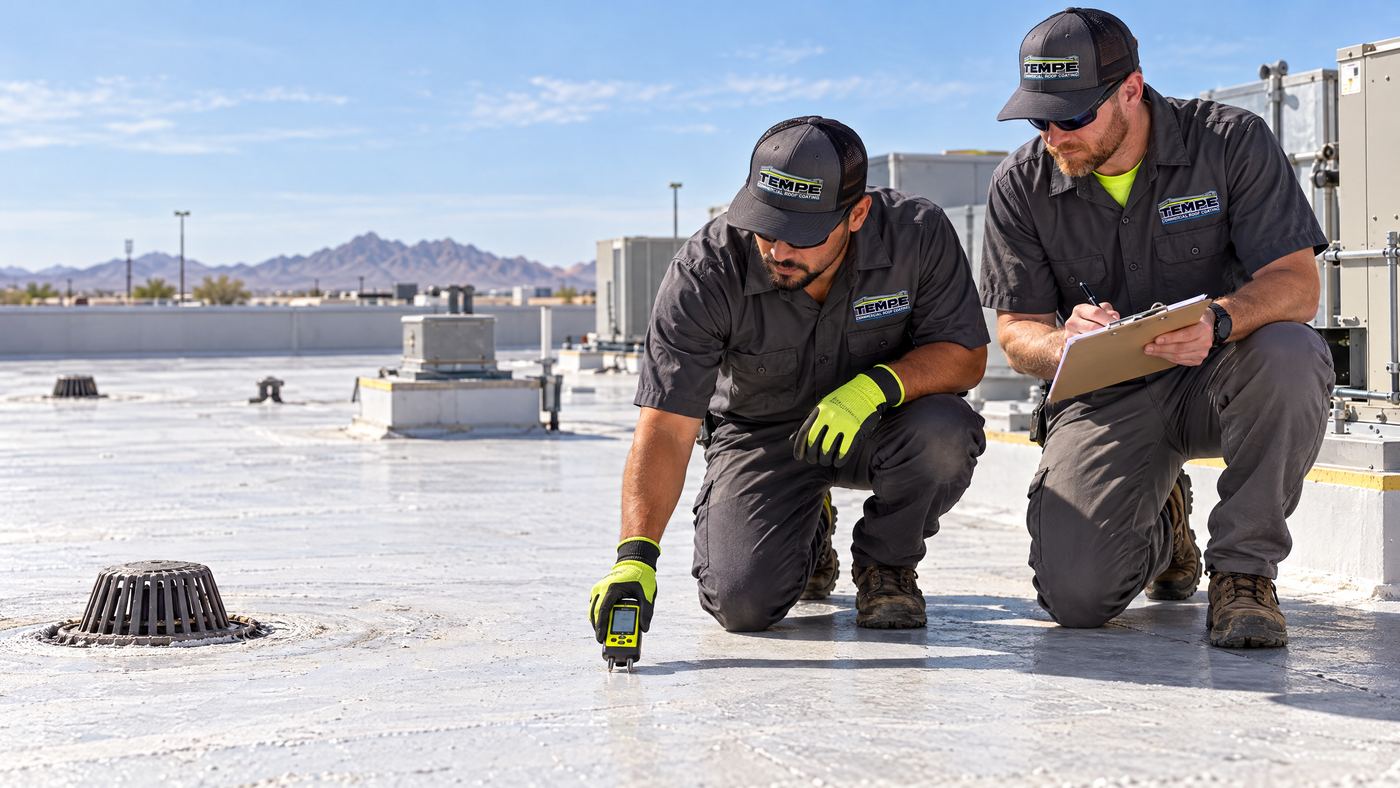
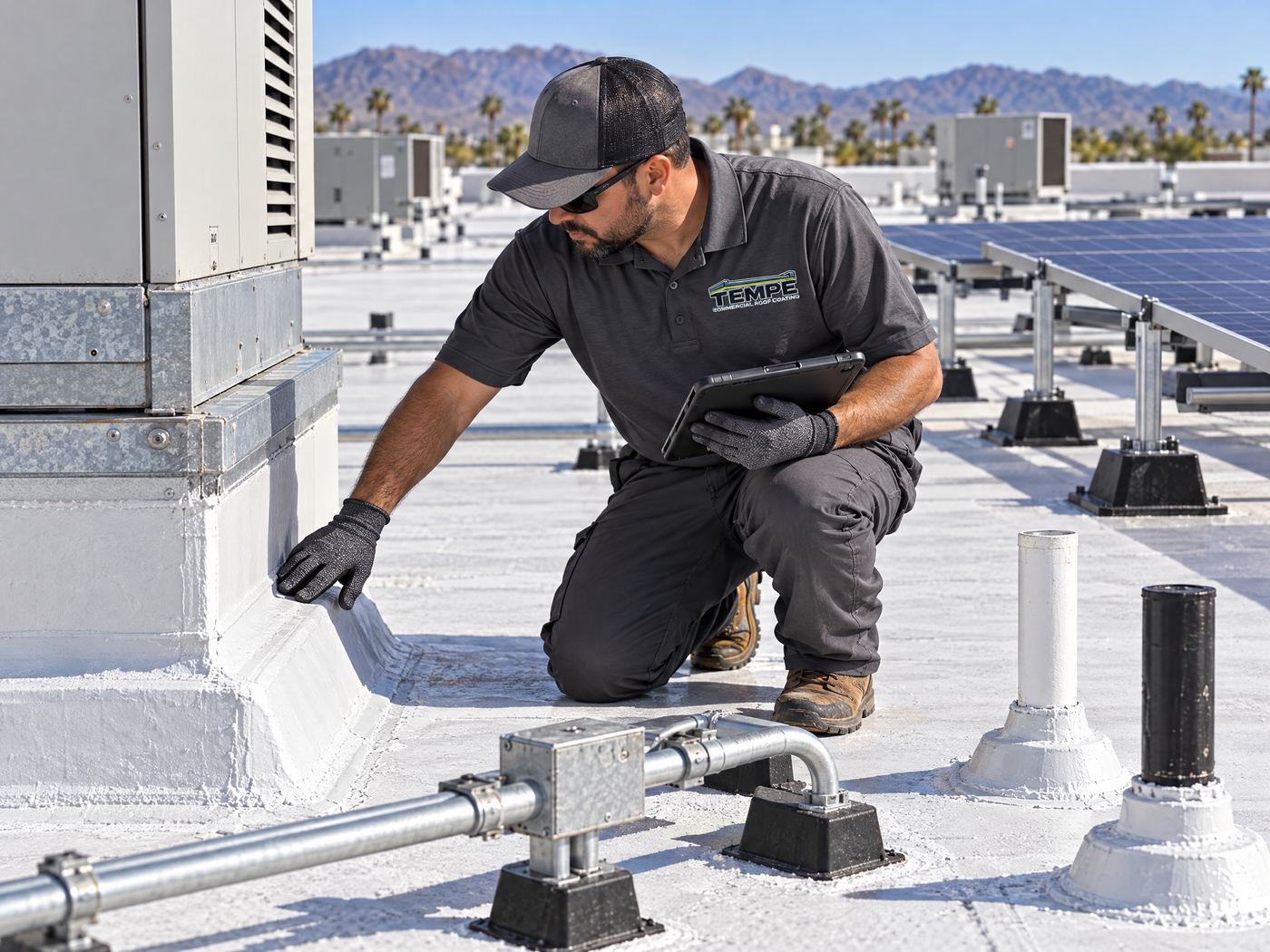
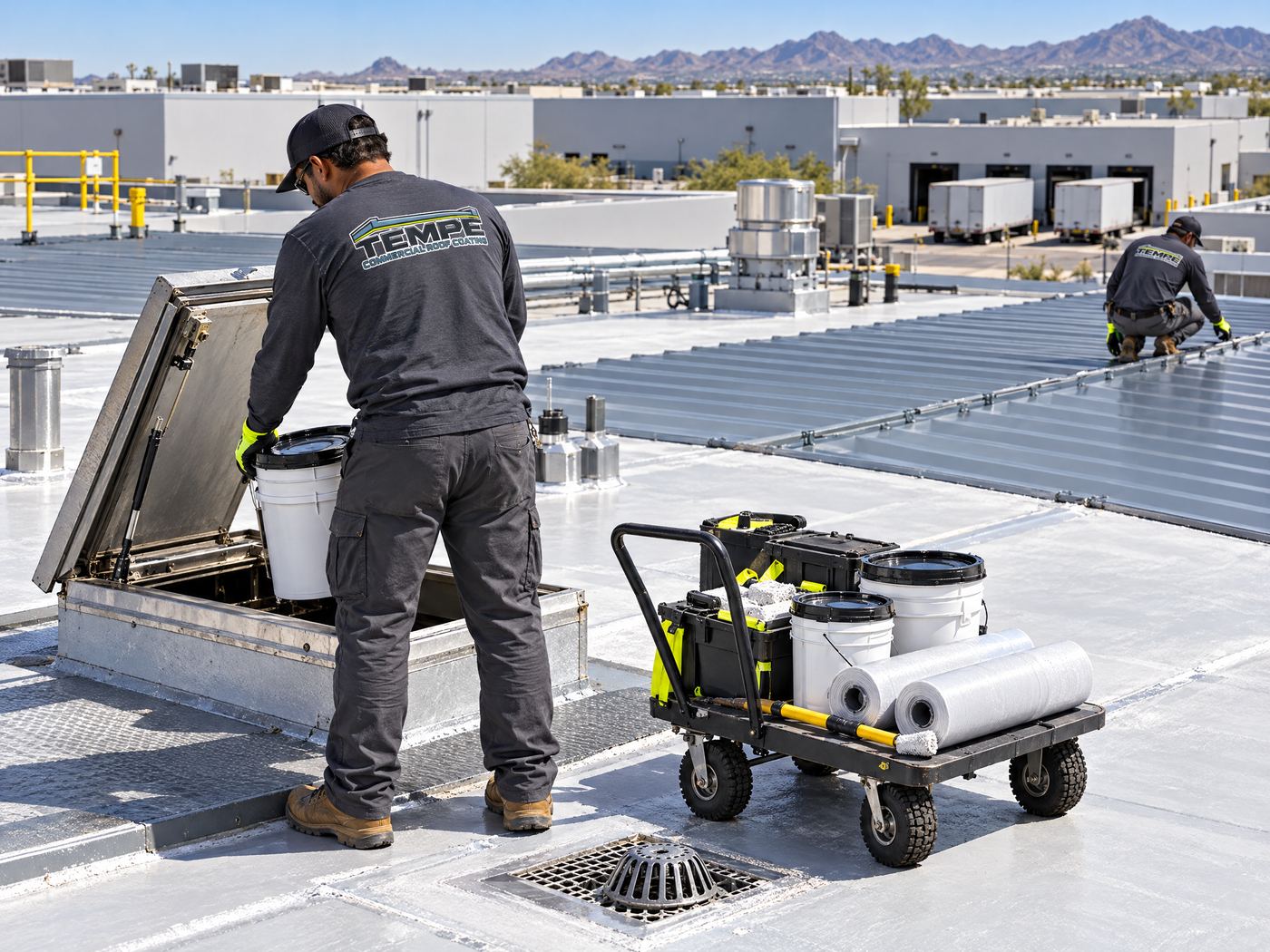
A coating decision follows the roof evidence. We inspect each section, record what needs repair, and then select a compatible commercial roof coating system.
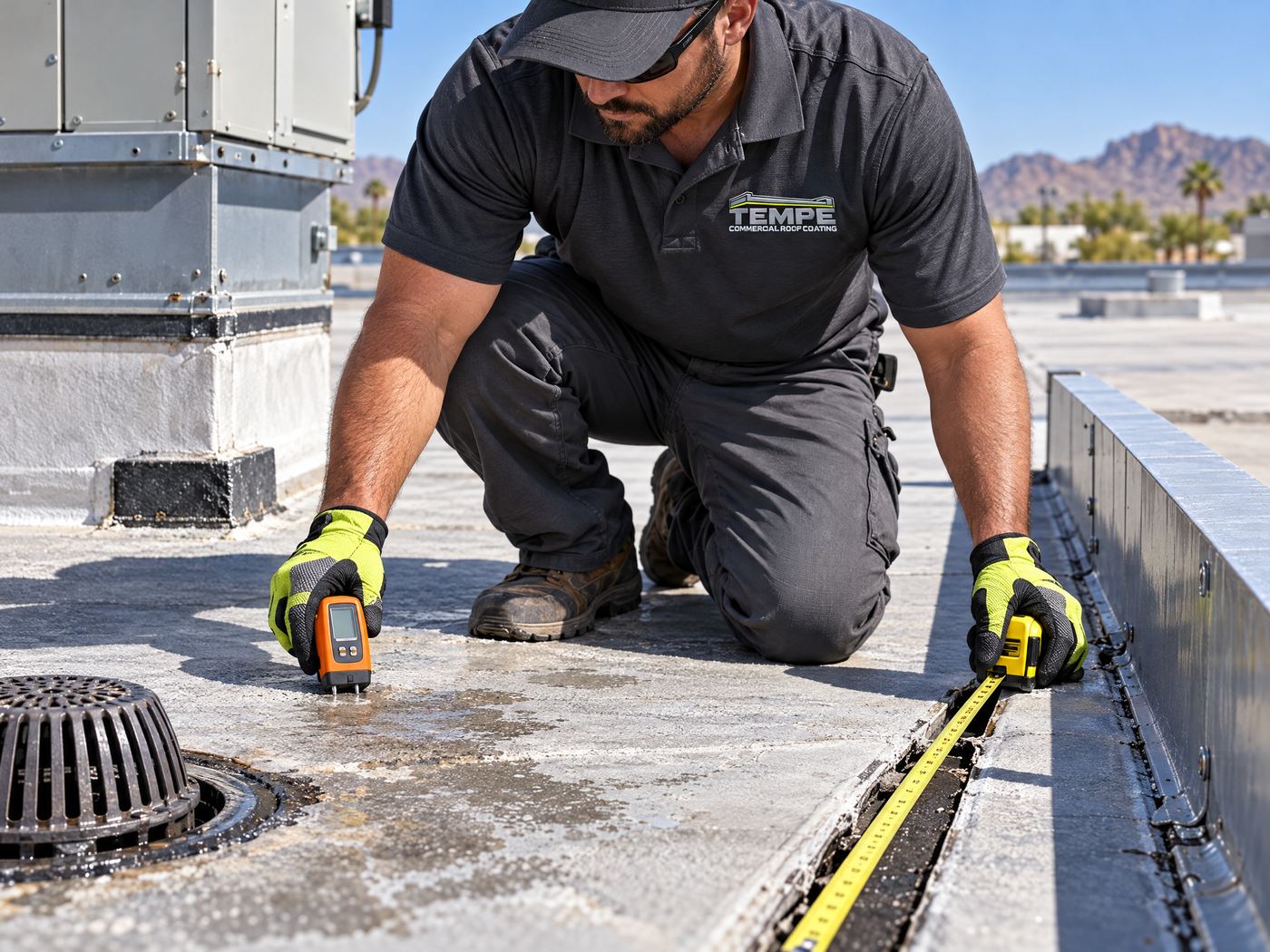
One building can contain several roof sections, repair histories, and materials. Metal panel laps, membrane seams, asphalt surfaces, and existing coatings each call for different preparation questions. We keep those sections visible instead of treating the roof as one uniform sheet.
Moisture, drainage, and attachment come before product selection. A soft area near a drain, a loose flashing edge, or a coating that is peeling from the substrate can move a section into repair-first work. A dry, attached surface with attached details can move toward coating preparation.
For a commercial roof coating estimate, use the commercial roof estimate request. Questions about records or an occupied building can go through the roof information request.
Recurring leaks, ponding rings, and wet insulation deserve a direct conversation about repair boundaries and coating suitability.
The inspection follows water paths, roof layers, and work constraints so each section has a defined next step.
Open membrane seams, panel laps, loose fasteners, and rust blooms show where water entry or movement can begin.
Wet insulation, soft spots, blistering, and interior ceiling stains can point below the visible roof covering.
Drain bowls, scuppers, overflow paths, and ponding rings reveal whether water can leave the roof after coating.
Pipe boots, conduit supports, skylight edges, and HVAC curbs receive a separate check for flashing gaps and sealant failure.
Parapet flashing, edge metal, expansion joints, and roof-height changes can set the boundary for repair work.
Peeling areas, chalking, unknown products, and weak adhesion determine whether cleaning, testing, or removal comes first.
Rooftop units, air intakes, service paths, tenant areas, and delivery routes affect staging and application controls.
For a commercial property owner, the useful result is a decision record that connects symptoms to work: a leak path to a penetration, a ponding mark to drainage, a failing lap to repair, or a worn field to preparation. That record helps compare coating, repair, and replacement conversations without forcing every roof into one answer.
An inspection-led roof coating decision begins with visible conditions and the building’s operating needs. We look at roof sections, material transitions, seams, fasteners, flashing, drains, scuppers, penetrations, and equipment paths before the product conversation takes over.
The same roof can contain areas with different next steps. A attached field can move toward preparation while an open seam, wet insulation, damaged curb, or corroded panel needs direct repair. Those boundaries belong in the scope so the property team knows what the coating is expected to cover and what it is not replacing.
Access is part of the roof work. Roof hatches, HVAC service paths, air intakes, loading areas, tenant schedules, security rules, and delivery routes can change the application sequence. Recording them early supports a practical plan around the commercial building.
Our copy on this overview does not promise a warranty, savings, schedule, or outcome. It explains the questions that make a commercial roof estimate useful: condition, compatibility, preparation, access, and the final review of roof details.
The same building can have both conditions. Each roof section gets a direction based on its surface, details, moisture, and drainage.
Coating follows the repair boundary, surface preparation, and product fit. Review the commercial roof coating FAQ for questions about records, equipment, drainage, and permits.
Bring the roof records you have, describe the leak pattern, and request an estimate for inspection-led commercial roof coating work in Tempe.
Roof Callback
Share your name and phone number. You can also call +1 (623) 310-0178 directly.