Commercial Roof Coating

Tempe Roof Coating

A coating decision starts with the existing roof, the product name comes after condition review. We look at seams, fasteners, drains, penetrations, and the materials below the surface before recommending the next step.

  • Open SeamsTrace panel laps and membrane joints before the coating layer covers them.
  • Loose FastenersCheck fastener heads, washers, and movement across metal roof panels.
  • Ponding RingsInspect standing-water marks around drains, scuppers, and low roof areas.
  • Roof PenetrationsReview flashing at HVAC curbs, pipes, conduits, and equipment supports.
  • Worn CoatingLook for peeling, exposed asphalt, blisters, and areas with weak adhesion.

Quick Facts

Service
Commercial roof coating
Primary Area
Tempe, Arizona
Systems
Five approved roof systems
First Step
Inspect the existing roof
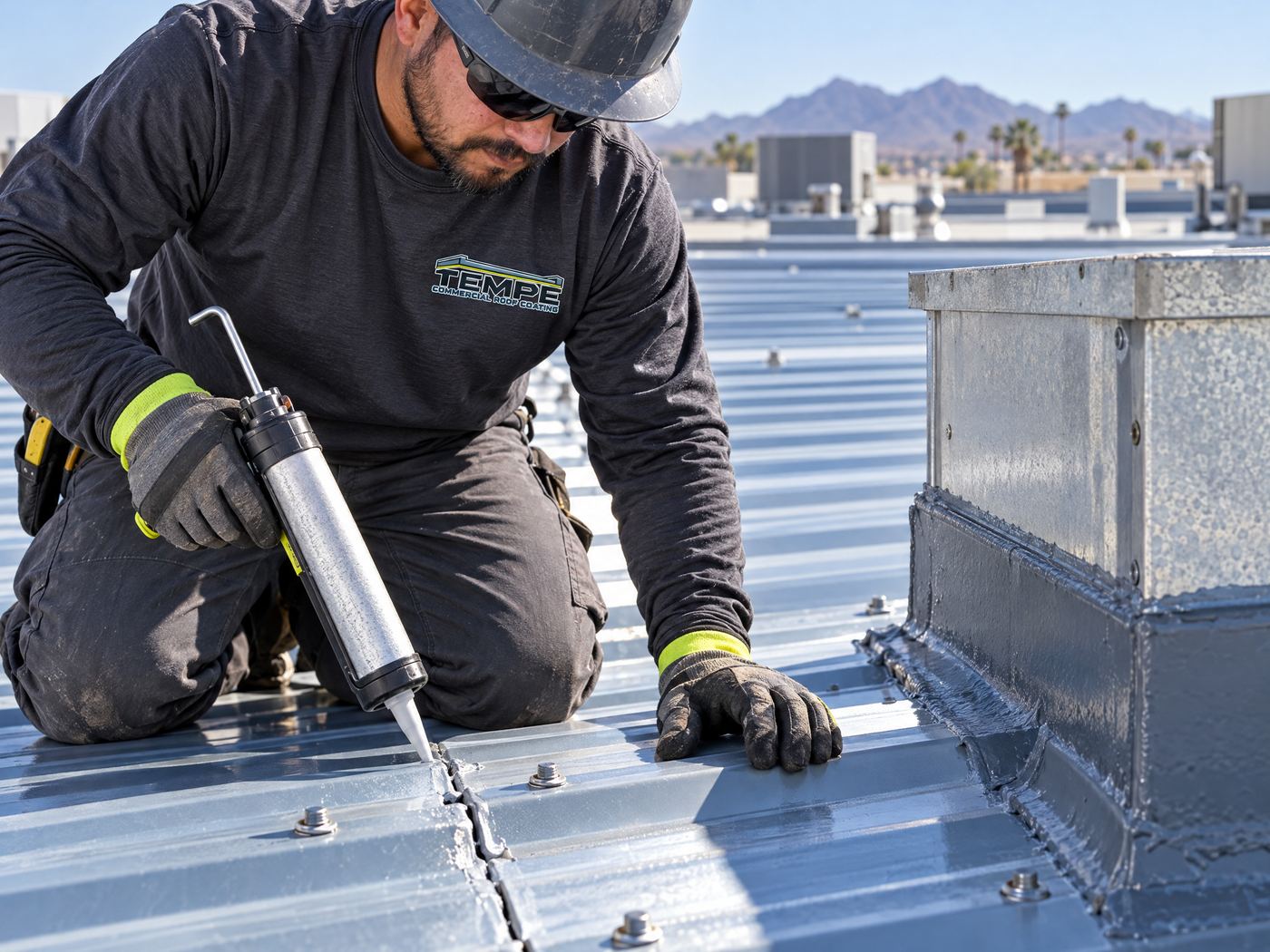
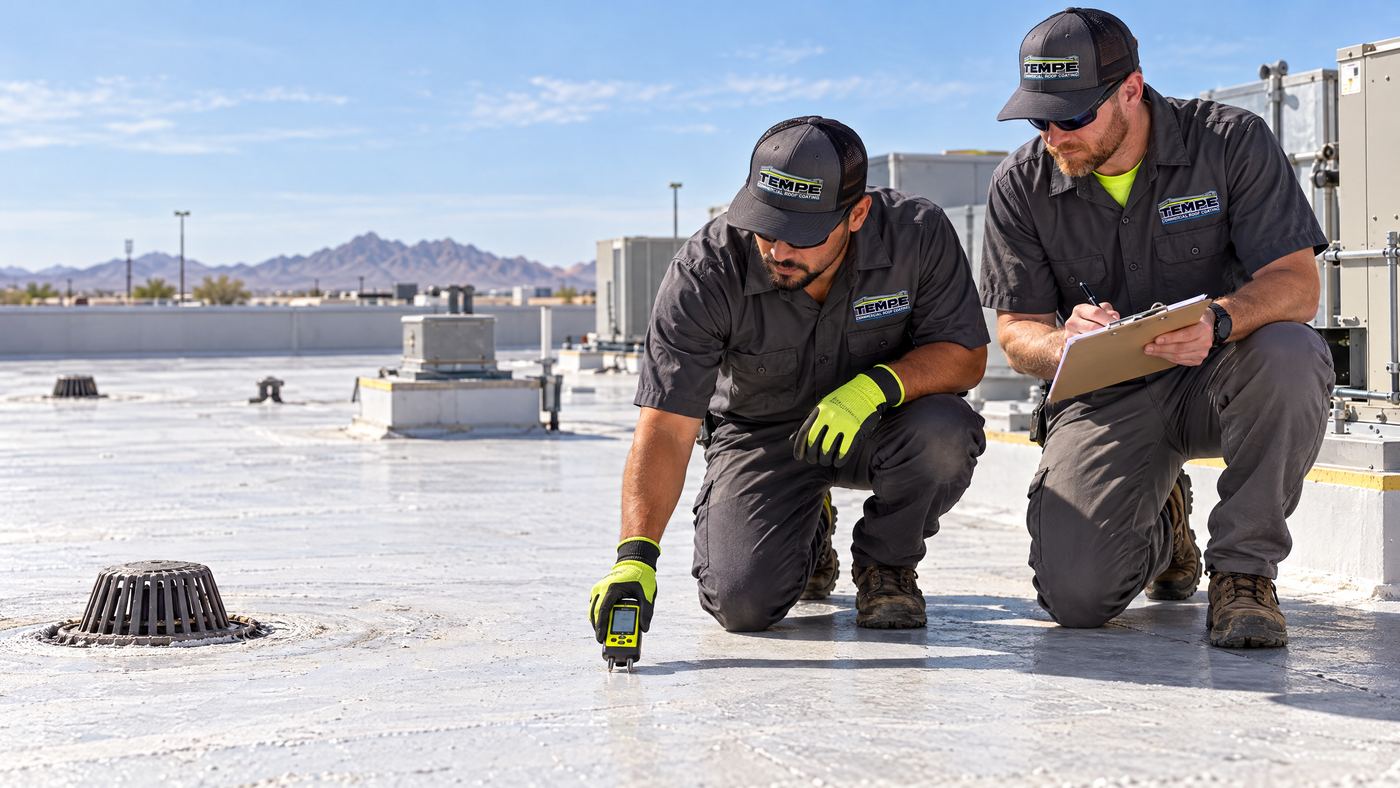
Commercial roof worker inspecting roof details in Tempe, Arizona
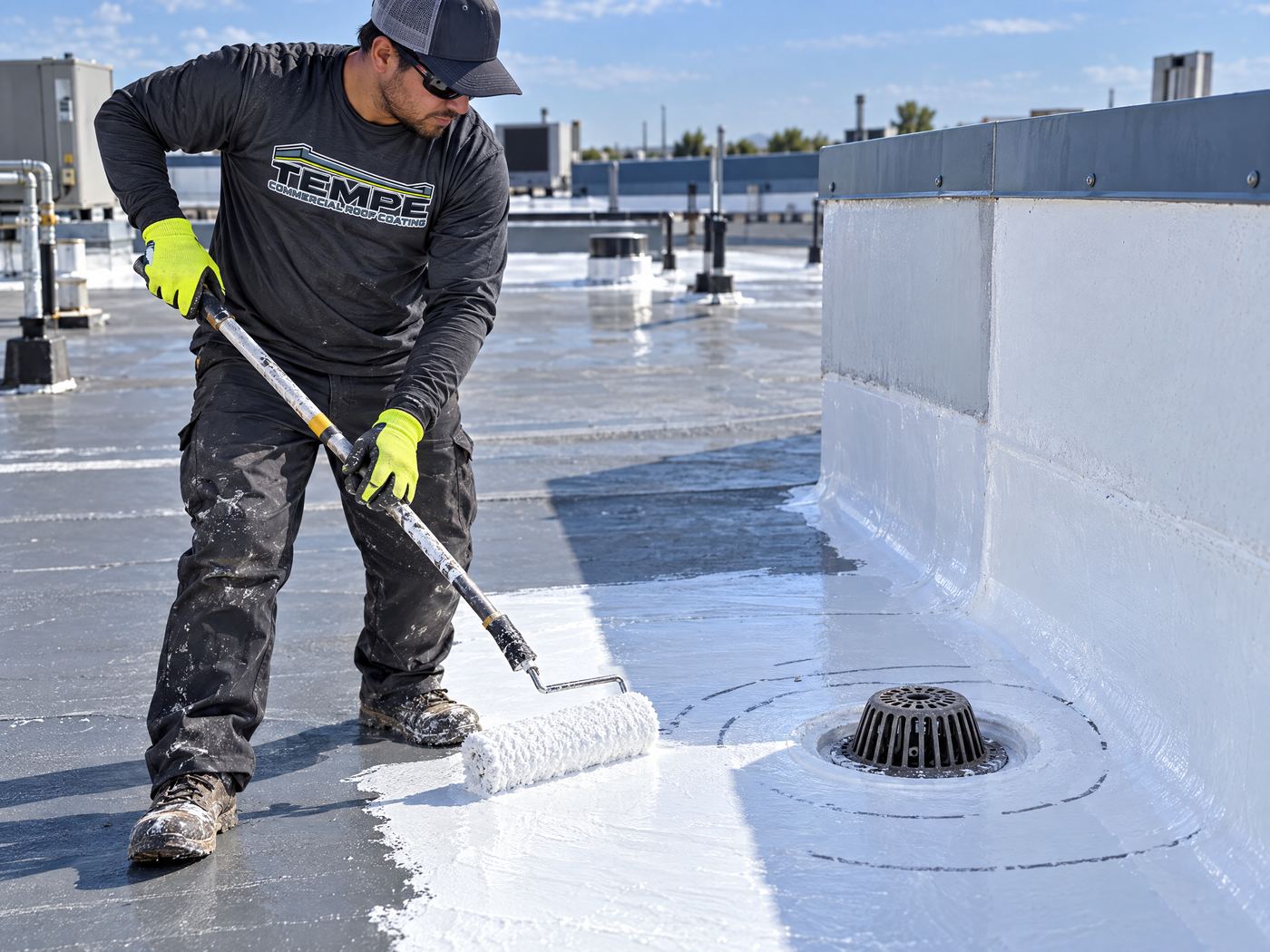
Commercial roof coating preparation around roof seams and flashing
Commercial roofing worker coordinating rooftop equipment access
Roof Decision Facts

Four Details Set The Direction

These roof details shape the work sequence and the coating choice.

  • Roof SectionsDifferent materials need separate checks.
  • DrainageDrains and scuppers stay accessible.
  • AccessHVAC curbs affect staging and detail work.
  • SurfaceAdhesion and moisture guide preparation.
Roof Suitability

Should You Repair, Restore, Or Replace?

Coating fits a roof that can accept preparation and a compatible system. Repair-first conditions belong in the scope before any broad application.

Coating Candidate

  • Membrane or panels remain attached around seams.
  • Fasteners, laps, and flashing can be repaired.
  • Insulation and roof deck show acceptable moisture conditions.
  • Drains and scuppers can carry water away.
  • Existing coating has enough adhesion for testing.

Request A Roof Estimate

Repair First

  • Open seams allow water below the roof surface.
  • Wet insulation sits beneath ponding rings or stains.
  • Loose HVAC curb flashing exposes the roof assembly.
  • Deck damage, severe corrosion, or displaced panels needs attention.
  • Unknown coating layers require compatibility checks.

We define these repairs before selecting a coating system.

Replacement Discussion

  • Structural deck damage changes the roof scope.
  • Widespread membrane failure limits restoration work.
  • Metal panels have severe section loss or movement.
  • Drainage changes require a separate design review.
  • Repeated repairs leave too little attached roof to coat.

A coating estimate should identify when another roof decision is more appropriate.

Inspection Sequence

From Roof Inspection To Coating

The work follows the roof condition. Each stage records a concrete detail before the next stage begins, so preparation and product selection stay tied to the building.

  1. Alpha

    DAY 1

    Inspect Your Roof

    We walk each roof section, trace leaks, check panel laps and membrane seams, inspect drains, and note HVAC curbs, pipe flashing, and equipment access.

  2. Bravo

    SCOPE

    Define Repairs

    Loose fasteners, open seams, damaged flashing, ponding edges, and wet materials receive a clear repair boundary before surface preparation starts.

  3. Charlie

    PREP

    Prepare The Surface

    Cleaning removes dirt and loose material around seams, drains, and penetrations. Adhesion, moisture, primer, and detail-fabric needs are checked for the selected system.

  4. Delta

    COAT

    Apply The System

    Coating is applied to the prepared roof with attention to coverage, specified thickness, edge metal, curbs, pipe bases, and areas around rooftop equipment.

  5. Echo

    CHECK

    Review Roof Details

    We review the finished surface at seams, flashing, drains, scuppers, penetrations, and access paths, then record care items for the facility team.

Seams, drains, curbs, and penetrations stay visible in the work sequence.

System Comparison

Commercial Roof Coating Options for Tempe

The roof substrate, moisture condition, and detail layout narrow the system choice. Use this comparison as a starting point, then confirm fit during inspection.

Commercial roof coating system comparison
SystemBest SubstratePonding ToleranceTypical UseRecoat Path
Metal Roof CoatingMetal panels with repairable laps and fastenersDrainage must be addressed firstRust bloom, panel seams, exposed fastenersCompatible metal system after preparation
Silicone Roof CoatingPrepared low-slope membranes and compatible coatingsReview ponding rings and moisture belowLow-slope restoration and water-exposed areasSilicone-compatible recoat after adhesion checks
Acrylic Roof Coatingattached, dry roof surfaces with repairable wearDrainage and cure conditions remain importantWorn coating, exposed asphalt, reinforced detailsCompatible acrylic maintenance coats
Spray Foam RoofingDry, prepared substrates that accept foamRoof slope and drainage still require reviewUneven surfaces, insulation transitions, detail workProtective topcoat selected for the foam system
Shingle Roof CoatingCommercial shingle assemblies approved for coatingFlashing and drainage must remain functionalShingle wear, exposed fasteners, granule concernsManufacturer and system guidance controls recoating

A mixed roof can require separate preparation and products for metal, membrane, asphalt, or shingle sections. We inspect the connections between sections before proposing one approach.

Qualified Roof Benefits

Benefits of Coating Your Roof

A suitable coating system can support a planned commercial roof program when the roof is repaired, prepared, and maintained around its real details.

Office BuildingsRetail CentersIndustrial FacilitiesMulti-Tenant PropertiesEquipment-Heavy Roofs

Protect Prepared Seams

Reinforced seams and repaired laps give the coating a attached detail to cover across metal panels or membrane sections.

Keep Details In View

A defined coating scope keeps drains, scuppers, HVAC curbs, and pipe flashing in the maintenance conversation.

Support Roof Access

Walk paths and equipment zones can be considered in the system scope instead of treating the roof as an empty surface.

Plan Around Operations

Separate roof sections, loading routes, tenant access, and rooftop equipment can guide a phased application sequence.

Roof Warning Signs

Problems That Need A Roof Decision

Visible roof symptoms point to different actions. Use the severity labels to separate items for observation from details that need repair before coating.

  • Watch

    Worn Surface Coating

    Chalky or peeling coating around roof drains and field seams can signal surface wear and a need for adhesion checks.

  • Watch

    Small Ponding Rings

    Dark rings near scuppers or low roof areas show where water remains after drainage, cleaning, or weather events.

  • Repair First

    Open Panel Laps

    Separated metal laps and exposed fasteners create entry points that a broad coating pass cannot replace.

  • Repair First

    Failed Penetration Flashing

    Gaps at pipe bases, conduit supports, and HVAC curbs need detail repairs before the main roof surface is coated.

  • Repair First

    Wet Insulation

    Soft areas, ceiling stains, and moisture below the membrane change the scope and require investigation before restoration.

  • Call Now

    Active Interior Leaks

    Recurring water at ceiling tiles, walls, or equipment rooms needs a roof inspection that traces the source, beyond the stain.

Active Roof Trouble

Water Standing On Your Roof?

Call when ponding, open seams, or a penetration is sending water into an occupied commercial building.

+1 (623) 310-0178Call Us
Approved Coverage

Commercial Roof Coating Across Tempe Areas

We serve commercial properties across Tempe and the approved nearby areas below. Each roof still receives a site-specific review of access, sections, drainage, and equipment.

Tempe commercial roof coating coverage corridor, not to scaleA not to scale corridor showing Tempe Lake, Discovery District, Tempe, Tempe Maker, Ahwatukee Foothills, South Mountain, and Guadalupe.Tempe LakeAhwatukee FoothillsTempeTempe MakerSouth MountainGuadalupe

Coverage schematic.

Tempe's innovation-hub framework identifies commercial, industrial, manufacturing, office, and research areas. Those building uses can bring different roof access and equipment questions to the inspection.

View All Tempe Service Areas

Roof Coating Answers

Questions Tempe Facility Managers Ask

Clear answers help you separate coating work from repairs, equipment coordination, drainage review, and replacement decisions.

Will Roof Coating Stop Every Leak On The Building?

No. Coating is part of a roof restoration system, works alongside repairing every source of water entry. Leaks can originate from damaged flashing, open seams, drains, penetrations, or wet materials beneath the surface. Those issues must be identified and addressed as needed. ReviewTempeRoofCoating.

Can A Roof With Several Materials Use One Coating?

It depends on the roof sections and the connection details. Metal panels, rubber membranes, asphalt-based roofing, and shingle assemblies can need different preparation and products. We inspect each section, check the transitions, and set a compatible scope instead of applying one product across every material. ReviewTempeRoofCoating.

What Makes A Roof Compatible For Coating?

A compatible roof has enough attached, repairable material for cleaning, preparation, and coating. We check seams, fasteners, flashing, drains, penetrations, insulation, and the deck where accessible. Widespread wet materials, severe corrosion, or structural damage can move the decision toward repair or replacement. ReviewTempeRoofCoating.

Can You Coat Around HVAC Curbs And Pipe Supports?

Yes, those details belong in the inspection and preparation scope. We check curb edges, pipe bases, conduit supports, sealants, and nearby roofing for gaps or water entry. Equipment replacement plans should be shared before coating because later work can disturb a finished surface. ReviewTempeRoofCoating.

Should Drains And Scuppers Be Checked Before Coating?

Yes. Drains, scuppers, overflow paths, and nearby ponding rings need review before application. A coating surface cannot compensate for blocked or damaged drainage. We keep these openings functional and identify drainage work that sits outside the coating layer. ReviewTempeRoofCoating.

Can A Commercial Roof Be Coated In Separate Phases?

Sometimes. Separate phases can help coordinate tenant schedules, equipment access, loading areas, and roof sections with different preparation needs. The sequence depends on the roof layout, weather conditions, and how the selected system must be applied and cured across connected areas. ReviewTempeRoofCoating.
Commercial Roof Estimate

Choose The Next Roof Step

Bring the roof condition, access needs, and system questions into one commercial coating estimate.

Commercial roof coating in TempeCall Us