Busy Equipment Zones
HVAC curbs, pipe supports, and service paths need clear access. Mark the equipment area before staging so technicians can reach the curb flashing after coating.
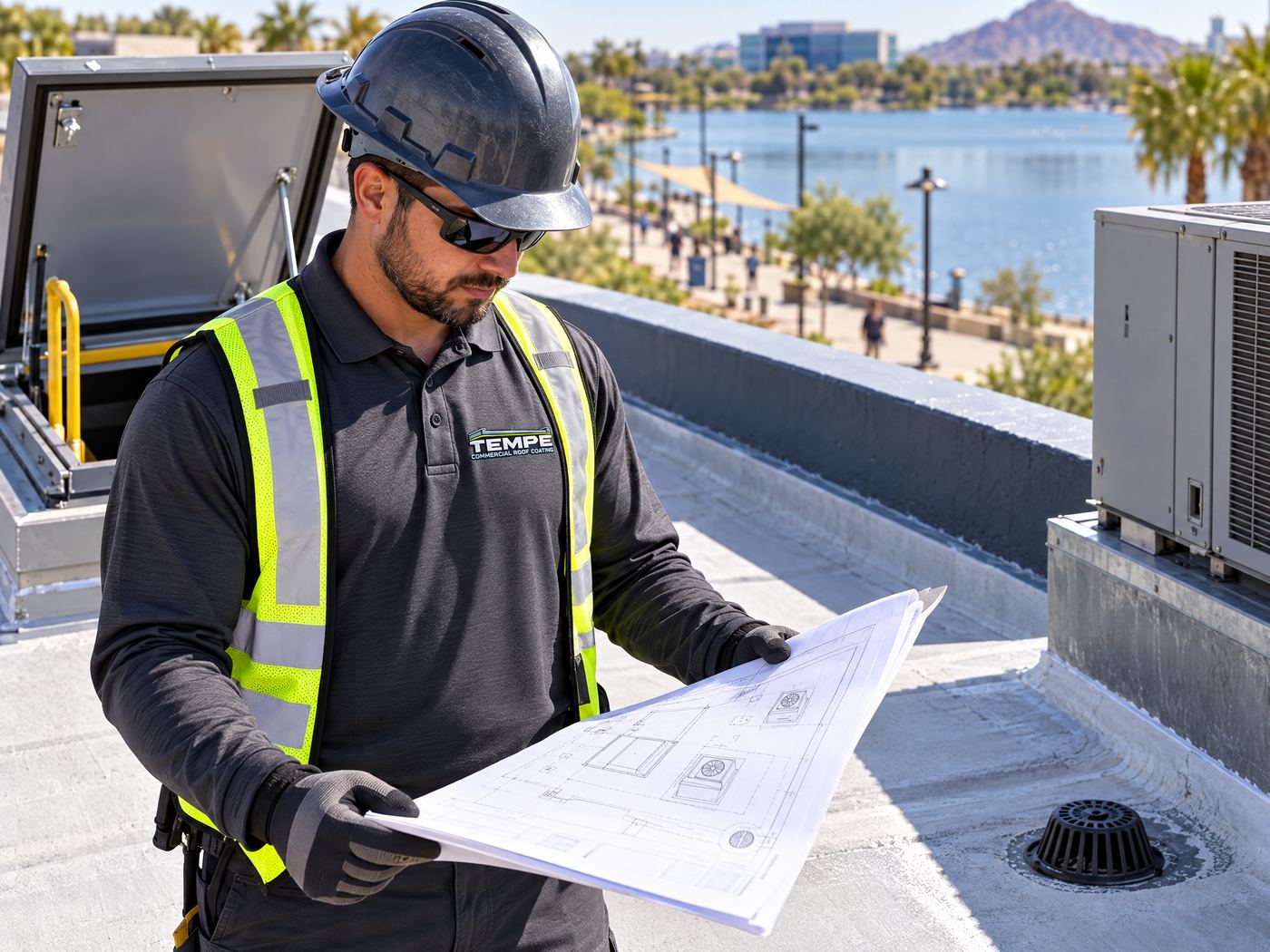
Tempe Lake roof coating calls for a roof plan that respects active properties, public paths, delivery routes, and the condition of each roof section.
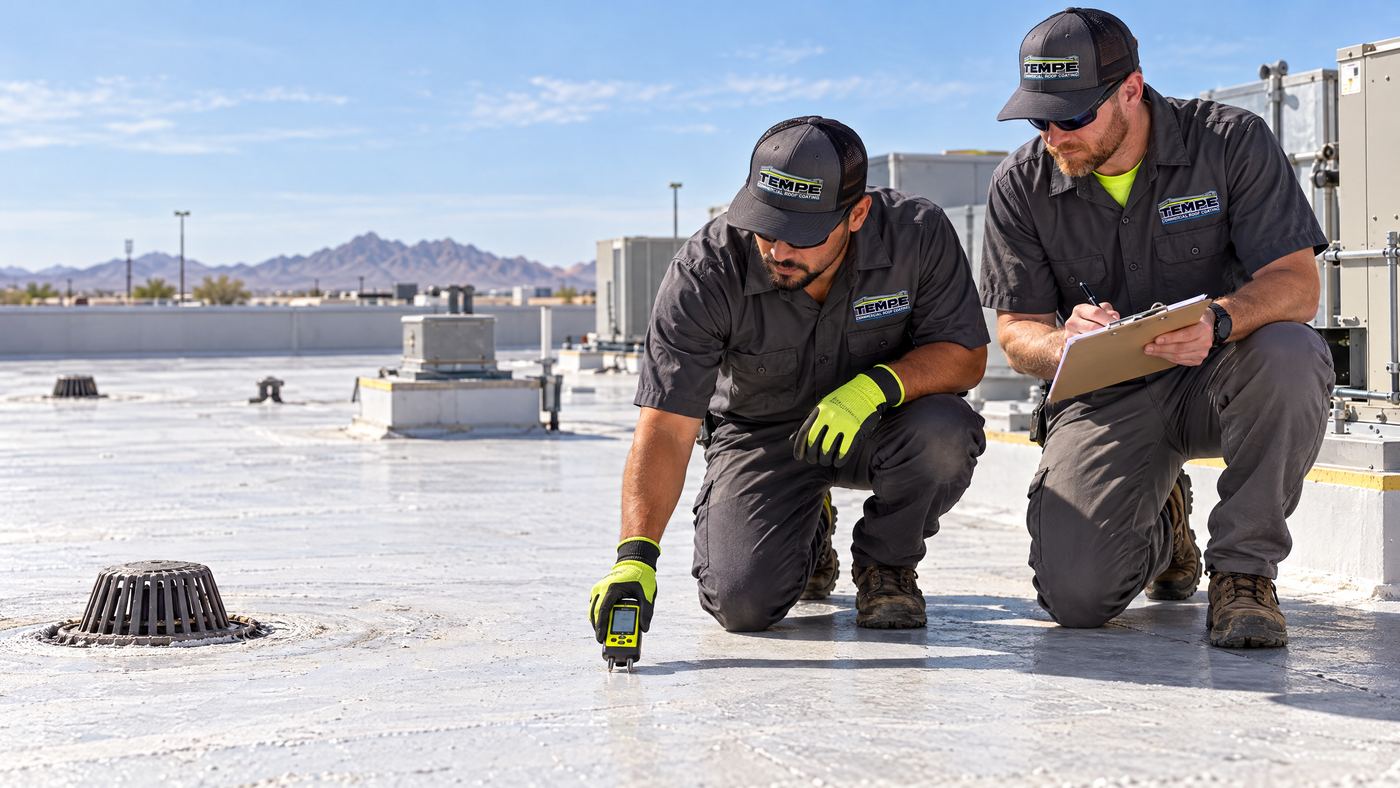
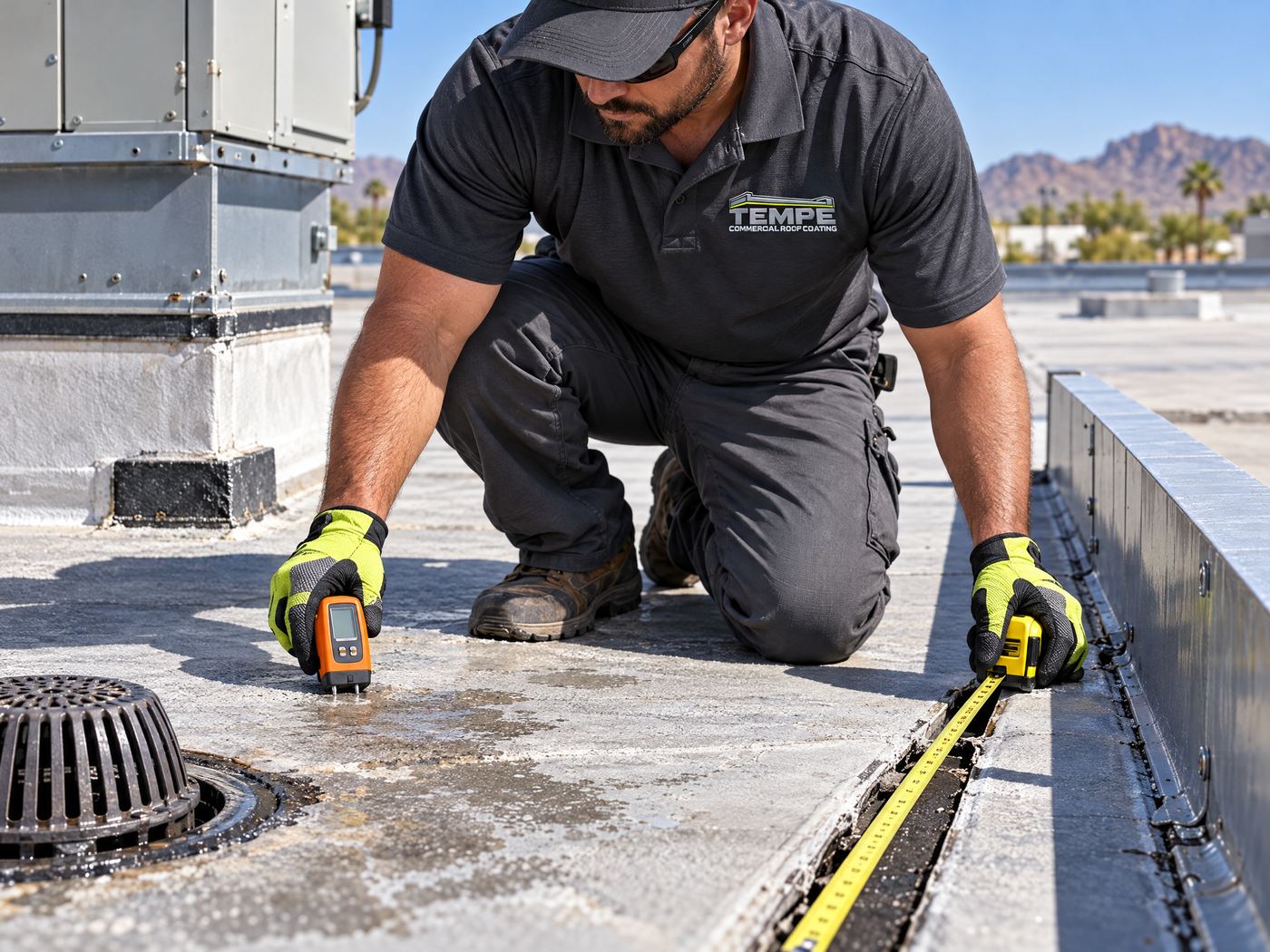
The City of Tempe describes Tempe Town Lake as more than two miles long, between Priest Drive and McClintock Drive, with more than 40 annual special events and more than 40,000 surrounding workers. Plan roof access and staging accordingly.
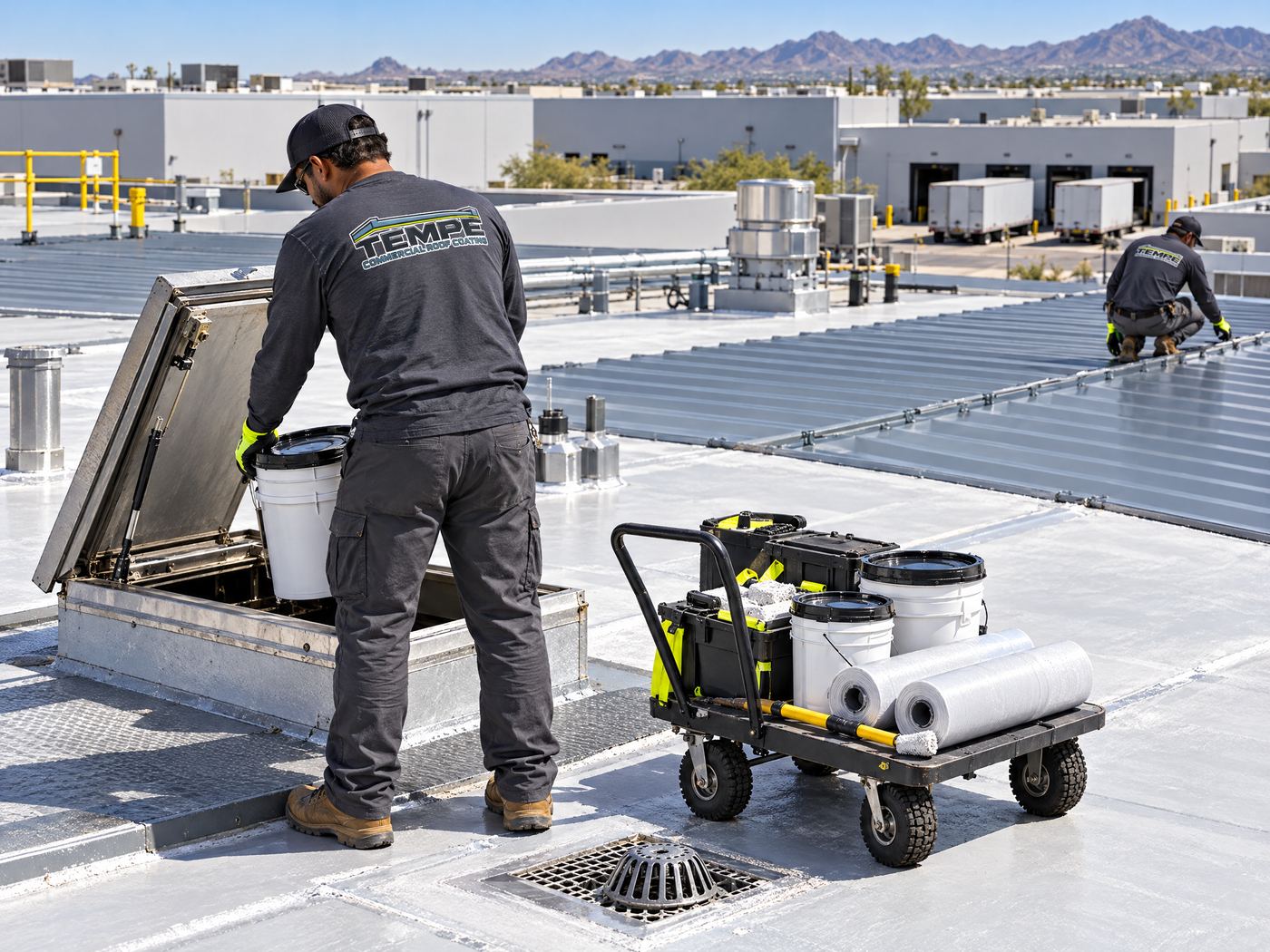
Start with the property’s working routes. Identify roof hatches, loading areas, pedestrian-facing entrances, delivery lanes, and restricted zones before equipment or coating materials move.
We coat the roof that can be prepared safely and identify repair-first areas before application begins.
Access planning works best when it follows visible roof conditions. Use these severity markers to separate items that need monitoring from details that need repair before coating.
HVAC curbs, pipe supports, and service paths need clear access. Mark the equipment area before staging so technicians can reach the curb flashing after coating.
Parapets, edge metal, and roof access above entrances can affect ground-level movement. Include those edges in the work boundary and final roof review.
Open panel laps, membrane seams, and loose flashing can allow water entry. Repair and reinforce those details before the main coating covers the roof field.
Blocked drains, damaged scuppers, and ponding rings need attention before coating. Keep primary and overflow drainage paths open through preparation and review.
Recurring stains below a curb, penetration, or roof joint point to a water-entry question. Trace the detail before coating and separate active leaks from roof-field wear.
Security checkpoints, escort rules, and closed delivery lanes can change how crews reach the roof. Share those conditions before planning material movement around public activity.
A coating project can support a suitable commercial roof when preparation, repairs, and access controls match the building’s actual conditions.
Marking roof hatches, parapets, equipment curbs, and public-facing edges gives preparation and application a clear work boundary.
Inspecting drains, scuppers, overflow paths, and ponding rings keeps drainage questions in the roof decision instead of covering them with coating.
HVAC curbs, pipe supports, and service paths stay identified so coating work respects future maintenance access and the roof details around equipment.
Separate roof materials, open seams, flashing, and repair areas can receive the preparation and coating approach each section requires.
The roof substrate and its visible details determine which coating conversation belongs next. Each service below starts with inspection and preparation.
Alpha
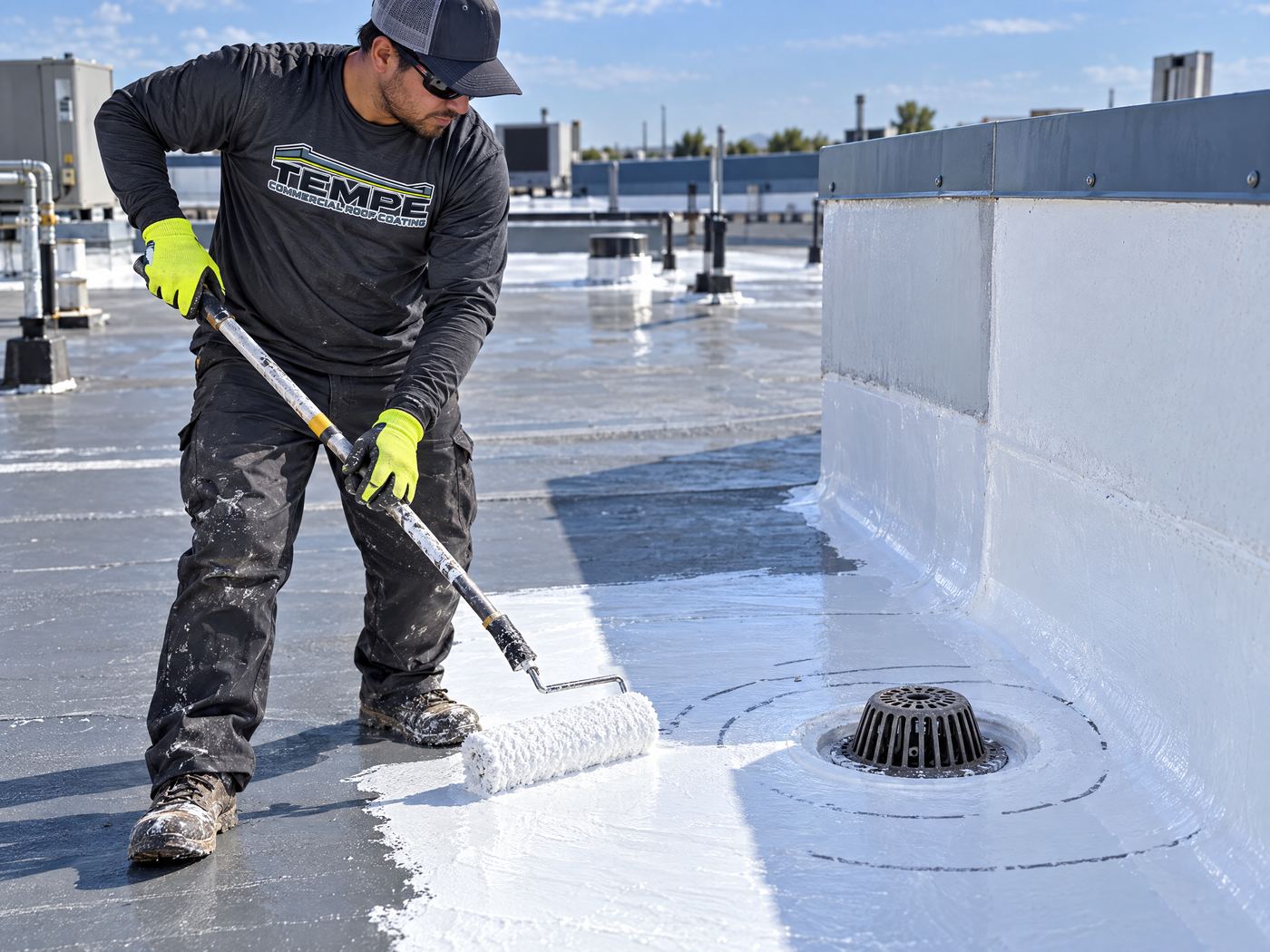
Low-slope roof areas with ponding rings, seams, or a compatible existing coating need moisture and adhesion checks before silicone application.
Silicone roof coating for low-slope roofsBravo
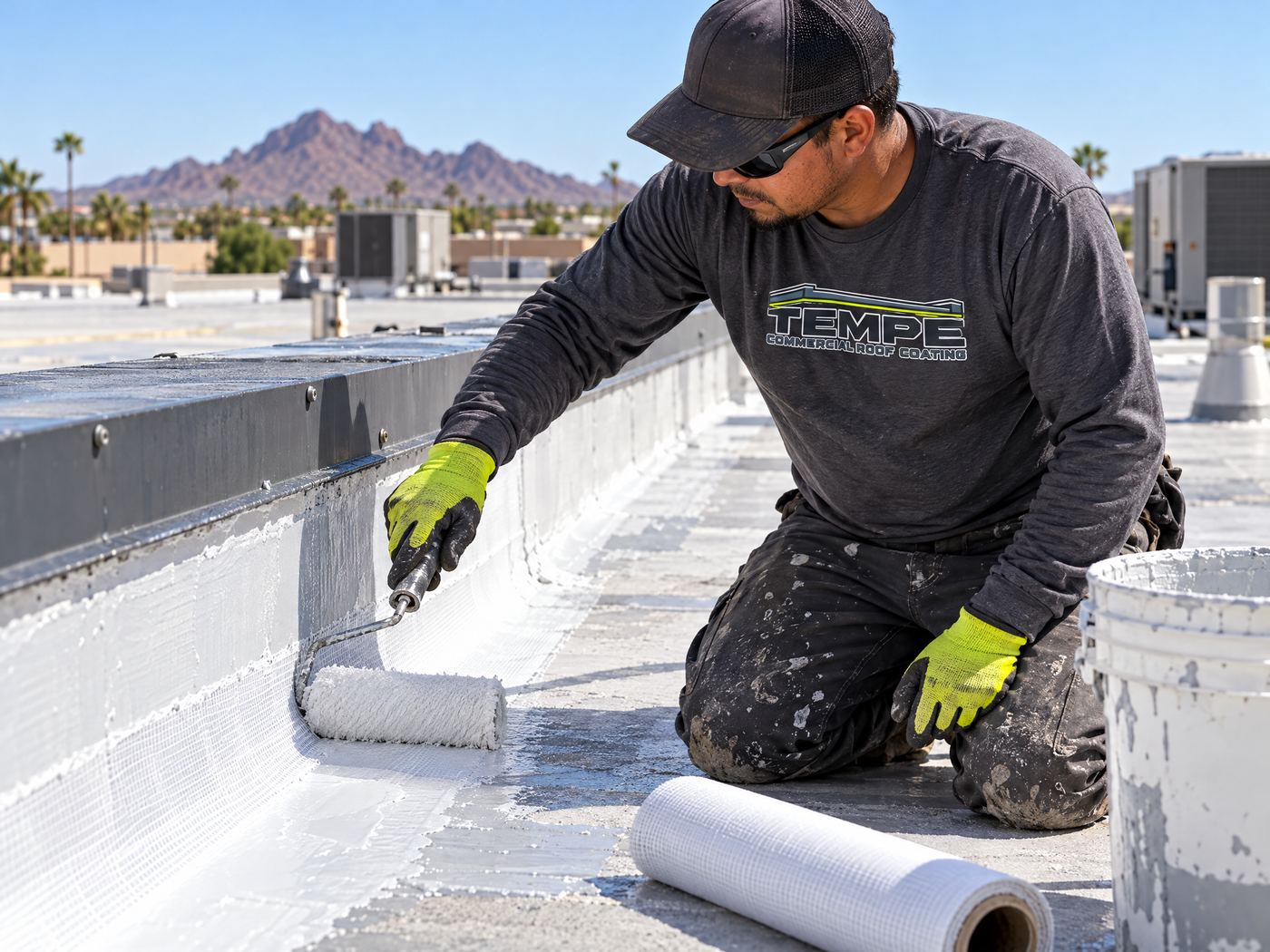
Worn coating, exposed detail fabric, and weather-sensitive roof edges require a dry substrate and a product-specific cure review before acrylic work.
Acrylic roof coating for prepared surfacesCharlie
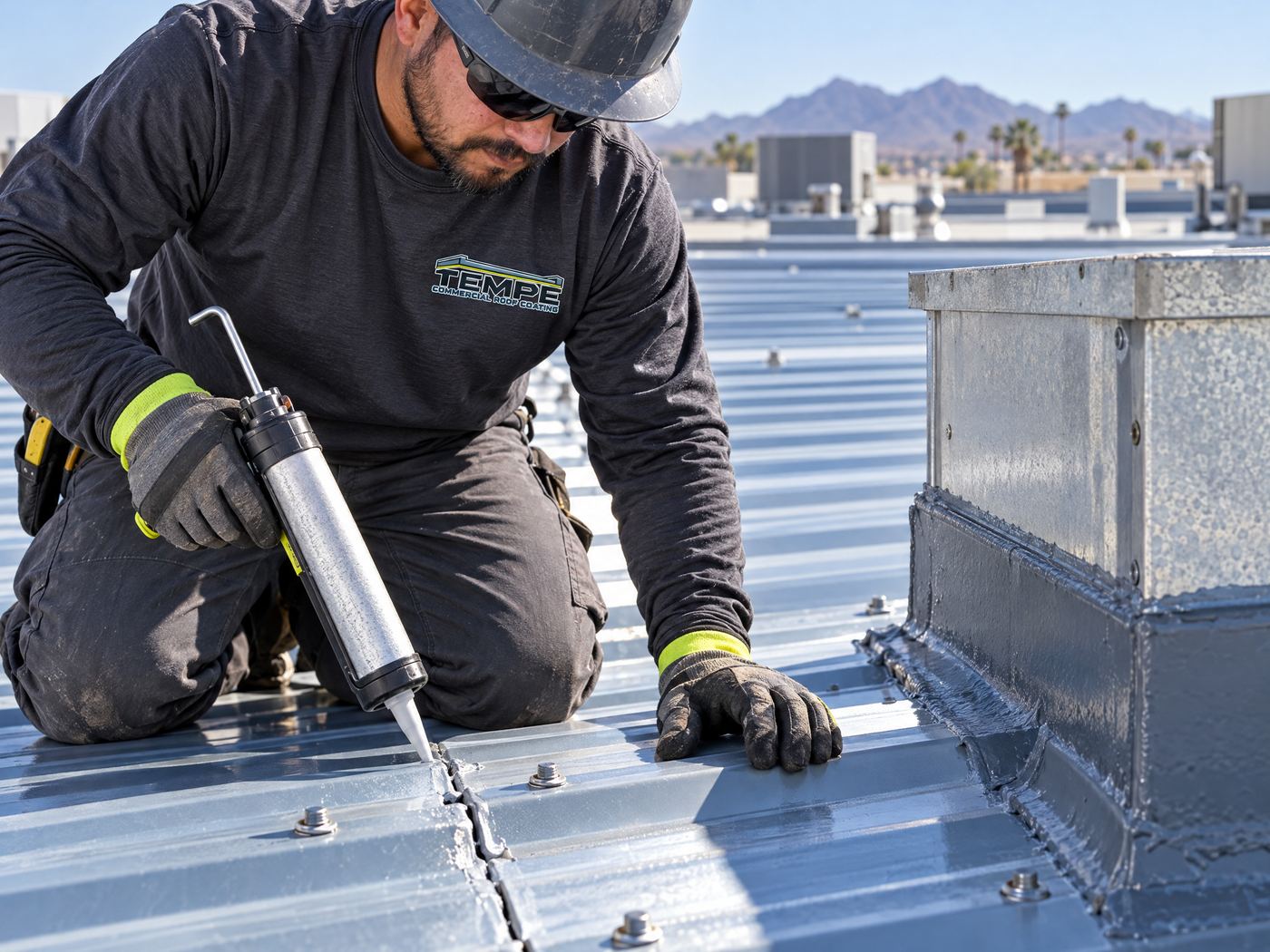
Rust bloom, open panel laps, loose fasteners, and pipe flashing guide the repair and primer steps before a metal roof coating is applied.
Metal roof coating for panel detailsCall before roof access, delivery movement, drainage work, or public-facing operations become part of an urgent roof decision.
The work sequence keeps roof condition, public access, and application details together from the first inspection through the final review.
Alpha
1Trace roof access, open seams, ponding rings, drains, scuppers, flashing, HVAC curbs, and visible water-entry points across each commercial roof section.
Bravo
2Separate loose flashing, damaged seams, failed sealant, wet materials, and blocked drainage from roof areas that can move toward coating preparation.
Charlie
3Place roof access, delivery routes, equipment zones, pedestrian-facing edges, and ground staging around the property’s active operations and restricted areas.
Delta
4Clean the roof field, address rust or loose coating, prepare panel laps and penetrations, and keep drains and scuppers clear for the coating system.
Echo
5Apply the selected silicone, acrylic, or metal roof coating according to the prepared substrate, product requirements, access controls, and detail work.
Foxtrot
6Check coating coverage, roof edges, drains, scuppers, flashing, curbs, penetrations, and the agreed access boundary before the roof returns to routine use.
Nearby approved areas bring different roof access and operating questions. Use the location detail that matches the building and its visible roof conditions.
These answers focus on access, staging, drainage, equipment, and coating suitability for commercial properties around Tempe Lake.
We can discuss the site's access procedures before scheduling. Tell us about security checkpoints, escort requirements, restricted roof areas, and approved working hours. These details help us plan crew access and avoid unnecessary interruptions. ReviewTempeLakeRoofCoa.
Start with the property’s event calendar, pedestrian routes, delivery lanes, and roof access points. Mark the roof hatch, staging area, drains, scuppers, and public-facing entrances that could affect the work boundary. The coating sequence can then keep material movement and roof access separate from active ground-level operations. ReviewTempeLakeRoofCoa.
Share loading areas, vehicle routes, roof hatch locations, security checkpoints, escort rules, and restricted zones. Include the location of HVAC curbs, pipe supports, drains, and public entrances. Those details show where materials can move and where roof access must remain clear during preparation and coating. ReviewTempeLakeRoofCoa.
Drains and scuppers need inspection and protection before coating. Check for blockages, damaged metal, ponding rings, loose connections, and clear overflow paths. Coating the roof field does not correct a drainage defect, so the drainage details must remain functional and accessible through preparation and final review. ReviewTempeLakeRoofCoa.
HVAC curbs affect both access and detail preparation. Identify service clearances, curb flashing, nearby air intakes, pipe supports, and the path technicians use to reach the equipment. Damaged flashing or gaps need attention before coating, while service paths should remain usable after the roof work. ReviewTempeLakeRoofCoa.
Yes, phased work can accommodate tenant schedules, public-facing operations, equipment access, and separate roof sections. The sequence depends on the roof layout, drainage details, preparation needs, weather, and how the selected coating must be applied and cured. Each phase still needs a clear repair and access boundary. ReviewTempeLakeRoofCoa.
Check the roof hatch, roof edges, parapet, drains, scuppers, open seams, flashing, penetrations, and HVAC curbs before materials are staged. Confirm that the staging route will not block drainage or service access. These visible details connect the ground plan to the actual roof preparation and coating work. ReviewTempeLakeRoofCoa.
Share the commercial property details, roof sections, access rules, drainage concerns, and public-facing operations that affect the work.
Roof Callback
Share your name and phone number. You can also call +1 (623) 310-0178 directly.