Ponding Rings
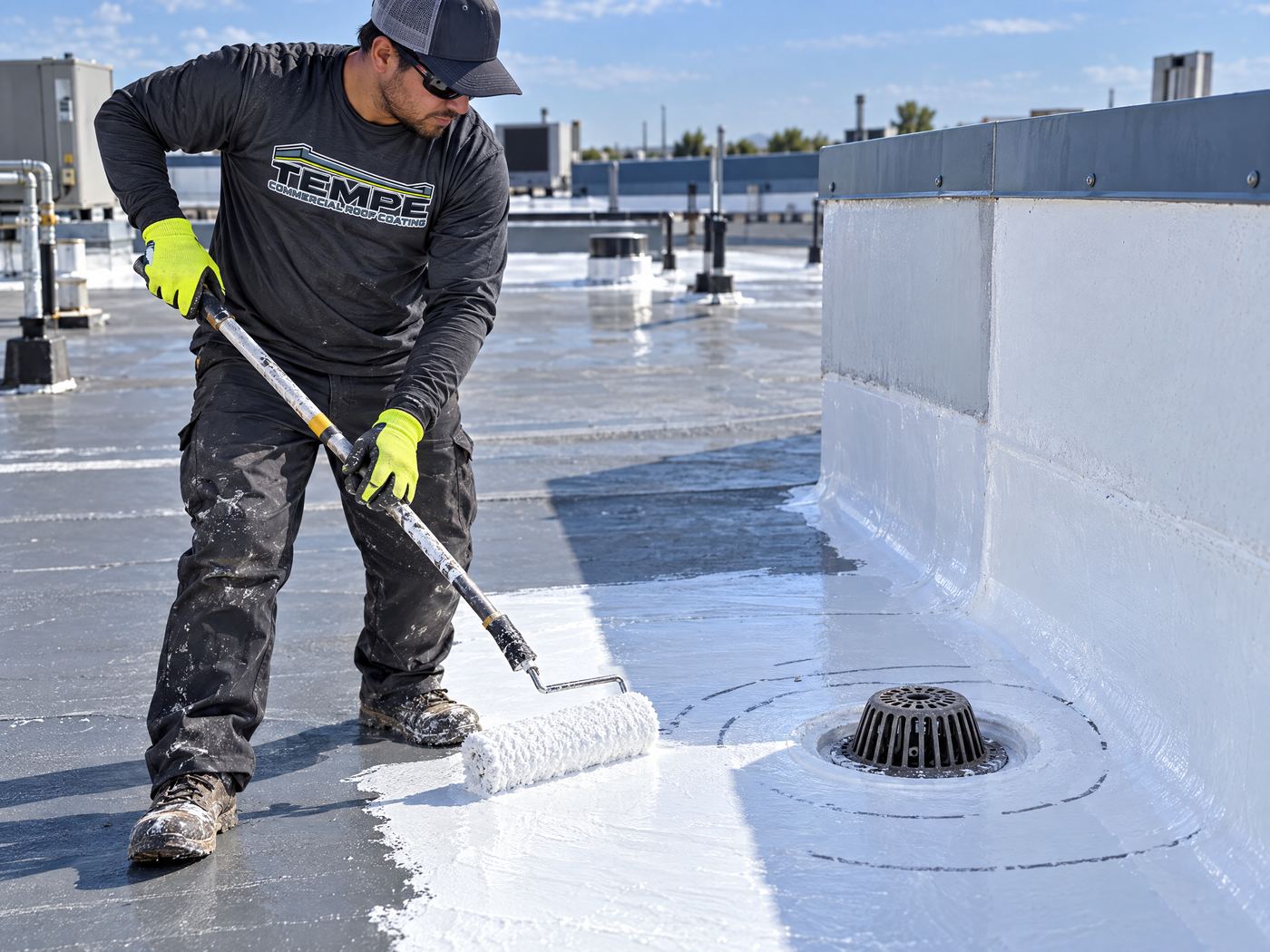
Water marks show where drainage and surface slope need review.
A low-slope roof needs more than a fresh surface. We check water, seams, old coating, and substrate condition before selecting a silicone system.
These roof details decide whether silicone coating belongs in the scope and which preparation steps come first.
Water marks show where drainage and surface slope need review.
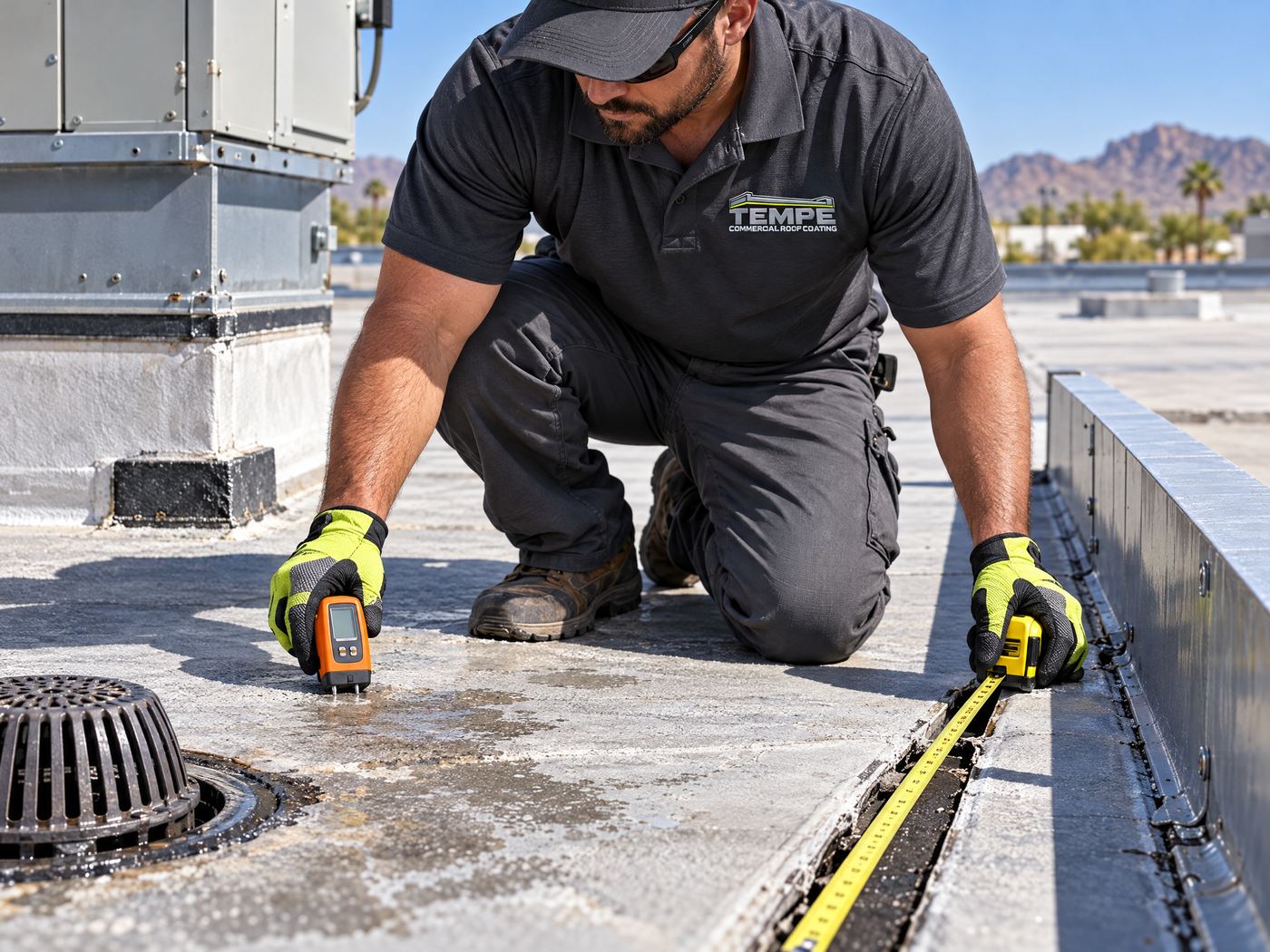
Open or moving seams need repair before coating spans them.
Attached material still needs compatibility and adhesion checks.
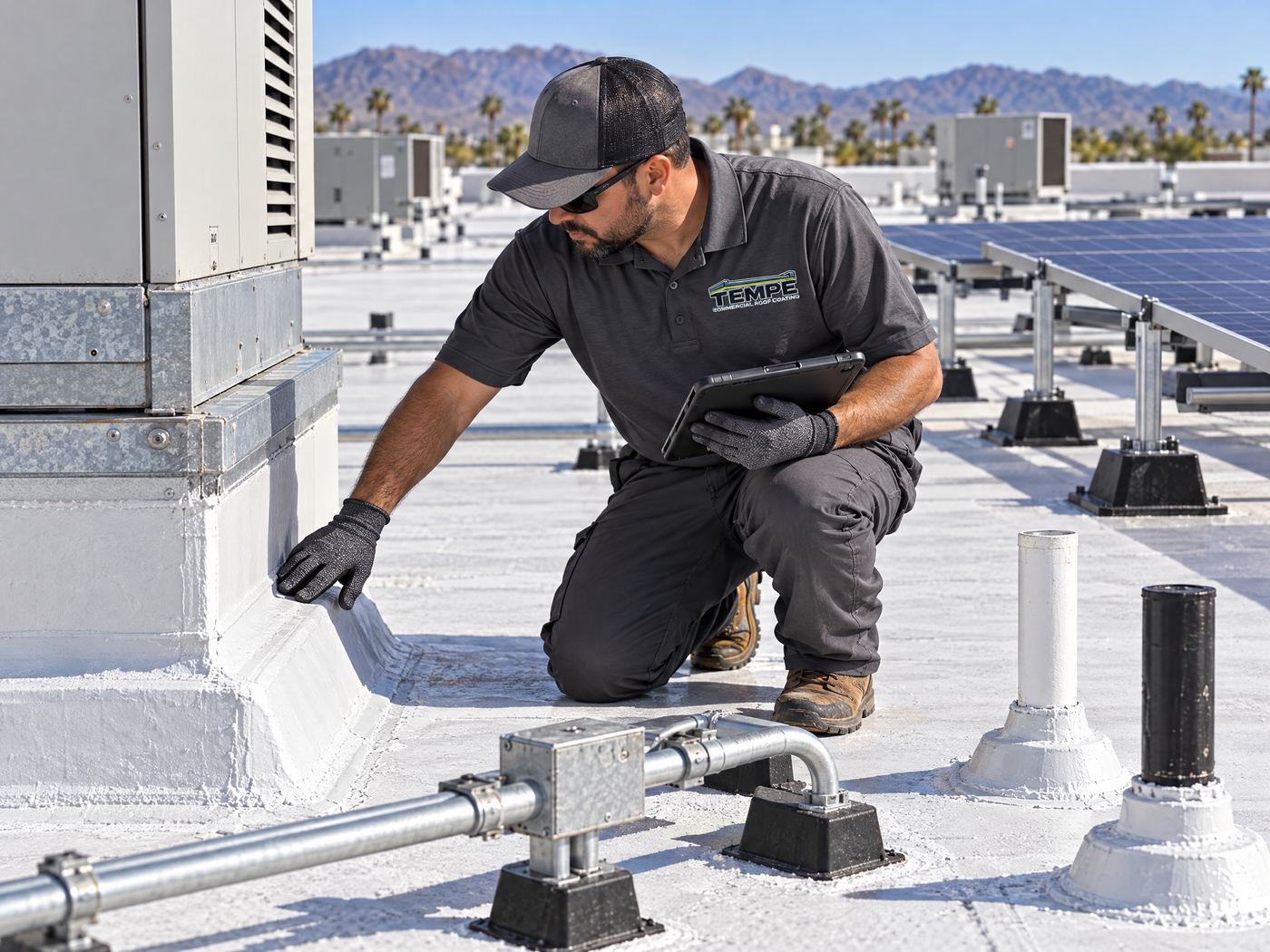
Curbs, pipes, and flashing can direct water beneath a coating.
Silicone can restore a suitable low-slope roof when the substrate, drainage, and existing coating support the system. Repair-first conditions change the scope.
A coating covers a prepared roof surface. It does not replace drainage work, wet-material removal, seam repair, or damaged flashing correction.
Use these conditions to separate a maintenance concern from a repair boundary. Each detail points to a different silicone preparation decision.
Dark rings around a drain or scupper show repeated water contact. We trace the water path before treating the field membrane.
Moisture beneath the roof surface can weaken adhesion and keep a coating from solving the underlying condition.
Brown or oily discoloration can migrate through a new layer. The area can need isolation, primer, or additional preparation.
Raised, open, or moving seams need compatible repair before a silicone film crosses the joint.
Gaps, split sealant, and lifted flashing around a pipe can send water beneath the coating system.
Coating a roof without a working overflow path leaves drainage risk in place around parapet edges.
Silicone is one choice among commercial roof systems. The roof material, moisture condition, and recoat history should determine the next step.
| System | Best Roof Detail | Moisture Question | Typical Use | Recoat Path |
|---|---|---|---|---|
| Silicone | Low-slope membrane, seams, and ponding review | Where is water sitting, and is insulation dry? | Restoration after repair and adhesion checks | Compatible silicone preparation and recoat |
| Acrylic | Compatible roof surface with weather-sensitive details | Can the surface stay dry through cure? | Reflective coating on an approved substrate | Product-specific cleaning and compatible acrylic |
| Spray Foam | Dry substrate needing added slope or insulation review | Is the deck and roof assembly dry enough? | Foam application with a selected topcoat | Topcoat maintenance based on foam condition |
| Metal Coating | Panel laps, fasteners, rust, and pipe flashing | Is condensation separate from active leakage? | Metal preparation, seam work, and coating | Compatible metal coating after surface preparation |
| Shingle Coating | Commercial shingle assembly and flashing | Are shingles, granules, and deck conditions attached? | Narrow suitability review before coating | Manufacturer guidance controls any recoat |
A prepared silicone system can support roof restoration when the assembly passes inspection. The benefit depends on the roof detail being addressed first.
A silicone layer can tie prepared field areas together around repaired seams, curbs, and membrane transitions.
Primer and reinforcement decisions stay connected to bleed-through, flashing, asphalt patches, and the roof surface below.
When a silicone surface remains attached and compatible, future work can follow a silicone-specific cleaning and recoat path.
Product details, repairs, adhesion results, and drain observations give facility staff useful roof information after coating.
Call to discuss ponding at drains, wet insulation, or water entry around membrane seams and roof penetrations.
The work sequence keeps moisture, adhesion, repair limits, and coating application in the same decision chain.
Alpha
We check ponding rings, drains, membrane seams, wet insulation indicators, roof penetrations, and the condition of any existing coating.
Bravo
Open seams, damaged flashing, blocked scuppers, and failed pipe details are addressed before the silicone layer is applied.
Charlie
Cleaning removes roof residue, while adhesion checks identify loose coating. Bleed-through areas receive the primer or isolation treatment required by the selected system.
Delta
The coating is applied around seams, curbs, penetrations, and field membrane according to the selected product requirements and site conditions.
Echo
The finished surface is reviewed at drainage points, parapet edges, flashing, HVAC curbs, and repaired seams so maintenance records match the roof work.
Another system can fit when the roof has a different substrate, moisture condition, or preparation requirement.
Alpha
Review this option for a compatible roof surface where cure conditions, exposed asphalt, and detail fabric control the preparation.
See Acrylic Roof CoatingBravo
Compare foam when substrate dryness, roof slope, HVAC intakes, or a selected topcoat affect the restoration decision.
See Spray Foam RoofingCharlie
Review all approved systems when a building includes metal panels, low-slope membranes, foam, or shingle roof sections.
Compare Commercial Roof ServicesDirect answers help facility managers decide what to inspect before coating a low-slope commercial roof.
Sometimes. The old coating must be firmly attached, compatible with the new product, and in compatible condition. Loose or failing areas need attention first. We also check whether the existing surface requires cleaning, repairs, or adhesion testing. ReviewSiliconeRoofCoat.
Silicone can be considered on a roof with ponding only after the water source and substrate condition are reviewed. We inspect drains, scuppers, low areas, membrane seams, and wet insulation indicators. Coating the ring around standing water does not correct a blocked drain or damaged roof assembly. ReviewSiliconeRoofCoat.
Bleed-through can discolor or weaken the new coating where asphalt, oils, or old patch materials migrate upward. We identify those areas during preparation and follow the selected system requirements for cleaning, isolation, primer, or additional repair before coating the field membrane. ReviewSiliconeRoofCoat.
Primer depends on the roof surface, existing coating, repairs, and the selected silicone system. We inspect adhesion, residue, asphalt patches, and difficult details such as pipe flashing. Product instructions and test results determine where primer belongs rather than applying one treatment across every roof area. ReviewSiliconeRoofCoat.
Wet insulation needs investigation before coating continues. Trapped moisture can affect adhesion, roof performance, and the condition of the membrane or deck. We identify affected areas and separate repair or removal work from sections that can be cleaned, prepared, and coated. ReviewSiliconeRoofCoat.
A silicone roof generally follows a silicone-specific recoat path. Acrylic and silicone have different compatibility and preparation requirements, so a later coating should be selected from the existing system records and current adhesion condition. We inspect the installed surface before recommending any recoat material. ReviewSiliconeRoofCoat.
Tell us about the low-slope roof, ponding areas, existing coating, and visible membrane details. We will start with the roof condition and the work it can support.
Roof Callback
Share your name and phone number. You can also call +1 (623) 310-0178 directly.