Dry Substrate
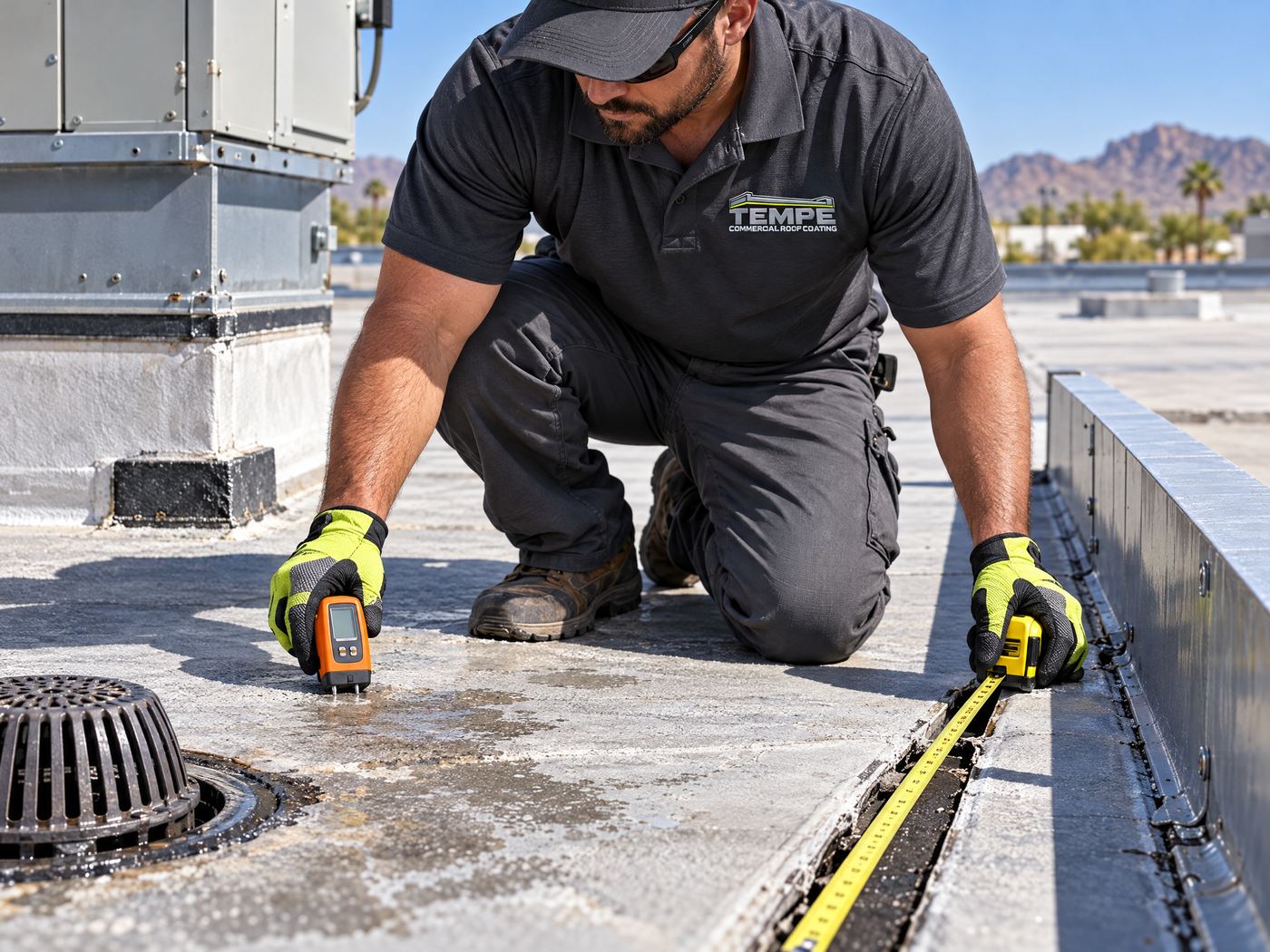
Moisture at a seam, drain edge, or exposed asphalt changes preparation before the first coat.
Acrylic coating fits a commercial roof when the surface is prepared and the forecast supports drying and cure. The roof detail work controls the result.
The coating choice follows what the roof can support on the day of work and after the first coat.
Moisture at a seam, drain edge, or exposed asphalt changes preparation before the first coat.
Air and roof-surface temperatures affect how a water-based film dries across open field areas.
Fresh acrylic needs a rain-free period for the coating to dry and cure as specified.
HVAC intakes, roof access, and tenant operations shape how coating materials reach each section.
Acrylic is a roof coating system for prepared, compatible surfaces. Repair-first areas are separated from coating-ready areas before material is applied.
Use these visible conditions to sort a roof into watch, repair-first, or call-now territory before a coating discussion.
Color loss across the open roof field can point to surface wear. Check adhesion and thickness before planning a recoat.
Dark areas near laps or patches need a closer look for bleed-through and primer requirements before acrylic is added.
Seam separation can move water below the coating. Repair and reinforce the seam before covering the field.
Cracked sealant at a pipe, curb, or parapet needs compatible detail work before the main coating pass.
Recurring interior stains or water at a penetration call for leak investigation before a water-based coating is scheduled.
Drainage and roof slope need review when rings remain near drains or low points after weather clears.
Acrylic is one option among commercial roof coating systems. The roof surface, moisture condition, detail history, and recoat path determine the fit.
| System | Best Surface | Weather And Moisture Check | Detail Approach | Recoat Direction |
|---|---|---|---|---|
| Acrylic | Prepared coated or compatible low-slope surfaces | Dry surface, rain window, air and roof temperature | Fabric at seams, transitions, and penetrations | Acrylic after adhesion and compatibility review |
| Silicone | Compatible low-slope roofs with moisture concerns | Ponding, wet insulation, and existing coating condition | Compatible reinforcement at membrane details | Silicone compatibility governs the next coat |
| Metal | Metal panels with repairable laps and fasteners | Corrosion, condensation, and exposed joints | Panel laps, fasteners, and pipe flashings | Primer and coating matched to prepared metal |
| Spray Foam | Dry, prepared substrates needing added slope or insulation review | Substrate moisture and overspray control | Curbs, penetrations, and thickness transitions | Topcoat selected after foam inspection |
| Shingle | Commercial shingle assemblies that pass compatibility review | Granule loss, flashing, and deck condition | Valleys, eaves, and flashing transitions | Manufacturer guidance controls recoating |
Acrylic coating can support a commercial roof when preparation, application conditions, and maintenance fit the existing assembly.
A light-colored acrylic surface can reflect solar energy when the installed system and roof condition support that use.
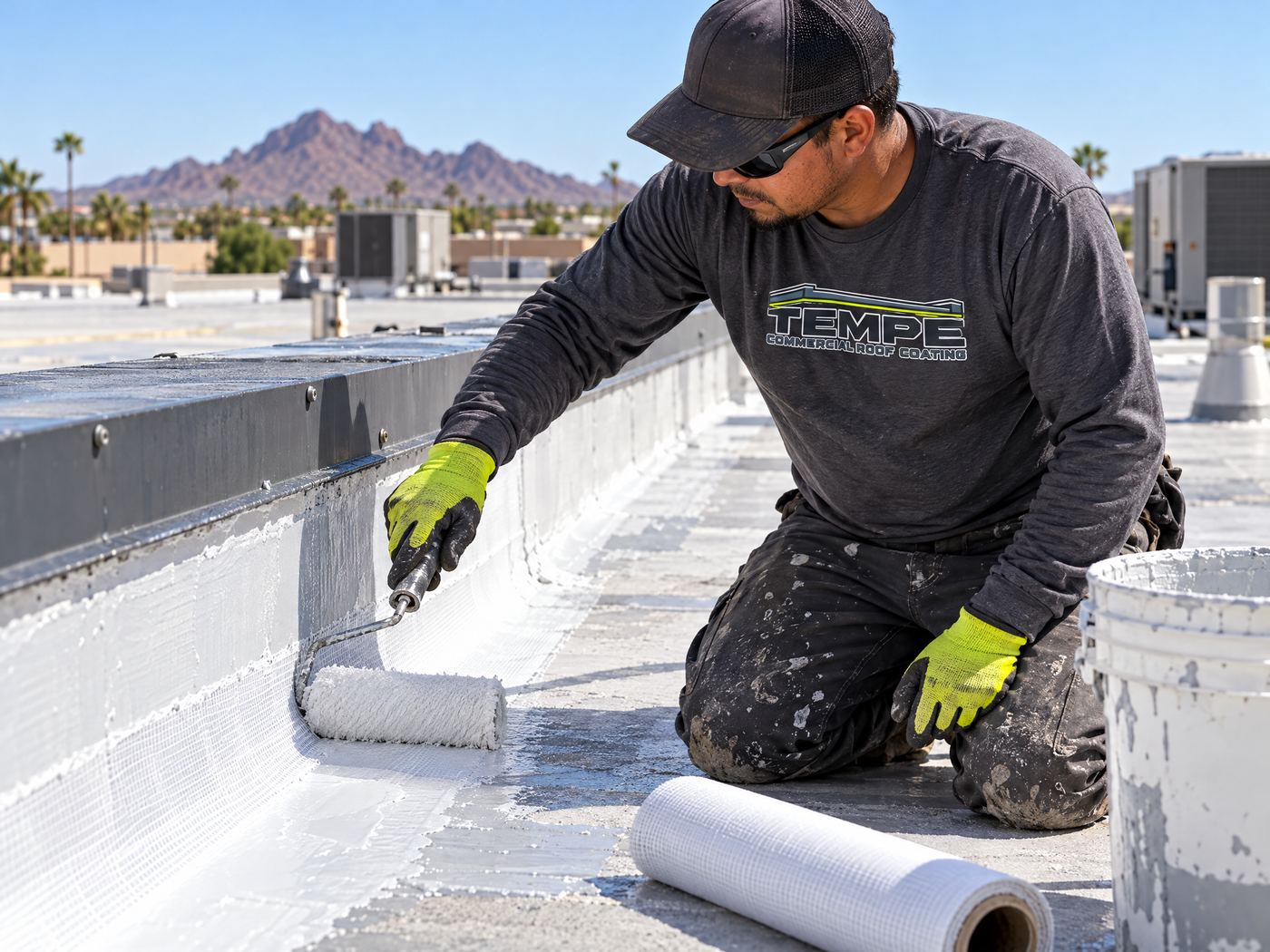
Fabric at a seam, curb, or pipe flashing makes reinforcement visible instead of burying a weak transition under field coating.
Adhesion checks and bleed-through review help define whether an acrylic recoat belongs over the existing surface.
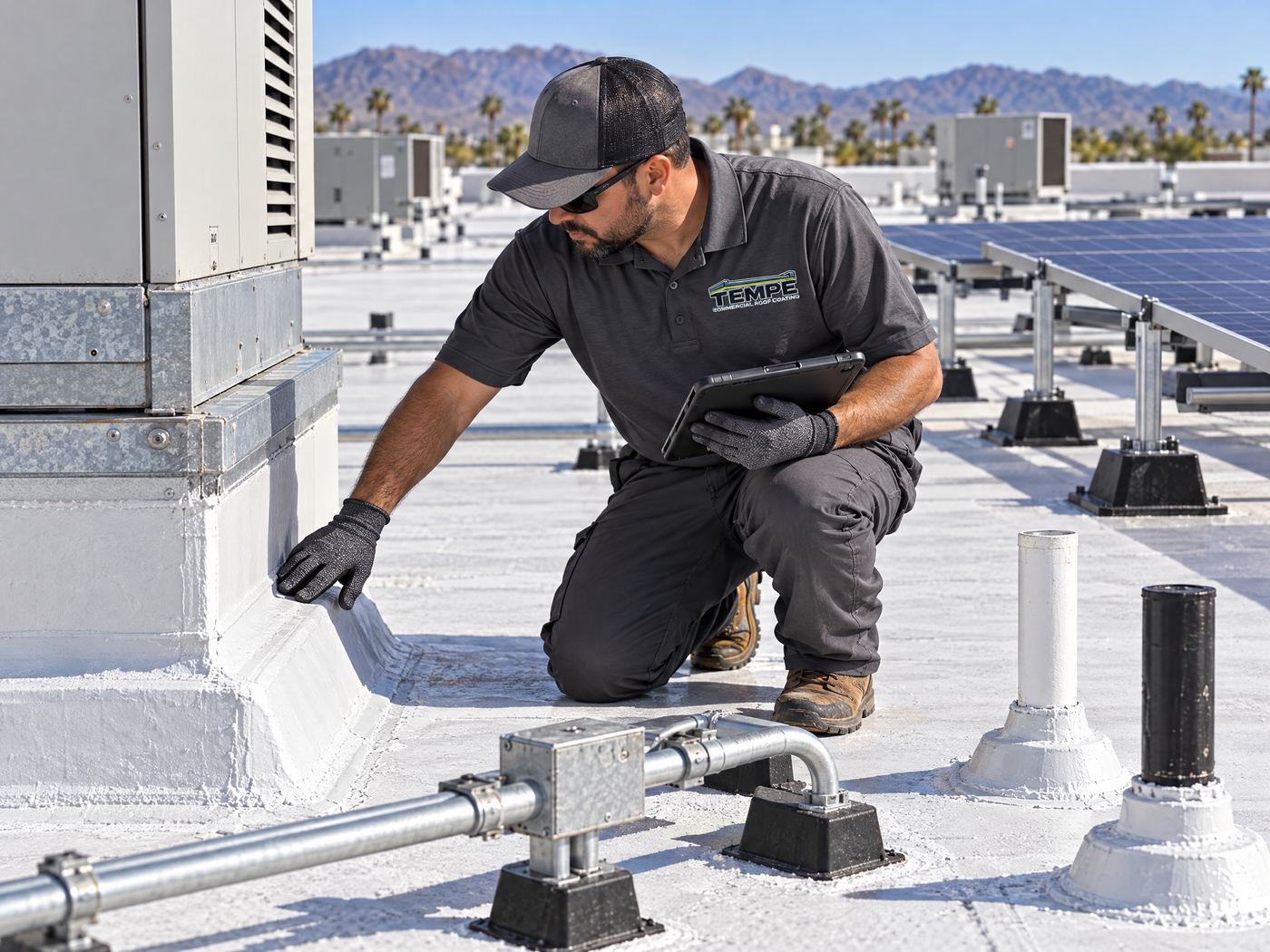
HVAC curbs, drains, walk paths, and tenant access points stay in the work conversation before coating reaches the roof.
Call before scheduling work around active water entry, a wet substrate, or a forecast that leaves fresh acrylic exposed.
The work sequence keeps water, detail repairs, weather, and coating thickness in view before the roof is released for use.
Alpha
CHECKWe inspect the field coating, exposed asphalt, seams, drains, flashing, penetrations, HVAC curbs, and interior leak locations. Each roof section gets its own condition notes before acrylic is selected.
Bravo
REPAIROpen seams, cracked sealant, damaged flashing, loose coating, and drain concerns are handled at the detail level. Fabric reinforcement is placed where the transition needs added support.
Charlie
PREPCleaning removes dirt and loose material from the roof field. We check adhesion, identify asphalt bleed-through, and set primer or barrier work where the existing surface requires it.
Delta
COATCoating is applied across prepared sections while air temperature, roof temperature, wind, and rain conditions support drying. The application method accounts for HVAC intakes, vehicles, and occupied areas.
Echo
VERIFYWe review coverage, detail transitions, seams, penetrations, drains, and areas where bleed-through could return. Maintenance records identify the acrylic system and future inspection points.
A different roof surface or moisture condition can move the decision toward another coating system.
Alpha
Ponding rings, wet insulation concerns, or an existing silicone layer call for a moisture and compatibility review.
Bravo
Rust bloom, panel laps, loose fasteners, and pipe flashing require metal-specific preparation before coating.
Charlie
Compare metal, silicone, acrylic, spray foam, and shingle systems by substrate, moisture, and detail conditions.
These answers focus on cure conditions, rain, temperature, details, bleed-through, and the limits of a recoat.
The required dry or cure time depends on the product and the conditions during application. Air temperature, roof-surface temperature, humidity, wind, and the coating type can all affect the timing. We follow the manufacturer's instructions and account for the weather before scheduling the work. ReviewAcrylicRoofCoati.
Fresh acrylic needs a rain-free window for the film to dry and cure. We check the forecast, roof temperature, wind, and the planned coat sequence before application. If rain could reach an uncured surface, that section is held until conditions support the product requirements. ReviewAcrylicRoofCoati.
The selected product sets the temperature requirements, and the roof surface matters as much as the air. A shaded membrane, metal curb, or cold seam can dry differently from the open field. We use the product instructions and current roof conditions to choose a workable application window. ReviewAcrylicRoofCoati.
Fabric is used where a seam, transition, penetration, or flashing detail needs reinforcement. We first address the defect and prepare the surrounding surface. The fabric and acrylic must be compatible with the selected system, with extra attention at pipe flashings, curbs, and movement-prone joints. ReviewAcrylicRoofCoati.
Asphalt, patch materials, stains, and older roof layers can migrate into a new acrylic film. We look for dark areas, exposed asphalt, and previous repairs during preparation. A compatible primer or barrier plan can be needed before the field coat proceeds. ReviewAcrylicRoofCoati.
An existing acrylic roof can be recoated when the old layer is attached, compatible, and prepared for the new material. We inspect adhesion, worn areas, seams, dirt, and bleed-through first. Loose coating or failed details receive attention before another acrylic layer is applied. ReviewAcrylicRoofCoati.
No. Coating is part of a roof restoration system, works alongside repairing every source of water entry. Leaks can originate from damaged flashing, open seams, drains, penetrations, or wet materials beneath the surface. Those issues must be identified and addressed as needed. ReviewAcrylicRoofCoati.
We inspect the roof surface, details, weather window, and recoat history before recommending the next coating step.
Roof Callback
Share your name and phone number. You can also call +1 (623) 310-0178 directly.